


Safe Thinking and Affect Regulation (STAR): human immunodeficiency virus prevention in alternative/therapeutic schools
- PMID: 21961780
- PMCID: PMC3185294
- DOI: 10.1016/j.jaac.2011.06.018
Safe Thinking and Affect Regulation (STAR): human immunodeficiency virus prevention in alternative/therapeutic schools
Abstract
Objective: To evaluate the effectiveness of Safe Thinking and Affect Regulation (STAR), a 14-session HIV-prevention program for adolescents at alternative/therapeutic schools. Because these youth frequently have difficulties with emotions and cognitions, it was designed to improve sexuality-specific affect management and cognitive monitoring, as well as HIV-related knowledge and attitudes. It was hypothesized that STAR would lead to a decrease in sexual risk and improved HIV knowledge and attitudes.
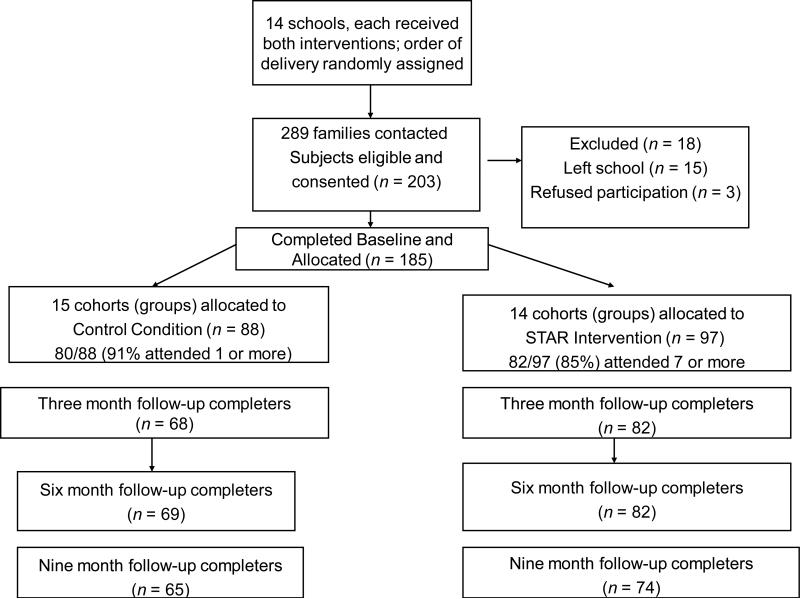
Method: Fourteen schools were randomly assigned by year either to the STAR intervention or a brief educational program. Schools received the alternate intervention the following year. A total of 185 adolescents in 29 cohorts (groups) participated in the interventions. Assessment of sexual behavior, knowledge and attitudes with audio computer-assisted self-interviews occurred at 3, 6, and 9 months post intervention.
Results: Hierarchical linear model (HLM) analyses found that adolescents in the STAR intervention reported a significantly greater decrease (p < .05) in the Sexual Risk Index than youth in the control group over the 6 months post intervention and similar improvements in the HIV Knowledge Scale and the Condom Use Self Efficacy Scale. There were no group differences between 6 and 9 months post intervention.
Conclusions: This STAR intervention for youth in alternative schools was associated with decreased sexual risk for 6 months after the intervention. These data suggest that intervention strategies that target cognitions and affect within a sexual context might be usefully applied to improving sexual behavior but may need to be reinforced over time. Clinical trial registration information--HIV, Abuse, and Psychiatric Disorders Among Youth; http://clinicaltrials.gov; NCT00603369.
Copyright © 2011 American Academy of Child and Adolescent Psychiatry. Published by Elsevier Inc. All rights reserved.
Figures
References
-
- CDC HIV Incidence. Statistics and Surveillance – United States, 2008. [April 25, 2011]; http://www.cdc.gov/hiv/topics/surveillance/resources/factsheets/pdf/inci....
-
- Weinstock H, Berman S, Cates W. Sexually transmitted diseases among American youth: Incidence and prevalence estimates 2000. Perspectives on Sexual and Reproductive Health. 2004;36:6–10. - PubMed
-
- Grunbaum J, Lowry R, Kann L. Prevalence of health-related behaviors among alternative high school students as compared with students attending regular high schools. Journal of Adolescent Health. 2001;29:337–343. - PubMed
Publication types
MeSH terms
Associated data
Grants and funding
LinkOut - more resources
Full Text Sources
Medical
