


The role of religion and spirituality in psychological distress prior to surgery for urologic cancer
- PMID: 21964511
- PMCID: PMC3746331
- DOI: 10.1177/1534735411416456
The role of religion and spirituality in psychological distress prior to surgery for urologic cancer
Abstract
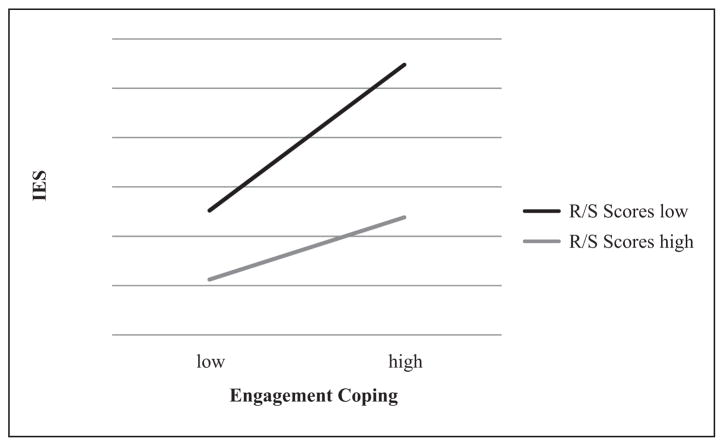
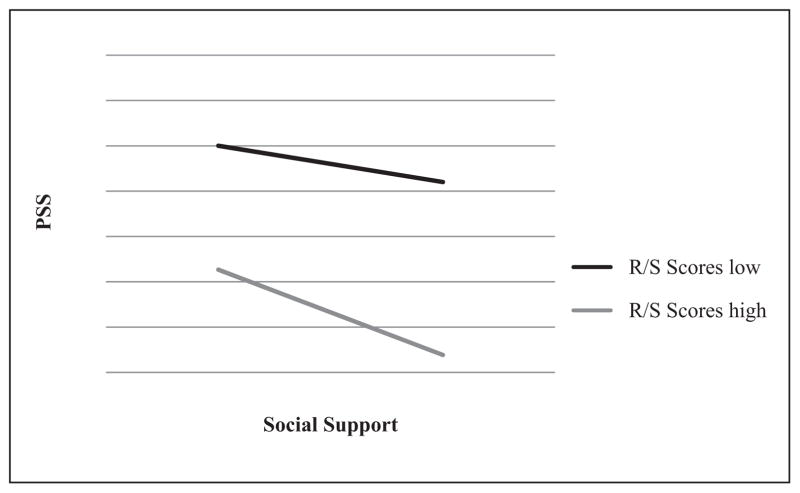
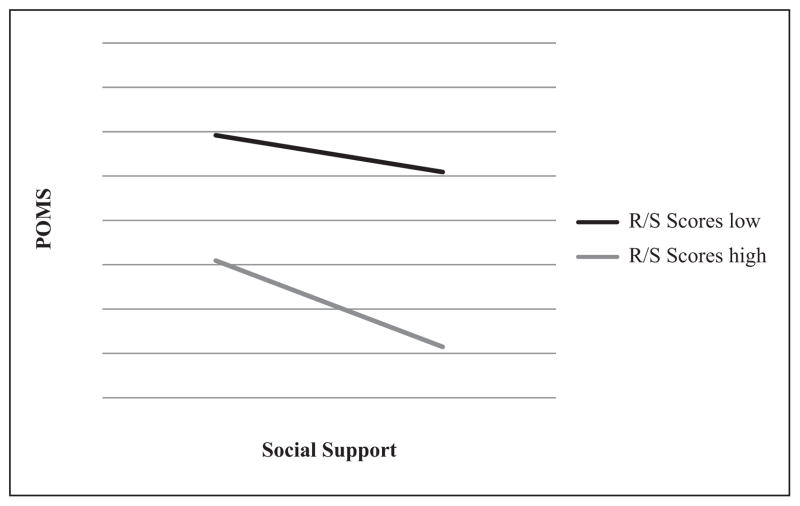
The present study examined the associations between religion and spirituality (R/S), presurgical distress, and other psychosocial factors such as engagement coping, avoidant coping, and social support. Participants were 115 men scheduled for surgery for urologic cancer. Before surgery, participants completed scales measuring intrinsic religiosity, organized religious activity, and nonorganized religious activity (IR, ORA, NORA); social support (Medical Outcomes Study Social Support Survey); and distress (Impact of Event Scale [IES], Perceived Stress Scale [PSS], Brief Symptom Inventory-18 [BSI-18], and Profile of Mood States [POMS]). R/S was positively associated with engagement coping. Social support was positively associated with engagement coping and inversely associated with POMS and PSS scores. Engagement coping was positively associated with IES and BSI scores, and avoidant coping was positively associated with all distress measures. R/S moderated the association between engagement coping and IES scores, such that the association between engagement coping and IES was not significant for men with high R/S scores (greater religious belief). R/S moderated the association between social support and distress; the inverse association between social support and PSS and POMS scores was only significant for men who scored high on R/S. This study replicated findings from previous studies suggesting that engagement and avoidant types of coping can lead to increased distress prior to surgery. Although R/S was associated with engagement coping, it was not associated with any of the distress measures. The finding that R/S moderated the associations between engagement coping and distress and social support and distress suggests that the association between R/S, coping style, social support, and adjustment to stressful life situations is not simplistic, and indirect associations should be explored.
Conflict of interest statement
The author(s) declared no potential conflicts of interest with respect to the research, authorship, and/or publication of this article.
Figures
References
-
- Koenig HG. Religion, spirituality, and medicine: research findings and implications for clinical practice. South Med J. 2004;97:1194–1200. - PubMed
-
- Koenig HG, George LK, Peterson BL. Religiosity and remission of depression in medically ill older patients. Am J Psychiatry. 1998;155:536–542. - PubMed
-
- McCullough ME, Larson DB. Religion and depression: a review of the literature. Twin Res. 1999;2:126–136. - PubMed
-
- Bush EG, Rye MS, Brant CR, Emery E, Pargament KI, Riessinger CA. Religious coping with chronic pain. Appl Psychophysiol Biofeedback. 1999;24:249–260. - PubMed
MeSH terms
Grants and funding
LinkOut - more resources
Full Text Sources
Medical
