


Genome-wide analysis of yeast stress survival and tolerance acquisition to analyze the central trade-off between growth rate and cellular robustness
- PMID: 21965291
- PMCID: PMC3216668
- DOI: 10.1091/mbc.E10-08-0721
Genome-wide analysis of yeast stress survival and tolerance acquisition to analyze the central trade-off between growth rate and cellular robustness
Abstract
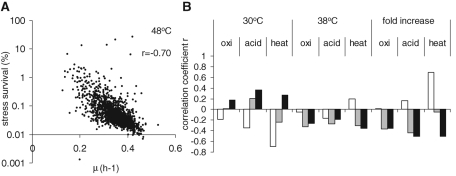
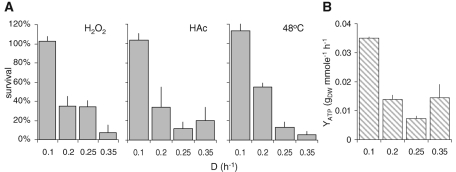
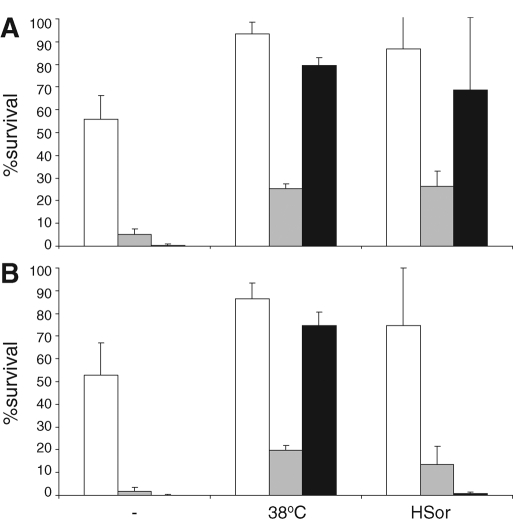
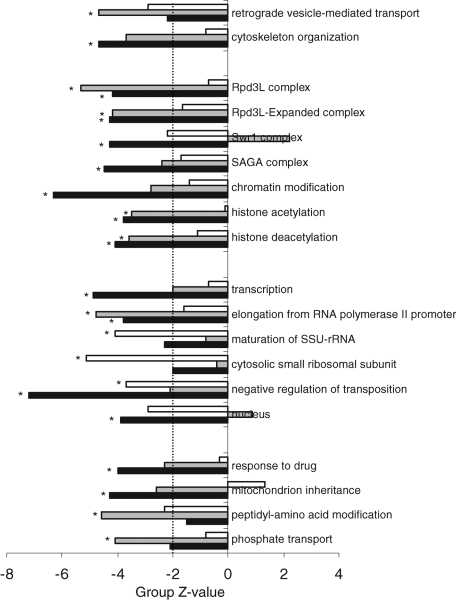
All organisms have evolved to cope with changes in environmental conditions, ensuring the optimal combination of proliferation and survival. In yeast, exposure to a mild stress leads to an increased tolerance for other stresses. This suggests that yeast uses information from the environment to prepare for future threats. We used the yeast knockout collection to systematically investigate the genes and functions involved in severe stress survival and in the acquisition of stress (cross-) tolerance. Besides genes and functions relevant for survival of heat, acid, and oxidative stress, we found an inverse correlation between mutant growth rate and stress survival. Using chemostat cultures, we confirmed that growth rate governs stress tolerance, with higher growth efficiency at low growth rates liberating the energy for these investments. Cellular functions required for stress tolerance acquisition, independent of the reduction in growth rate, were involved in vesicular transport, the Rpd3 histone deacetylase complex, and the mitotic cell cycle. Stress resistance and acquired stress tolerance in Saccharomyces cerevisiae are governed by a combination of stress-specific and general processes. The reduction of growth rate, irrespective of the cause of this reduction, leads to redistribution of resources toward stress tolerance functions, thus preparing the cells for impending change.
Figures
References
-
- Attfield PV. Trehalose accumulates in Saccharomyces cerevisiae during exposure to agents that induce heat shock response. FEBS Lett. 1987;225:259–263. - PubMed
-
- Attfield PV, Choi HY, Veal DA, Bell PJ. Heterogeneity of stress gene expression and stress resistance among individual cells of Saccharomyces cerevisiae. Mol Microbiol. 2001;40:1000–1008. - PubMed
-
- Balaban NQ, Merrin J, Chait R, Kowalik L, Leibler S. Bacterial persistence as a phenotypic switch. Science. 2004;305:1622–1625. - PubMed
-
- Beck T, Hall MN. The TOR signalling pathway controls nuclear localization of nutrient-regulated transcription factors. Nature. 1999;402:689–692. - PubMed
Publication types
MeSH terms
Substances
Grants and funding
LinkOut - more resources
Full Text Sources
Molecular Biology Databases
