


Review
doi: 10.1172/JCI57099.
Epub 2011 Oct 3.
Breast cancer stem cells, cytokine networks, and the tumor microenvironment
Affiliations
- PMID: 21965337
- PMCID: PMC3223613
- DOI: 10.1172/JCI57099
Item in Clipboard
Review
Breast cancer stem cells, cytokine networks, and the tumor microenvironment
J Clin Invest.
2011 Oct.
Abstract
Many tumors, including breast cancer, are maintained by a subpopulation of cells that display stem cell properties, mediate metastasis, and contribute to treatment resistance. These cancer stem cells (CSCs) are regulated by complex interactions with the components of the tumor microenvironment - including mesenchymal stem cells, adipocytes, tumor associated fibroblasts, endothelial cells, and immune cells - through networks of cytokines and growth factors. Since these components have a direct influence on CSC properties, they represent attractive targets for therapeutic development.
Figures
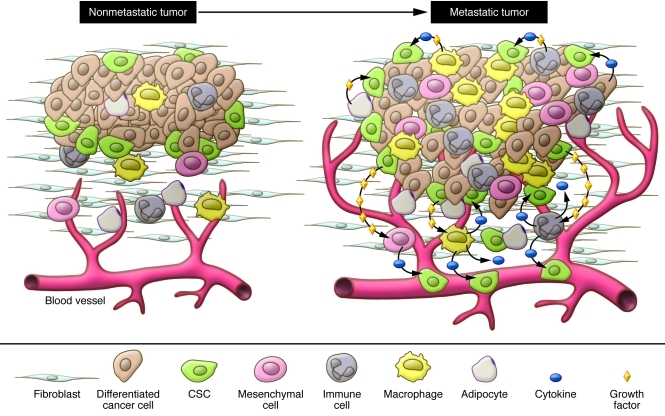
Elevated levels of cytokines and growth factors produced by tumor cells enhance the proliferation and survival of CSCs, induce angiogenesis, and recruit tumor-associated macrophages, neutrophils, and mast cells, which secrete additional growth factors, forming a positive feedback loop that promotes tumor cell invasion and metastasis.
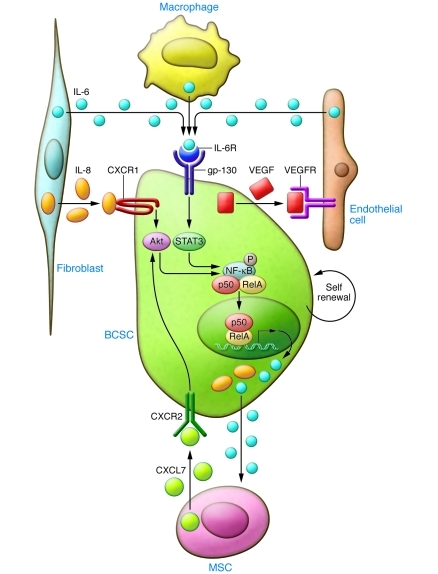
Tumor-associated fibroblasts (TAFs) and macrophages (TAMs) and MSCs have been shown to secrete IL-6, IL-8, and CXCL7, which in turn activate Stat3/NF-κB signaling, leading to self renewal of BCSCs. This generates a positive feedback loop between the tumor microenvironment and tumor cells.
References
-
- Li X, et al. Intrinsic resistance of tumorigenic breast cancer cells to chemotherapy. J Natl Cancer Inst. 2008;100(9):672–679. - PubMed
Publication types
MeSH terms
Substances
Grants and funding
LinkOut - more resources
Full Text Sources
Other Literature Sources
Medical
