


The role of infant sleep in intergenerational transmission of trauma
- PMID: 21966069
- PMCID: PMC3174839
- DOI: 10.5665/SLEEP.1282
The role of infant sleep in intergenerational transmission of trauma
Abstract
Introduction: Children of parents who experienced trauma often present emotional and behavioral problems, a phenomenon named inter-generational transmission of trauma (IGTT). Combined with antenatal factors, parenting and the home environment contribute to the development and maintenance of sleep problems in children. In turn, infant sleep difficulty predicts behavioral and emotional problems later in life. The aim of this study was to investigate whether infant sleep problems predict early behavioral problems indicative of IGTT.
Methods: 184 first-time mothers (ages 18-47) participated. N=83 had a history of childhood abuse and posttraumatic stress disorder (PTSD+); 38 women reported childhood abuse but did not meet diagnostic criteria for PTSD (PTSD-); and the control group (N=63) had neither a history of abuse nor psychopathology (CON). Depression, anxiety, and sleep difficulty were assessed in the mothers at 4 months postpartum. Infant sleep was assessed using the Child Behavior Sleep Questionnaire (CSHQ). Outcome measures included the Parent Bonding Questionnaire (PBQ) at 4 months and the Child Behavior Check List (CBCL) at 18 months.
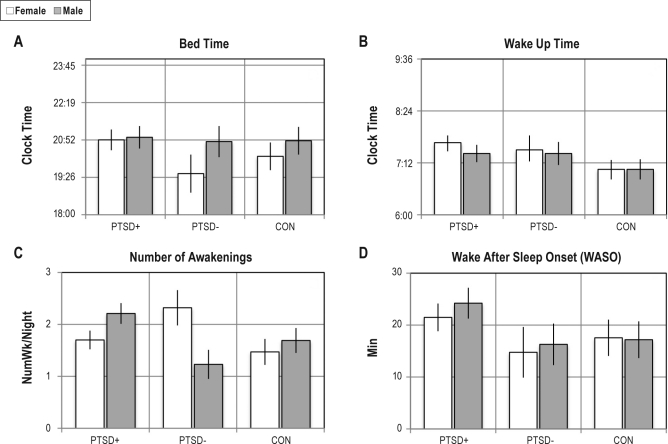
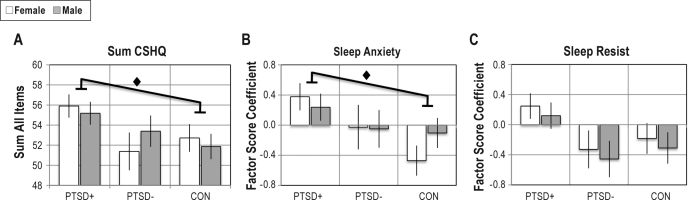
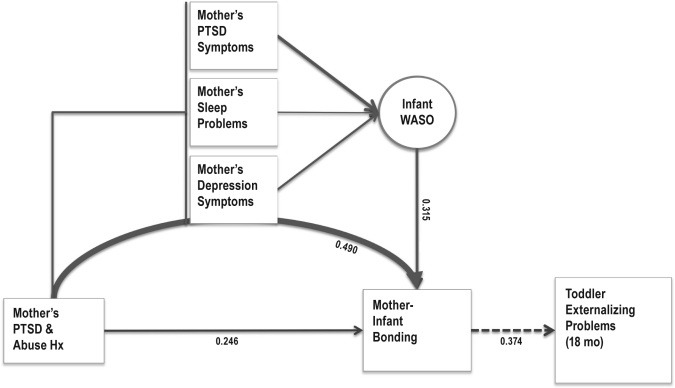
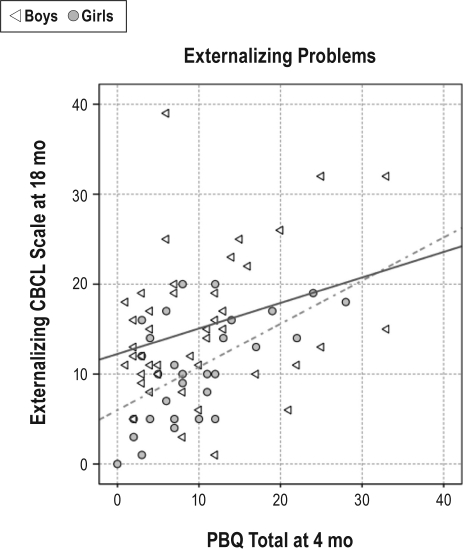
Results: Infants of PTSD+ mothers scored higher on the CSHQ and had more separation anxiety around bedtime than PTSD- and CON, and the severity of their symptoms was correlated with the degree of sleep disturbance. Maternal postpartum depression symptoms mediated impaired mother-infant bonding, while infant sleep disturbance contributed independently to impaired bonding. Mother-infant bonding at 4 months predicted more behavioral problems at 18 months.
Conclusions: Infant sleep difficulties and maternal mood play independent roles in infant-mother bonding disturbance, which in turn predicts behavioral problems at 18 months.
Keywords: Child abuse; PTSD; depression; development.
Figures
References
-
- Anders TF, Eiben LA. Pediatric sleep disorders: a review of the past 10 years. J Am Acad Child Adolesc Psychiatry. 1997;36:9–20. - PubMed
-
- Schwichtenberg AJ, Goodlin-Jones B. Causes and correlates of frequent night awakenings in early childhood. Int Rev Neurobiol. 93:177–91. - PubMed
-
- Richman N. A community survey of characteristics of one- to two-year-olds with sleep disruptions. J Am Acad Child Psychiatry. 1981;20:281–91. - PubMed
Publication types
MeSH terms
Grants and funding
LinkOut - more resources
Full Text Sources
Molecular Biology Databases
