. 2011;6(9):e25257.
doi: 10.1371/journal.pone.0025257. Epub 2011 Sep 26.

Yeast methylotrophy and autophagy in a methanol-oscillating environment on growing Arabidopsis thaliana leaves

Affiliations

Yeast methylotrophy and autophagy in a methanol-oscillating environment on growing Arabidopsis thaliana leaves

Kosuke Kawaguchi et al. PLoS One. 2011.

Abstract

The yeast Candida boidinii capable of growth on methanol proliferates and survives on the leaves of Arabidopsis thaliana. The local methanol concentration at the phyllosphere of growing A. thaliana exhibited daily periodicity, and yeast cells responded by altering both the expression of methanol-inducible genes and peroxisome proliferation. Even under these dynamically changing environmental conditions, yeast cells proliferated 3 to 4 times in 11 days. Among the C1-metabolic enzymes, enzymes in the methanol assimilation pathway, but not formaldehyde dissimilation or anti-oxidizing enzymes, were necessary for yeast proliferation at the phyllosphere. Furthermore, both peroxisome assembly and pexophagy, a selective autophagy pathway that degrades peroxisomes, were necessary for phyllospheric proliferation. Thus, the present study sheds light on the life cycle and physiology of yeast in the natural environment at both the molecular and cellular levels.


Conflict of interest statement

Competing Interests: The authors have declared that no competing interests exist.

Figures

Figure 1
Figure 1. The C. boidinii methanol sensor.
(A) Standard curve for fluorescent intensities of Venus-PTS1 relative to the methanol concentrations in the agar plates. Symbols indicate the following: white circle, light conditions; black circle, dark conditions. (B) Methanol concentrations on growing A. thaliana leaves (2–3 weeks after germination). Leaves were inoculated with the C. boidinii PDAS strain at 4, 8, 12, 16, 20, 24 hh, and the fluorescent intensity was measured 4 h post inoculation. The methanol concentration represents the average of at least 50 cells. Error bars show the standard deviations from at least three independent experiments. Gray bars indicate the dark period. (C) Methanol concentrations on A. thaliana leaves at various plant ages. Left, growing plant (5–6 weeks after germination); center, wilting plant (2 months after germination); right, dead plant (3 months after germination). Error bars show the standard deviations from at least three independent experiments.
Figure 2
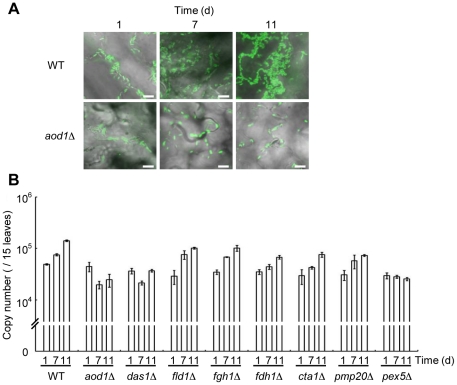
Figure 2. Proliferation of C. boidinii on growing A. thaliana leaves.
(A) Confocal microscope images of the Venus-labeled wild-type strain and aod1Δ strain on a plant leaf. C. boidinii cells were spotted on Arabidopsis leaves (2–3 weeks after germination). Bar, 10 µm. (B) Quantitation of cell number of the wild-type, and knockout strains after 1, 7, and 11 days. Error bars show the standard deviations of triplicate measurements.
Figure 3
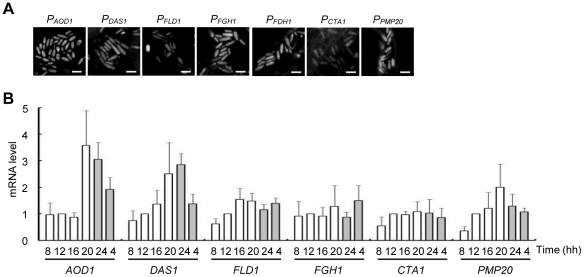
Figure 3. Expression of methanol-inducible genes on growing A. thaliana leaves.
Methanol-inducible genes were expressed on A. thaliana leaves and their expression levels oscillated during the daily light–dark cycle. (A) Confocal microscope images of C. boidinii that was inoculated on the plant leaf surface. Venus was expressed under the control of the following promoters: A, AOD1 B, DAS1 C, FGH1 D, FLD1 E, FDH1 F, CTA1 G, PMP20. Bar, 5 µm. (B) mRNA levels of methanol-inducible genes during the daily light–dark cycle. Expression level is expressed as the relative value to the sample collected at 12 hh. Error bars show the standard deviations of triplicate measurements.
Figure 4
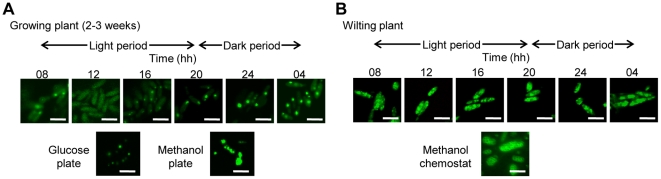
Figure 4. Peroxisome dynamics on growing and wilting plant leaves.
Peroxisomes were observed in C. boidinii expressing Venus-PTS1 under the control of the ACT1 promoter. C. boidinii cells inoculated on (A) (upper) a growing plant leaf, (lower) synthetic glucose and methanol plates, (B) (upper) wilting plant leaf observed at the indicated times, and (lower) methanol-limited chemostat culture at a dilution rate of 0.05 h−1. Bar, 5 µm.
Figure 5
Figure 5. Autophagy and pexophagy mutants have impaired proliferation on growing A. thaliana leaves.
(A) Quantitation of the cell mass of the wild-type, atg1Δ, atg8Δ and atg30Δ strains at 1, 7, and 11 days post inoculation. Error bars show the standard deviation of triplicate measurements. (B) Immunoblot analysis of autophagy based on Venus-Atg8 cleavage in the wild-type and atg1Δ strains. Cell lysates were prepared from leaves collected at the indicated time points (lanes 1–6 from the left), together with the negative control (lane 7) prepared from uninfected leaves. Arrowheads indicate the band positions corresponding to Venus-Atg8 and the processed Venus. (C) Lipidation of HA-Atg8 in cells of the wild-type strain on growing A. thaliana leaves. Yeast cell lysates were prepared from leaves at the indicated time points and was subjected to SDS-PAGE containing 6 M urea. The HA-Atg8 protein was detected by immunoblot analysis. (D) Alcohol oxidase levels in cells of the wild-type and atg30Δ strains. Cell lysates were prepared from leaves collected at the indicated time points. Alcohol oxidase and actin were detected by immunoblot analysis as described in Materials and Methods.

References

    1. Thauer RK. Functionalization of methane in anaerobic microorganisms. Angew Chem Int Ed Engl. 2010;49:6712–6713. - PubMed
    1. Ogata K, Nishikawa H, Ohsugi M. A yeast capable of utilizing methanol. Agric Biol Chem. 1969;33:1519–1520.
    1. Limtong S, Srisuk N, Yongmanitchai W, Yurimoto H, Nakase T, et al. Ogataea chonburiensis sp. nov. and Ogataea nakhonphanomensis sp. nov., thermotolerant, methylotrophic yeast species isolated in Thailand, and transfer of Pichia siamensis and Pichia thermomethanolica to the genus Ogataea. Int J Syst Evol Microbiol. 2008;58:302–307. - PubMed
    1. Peter G, Tornai-Lehoczki J, Dlauchy D. Ogataea populialbae sp. nov., a yeast species from white poplar. FEMS Yeast Res. 2009;9:936–941. - PubMed
    1. Barnett JA, Payne RW, Yarrow D. 1983. Yeasts: characteristics and identification (Cambridge University Press, New York) - PubMed

Publication types

MeSH terms