


Cyclooxygenase-2 deficiency leads to intestinal barrier dysfunction and increased mortality during polymicrobial sepsis
- PMID: 21967897
- PMCID: PMC3208135
- DOI: 10.4049/jimmunol.1101186
Cyclooxygenase-2 deficiency leads to intestinal barrier dysfunction and increased mortality during polymicrobial sepsis
Abstract
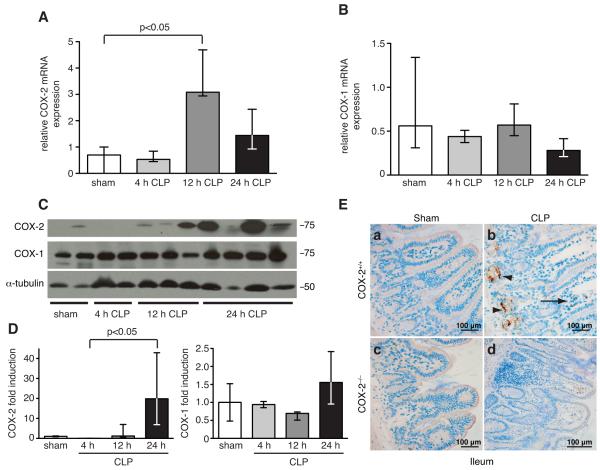
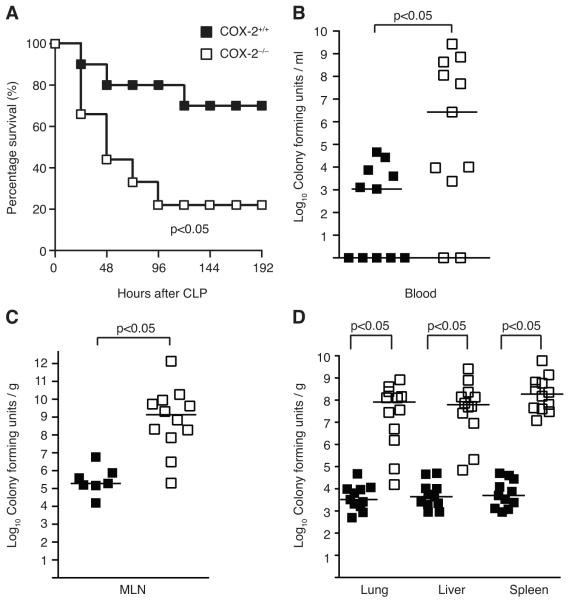
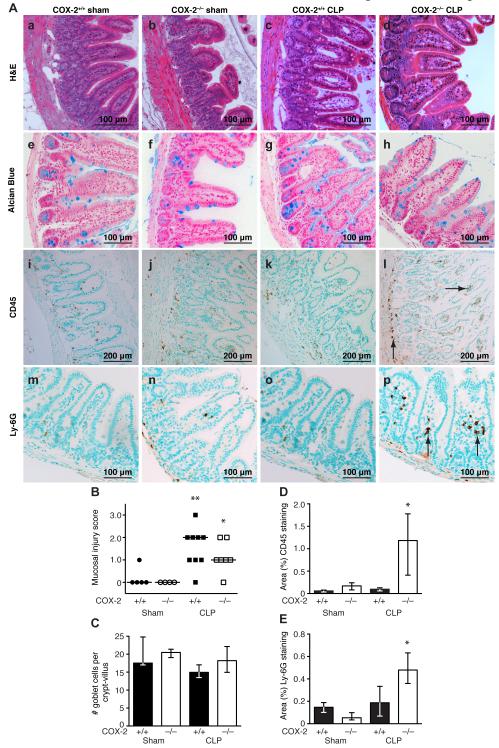
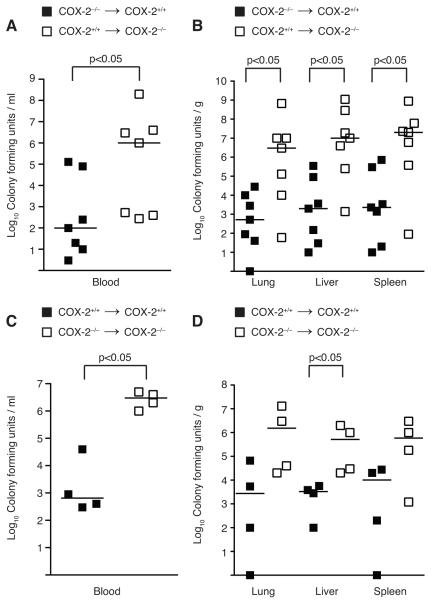
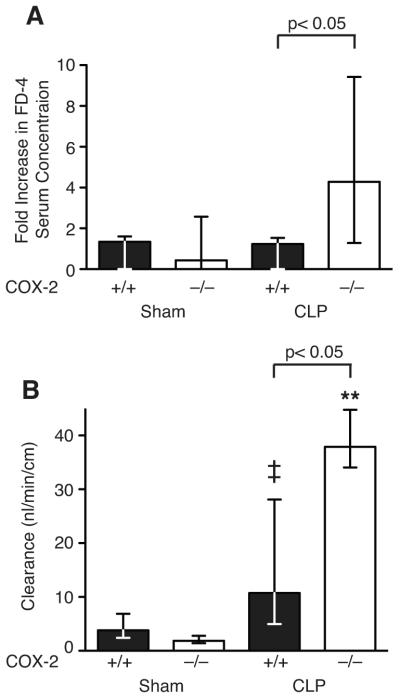
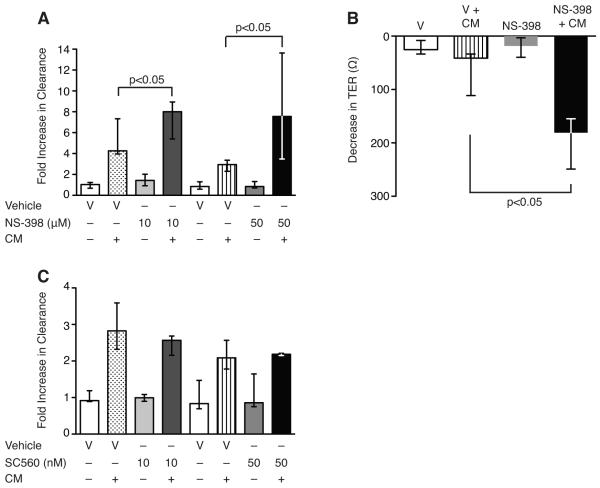
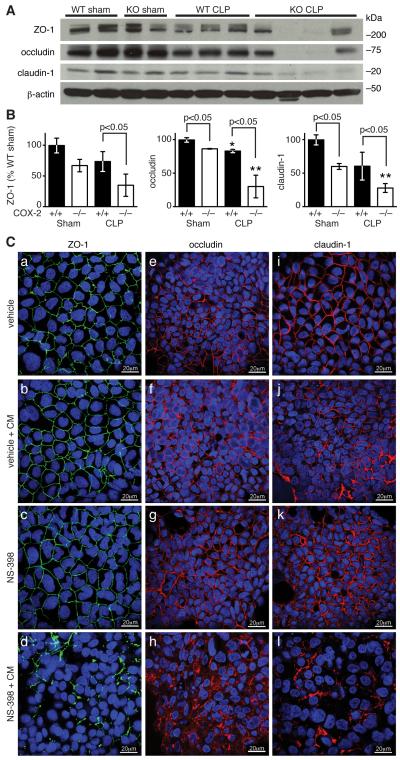
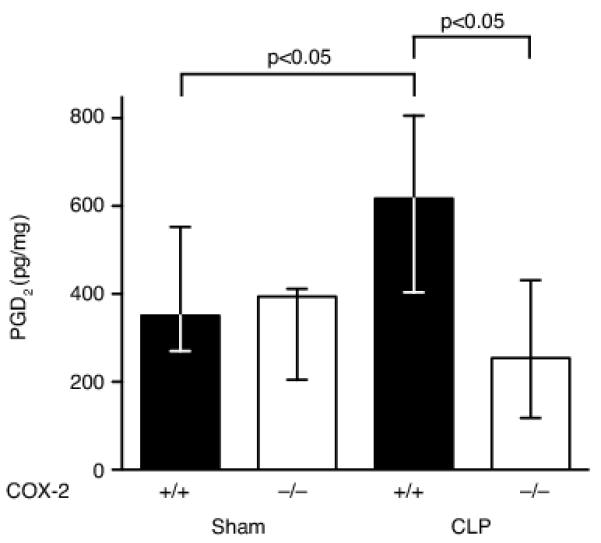
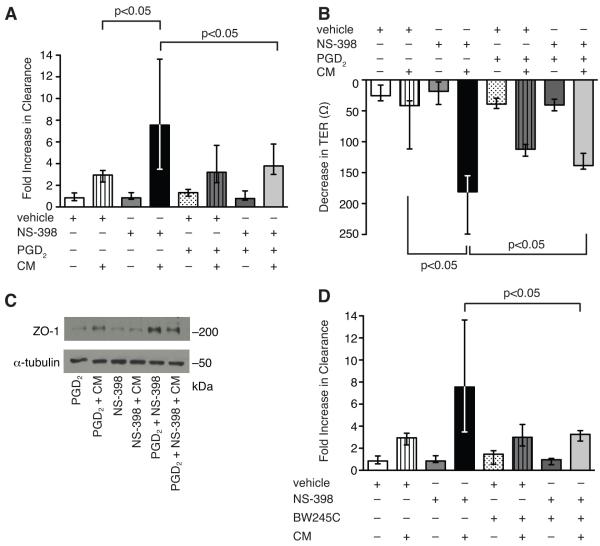
Sepsis remains the leading cause of death in critically ill patients, despite modern advances in critical care. Intestinal barrier dysfunction may lead to secondary bacterial translocation and the development of the multiple organ dysfunction syndrome during sepsis. Cyclooxygenase (COX)-2 is highly upregulated in the intestine during sepsis, and we hypothesized that it may be critical in the maintenance of intestinal epithelial barrier function during peritonitis-induced polymicrobial sepsis. COX-2(-/-) and COX-2(+/+) BALB/c mice underwent cecal ligation and puncture (CLP) or sham surgery. Mice chimeric for COX-2 were derived by bone marrow transplantation and underwent CLP. C2BBe1 cells, an intestinal epithelial cell line, were treated with the COX-2 inhibitor NS-398, PGD(2), or vehicle and stimulated with cytokines. COX-2(-/-) mice developed exaggerated bacteremia and increased mortality compared with COX-2(+/+) mice following CLP. Mice chimeric for COX-2 exhibited the recipient phenotype, suggesting that epithelial COX-2 expression in the ileum attenuates bacteremia following CLP. Absence of COX-2 significantly increased epithelial permeability of the ileum and reduced expression of the tight junction proteins zonula occludens-1, occludin, and claudin-1 in the ileum following CLP. Furthermore, PGD(2) attenuated cytokine-induced hyperpermeability and zonula occludens-1 downregulation in NS-398-treated C2BBe1 cells. Our findings reveal that absence of COX-2 is associated with enhanced intestinal epithelial permeability and leads to exaggerated bacterial translocation and increased mortality during peritonitis-induced sepsis. Taken together, our results suggest that epithelial expression of COX-2 in the ileum is a critical modulator of tight junction protein expression and intestinal barrier function during sepsis.
Figures
References
-
- Hotchkiss RS, Karl IE. The pathophysiology and treatment of sepsis. N. Engl. J. Med. 2003;348:138–150. - PubMed
-
- Anaya DA, Nathens AB. Risk factors for severe sepsis in secondary peritonitis. Surg. Infect. 2003;4:355–362. - PubMed
-
- Klein T, Shephard P, Kleinert H, Komhoff M. Regulation of cyclooxygenase-2 expression by cyclic AMP. Biochim. Biophys. Acta. 2007;1773:1605–1618. - PubMed
-
- Levy BD, Clish CB, Schmidt B, Gronert K, Serhan CN. Lipid mediator class switching during acute inflammation: signals in resolution. Nat. Immunol. 2001;2:612–619. - PubMed
Publication types
MeSH terms
Substances
Grants and funding
- R01 DK088199/DK/NIDDK NIH HHS/United States
- K08 GM083207/GM/NIGMS NIH HHS/United States
- R01 DK051362/DK/NIDDK NIH HHS/United States
- R01 DK053056/DK/NIDDK NIH HHS/United States
- R01 GM053249/GM/NIGMS NIH HHS/United States
- U01 AI061246/AI/NIAID NIH HHS/United States
- R01 AI061246/AI/NIAID NIH HHS/United States
- R01 HL060788/HL/NHLBI NIH HHS/United States
- T34 GM087193/GM/NIGMS NIH HHS/United States
- L30 GM089116/GM/NIGMS NIH HHS/United States
- P01 HL108801/HL/NHLBI NIH HHS/United States
- R37 DK044319/DK/NIDDK NIH HHS/United States
LinkOut - more resources
Full Text Sources
Other Literature Sources
Medical
Molecular Biology Databases
Research Materials
Miscellaneous
