


Prolactin regulation of the prostate gland: a female player in a male game
- PMID: 21971318
- PMCID: PMC6035044
- DOI: 10.1038/nrurol.2011.143
Prolactin regulation of the prostate gland: a female player in a male game
Abstract
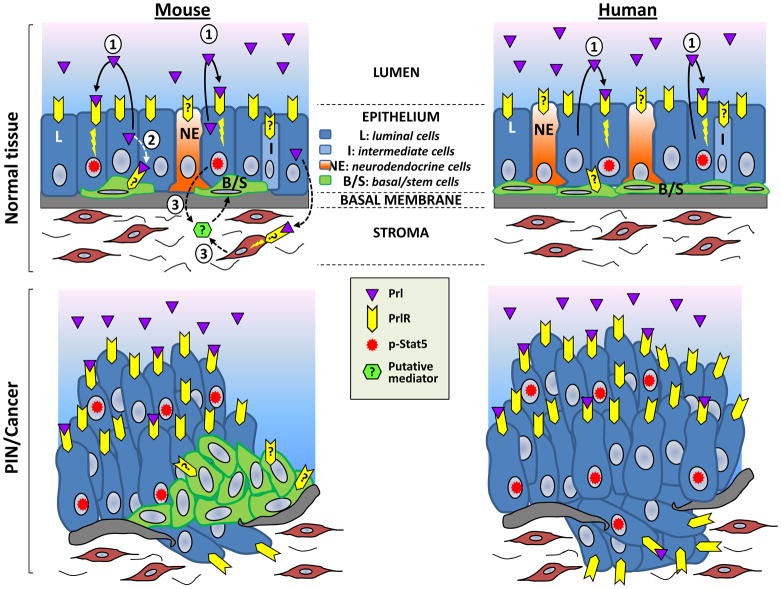
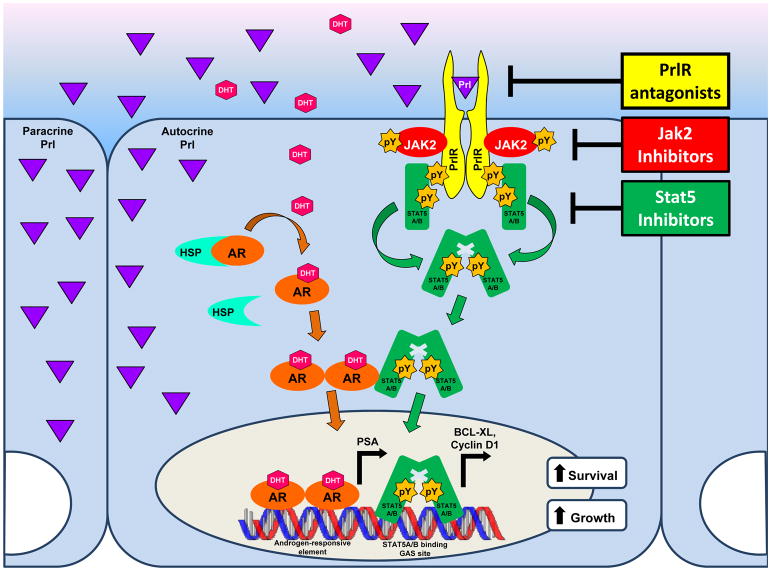
Prolactin is best known for its actions on the mammary gland. However, circulating prolactin is also detected in males and its receptor (PRLR) is expressed in the prostate, suggesting that the prostate is a target of prolactin. Germline knockout of prolactin or its receptor has failed to reveal a key role for prolactin signaling in mouse prostate physiology. However, several studies involving rodent models and human prostate cell lines and specimens have supported the contribution of the canonical PRLR-Jak2-Stat5a/b pathway to prostate cancer tumorigenesis and progression. Increased expression of prolactin in the prostate itself (rather than changes in circulating prolactin levels) and crosstalk with androgen receptor (AR) signaling are potential mechanisms for increased Stat5a/b signaling in prostate cancer. In the mouse prostate, prolactin overexpression results in disorganized expansion of the basal/stem cell compartment, which has been proposed to house putative prostate tumor-initiating cells. These findings provide new insight into the molecular and cellular targets by which locally produced prolactin could contribute to prostate cancer initiation and progression. A number of pharmacological inhibitors targeting various levels of the PRLR-Jak2-Stat5a/b pathway have been developed and are entering clinical trials for advanced prostate cancer.
Figures
References
-
- Riddle O, Bates RW, Dykshorn SW. The preparation, identification and assay of prolactin - a hormone of the anterior pituitary. Am J Physiol. 1933;105:191–216.
-
- Kelly PA, Djiane J, Postel-Vinay MC, Edery M. The prolactin/growth hormone receptor family. Endocr Rev. 1991;12:235–51. - PubMed
-
- Bole-Feysot C, Goffin V, Edery M, Binart N, Kelly PA. Prolactin (PRL) and its receptor: actions, signal transduction pathways and phenotypes observed in PRL receptor knockout mice. Endocr Rev. 1998;19:225–68. - PubMed
-
- Ormandy CJ, et al. Null mutation of the prolactin receptor gene produces multiple reproductive defects in the mouse. Genes Dev. 1997;11:167–78. - PubMed
Publication types
MeSH terms
Substances
Grants and funding
LinkOut - more resources
Full Text Sources
Medical
Research Materials
Miscellaneous
