


Pattern of forebrain activation in high novelty-seeking rats following aggressive encounter
- PMID: 21974861
- PMCID: PMC3200440
- DOI: 10.1016/j.brainres.2011.08.033
Pattern of forebrain activation in high novelty-seeking rats following aggressive encounter
Abstract
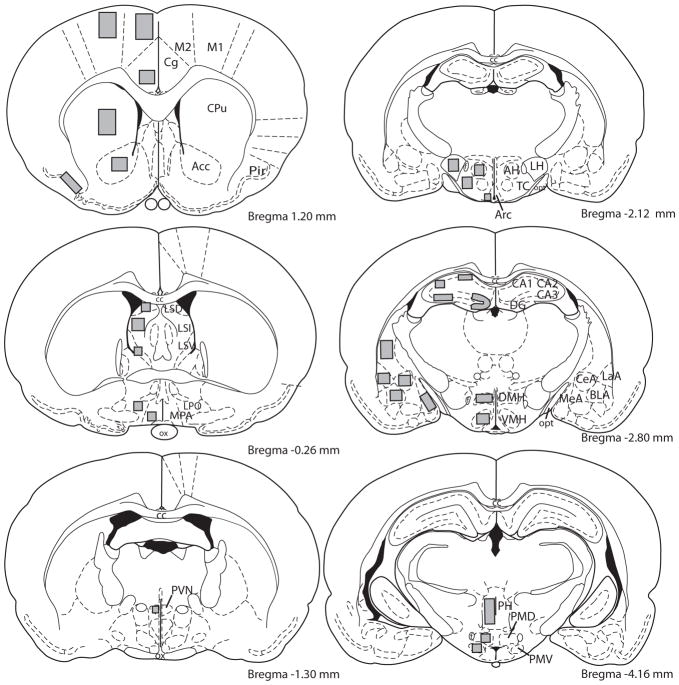
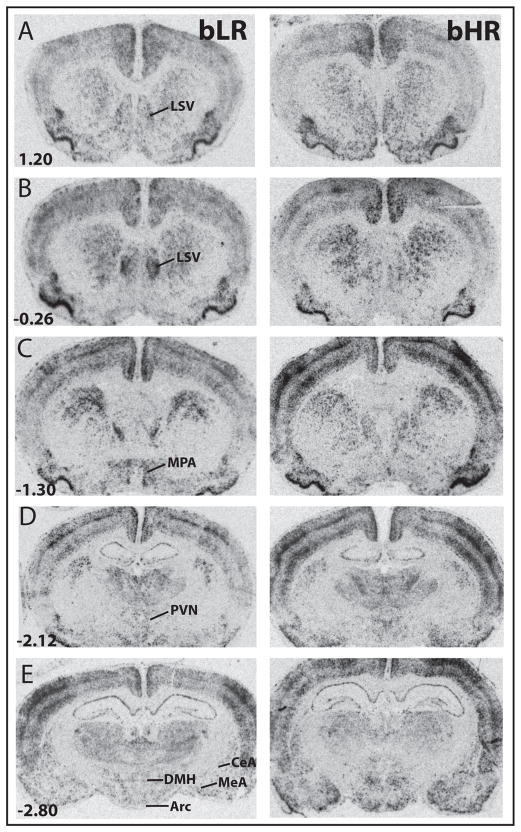
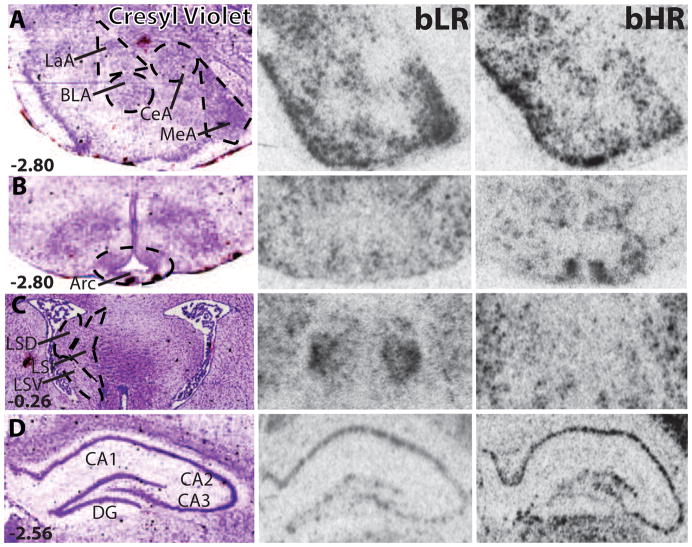
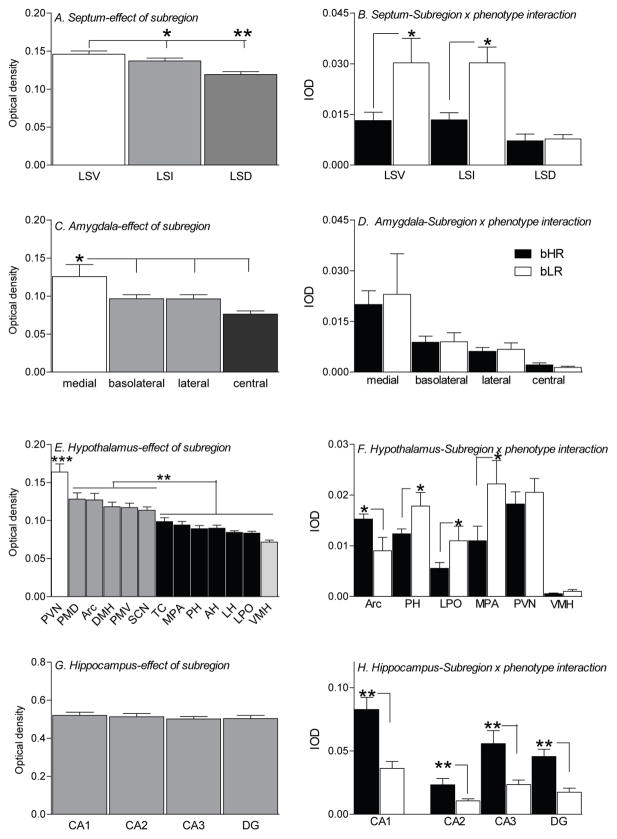
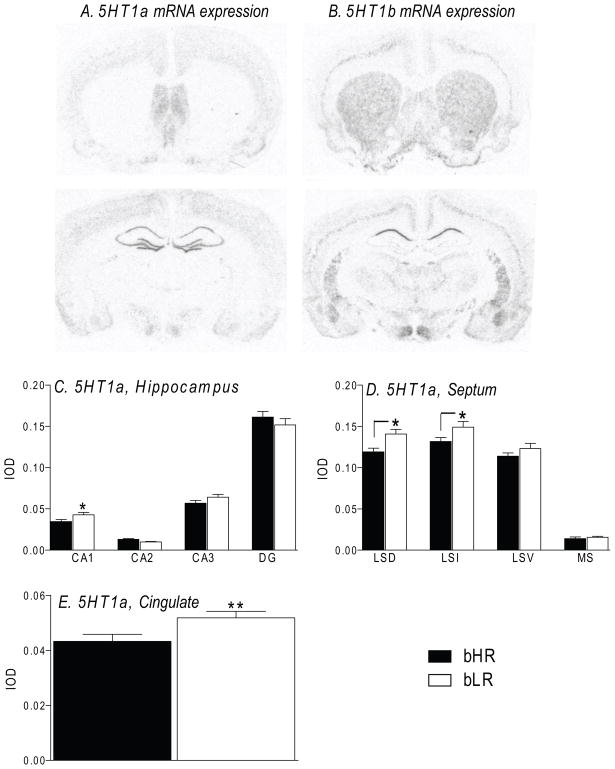
We have previously demonstrated that selectively-bred High (bHR) and Low (bLR) novelty-seeking rats exhibit agonistic differences, with bHRs acting in a highly aggressive manner when facing homecage intrusion. In order to discover the specific neuronal pathways responsible for bHRs' high levels of aggression, the present study compared c-fos mRNA expression in several forebrain regions of bHR/bLR males following this experience. bHR/bLR males were housed with female rats for 2 weeks, and then the females were replaced with a male intruder for 10 min. bHR/bLR residents were subsequently sacrificed by rapid decapitation, and their brains were removed and processed for c-fos in situ hybridization. Intrusion elicited robust c-fos mRNA expression in both phenotypes throughout the forebrain, including the septum, amygdala, hippocampus, cingulate cortex, and the hypothalamus. However, bHRs and bLRs exhibited distinct activation patterns in select areas. Compared to bHR rats, bLRs expressed greater c-fos in the lateral septum and within multiple hypothalamic nuclei, while bHRs showed greater activation in the arcuate hypothalamic nucleus and in the hippocampus. No bHR/bLR differences in c-fos expression were detected in the amygdala, cortical regions, and striatum. We also found divergent 5-HT1A receptor mRNA expression within some of these same areas, with bLRs having greater 5-HT1A, but not 5-HT1B, receptor mRNA levels in the septum, hippocampus and cingulate cortex. These findings, together with our earlier work, suggest that bHRs exhibit altered serotonergic functioning within select circuits during an aggressive encounter.
Copyright © 2011 Elsevier B.V. All rights reserved.
Conflict of interest statement
There are no biomedical financial interests or conflicts of interest for any of the authors.
Figures
References
-
- Adamec RE, Stark-Adamec C. Partial kindling and emotional bias in the cat: lasting aftereffects of partial kindling of the ventral hippocampus. I. Behavioral changes. Behav Neural Biol. 1983;38:205–22. - PubMed
-
- Adamec RE. Partial kindling of the ventral hippocampus: identification of changes in limbic physiology which accompany changes in feline aggression and defense. Physiology & Behavior. 1991;49:443–53. - PubMed
-
- Bandler R, Depaulis A, Vergnes M. Identification of midbrain neurones mediating defensive behaviour in the rat by microinjections of excitatory amino acids. Behav Brain Res. 1985;15:107–19. - PubMed
-
- Blanchard DC, Blanchard RJ, Lee EM, Nakamura S. Defensive behaviors in rats following septal and septal--amygdala lesions. J Comp Physiol Psychol. 1979;93:378–90. - PubMed
-
- Brown CS, Kent TA, Bryant SG, Gevedon RM, Campbell JL, Felthous AR, Barratt ES, Rose RM. Blood platelet uptake of serotonin in episodic aggression. Psychiatry Res. 1989;27:5–12. - PubMed
Publication types
MeSH terms
Grants and funding
LinkOut - more resources
Full Text Sources
