An International Survey-based Algorithm for the Pharmacologic Treatment of Chorea in Huntington's Disease
- PMID: 21975581
- PMCID: PMC3166256
- DOI: 10.1371/currents.RRN1260
An International Survey-based Algorithm for the Pharmacologic Treatment of Chorea in Huntington's Disease
Abstract
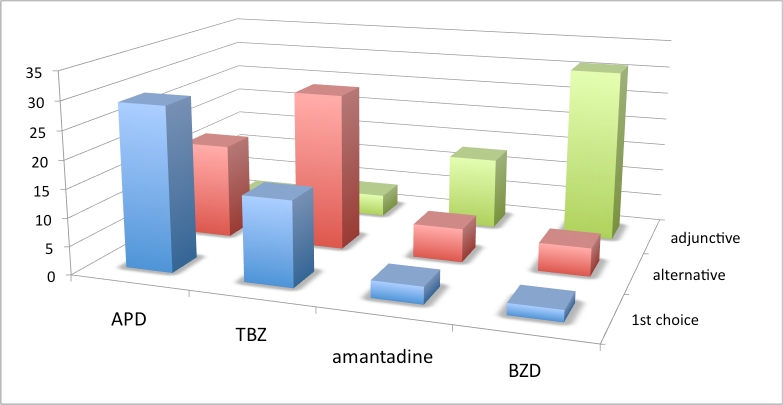
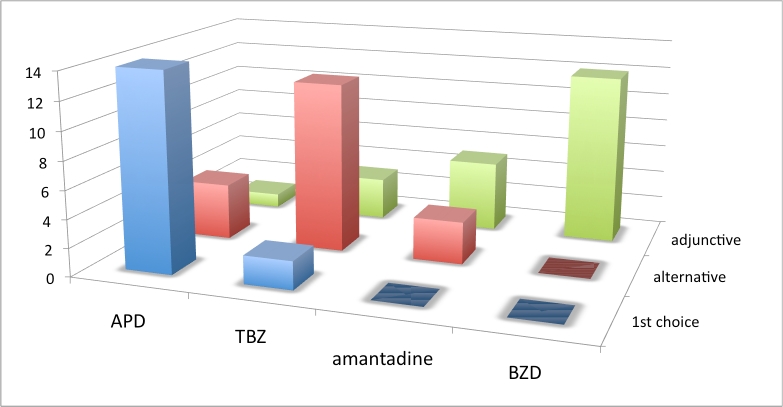
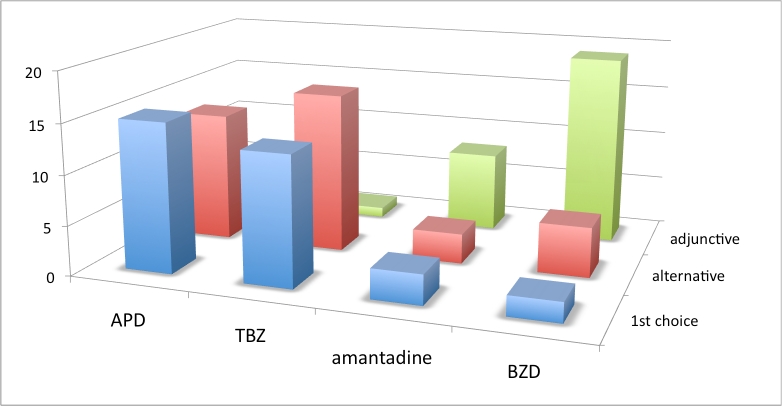
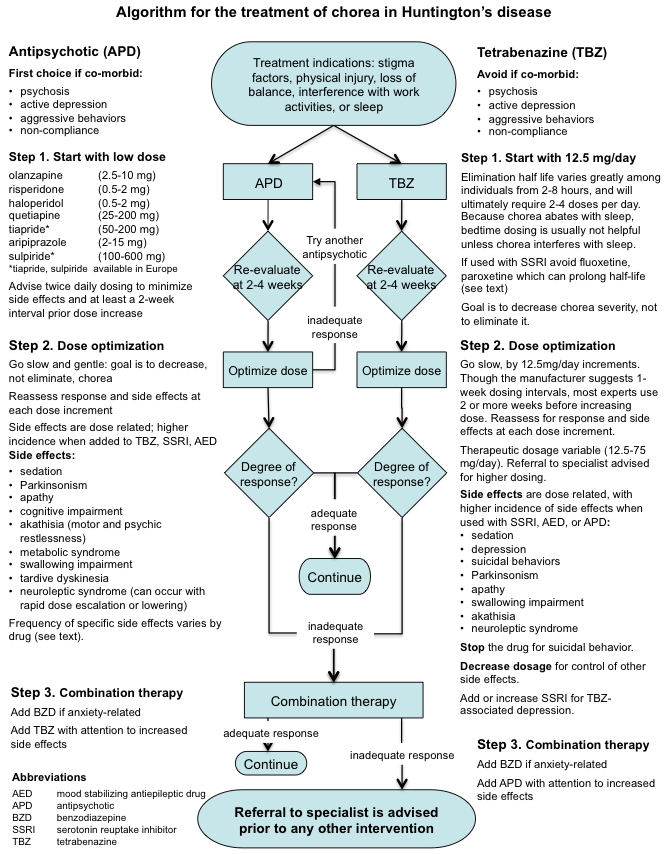
It is generally believed that treatments are available to manage chorea in Huntington's disease (HD). However, lack of evidence prevents the establishment of treatment guidelines. The HD chorea research literature fails to address the indications for drug treatment, drug selection, drug dosing and side effect profiles, management of inadequate response to a single drug, and preferred drug when behavioral symptoms comorbid to chorea are present. Because there is lack of an evidence base to inform clinical decision-making, we surveyed an international group of experts to address these points. Survey results showed that patient stigma, physical injury, gait instability, work interference, and disturbed sleep were indications for a drug treatment trial. However, the experts did not agree on first choice of chorea drug, with the majority of experts in Europe favoring an antipsychotic drug (APD), and a near equal split in first choice between an APD and tetrabenazine (TBZ) among experts from North America and Australia. All experts chose an APD when comorbid psychotic or aggressive behaviors were present, or when active depression prevented the use of TBZ. However, there was agreement from all geographic regions that both APDs and TBZ were acceptable as monotherapy in other situations. Perceived efficacy and side effect profiles were similar for APDs and TBZ, except for depression as a significant side effect of TBZ. Experts used a combination of an APD and TBZ when treatment required both drugs for control of chorea and a concurrent comorbid symptom, or when severe chorea was inadequately controlled by either drug alone. The benzodiazepines (BZDs) were judged ineffective as monotherapy but useful as adjunctive therapy, particularly when chorea was exacerbated by anxiety. There was broad disagreement about the use of amantadine for chorea. Experts who had used amantadine described its benefit as small and transient. In addition to survey results, this report reviews available chorea studies, and lastly presents an algorithm for the treatment of chorea in HD which is based on expert preferences obtained through this international survey.
References
-
- A novel gene containing a trinucleotide repeat that is expanded and unstable on Huntington's disease chromosomes. The Huntington's Disease Collaborative Research Group. Cell. 1993 Mar 26;72(6):971-83. - PubMed
-
- Wojaczyńska-Stanek K, Adamek D, Marszał E, Hoffman-Zacharska D. Huntington disease in a 9-year-old boy: clinical course and neuropathologic examination. J Child Neurol. 2006 Dec;21(12):1068-73. - PubMed
-
- “Huntington’s Disease” Third Edition Oxford monographs on Medical Genetics, Clinical Neurology of Huntington’s disease; Barry Kramer: page 82
LinkOut - more resources
Full Text Sources
Other Literature Sources