


Incidence and predictors of congestive heart failure after autologous hematopoietic cell transplantation
- PMID: 21976673
- PMCID: PMC3234663
- DOI: 10.1182/blood-2011-06-358226
Incidence and predictors of congestive heart failure after autologous hematopoietic cell transplantation
Abstract
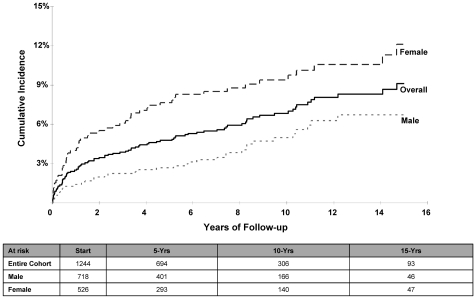
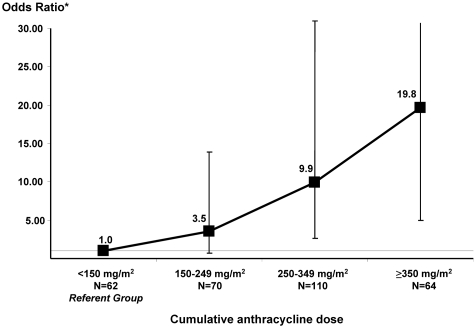
Advances in autologous hematopoietic cell transplantation (HCT) strategies have resulted in a growing number of long-term survivors. However, these survivors are at increased risk of developing cardiovascular complications due to pre-HCT therapeutic exposures and conditioning and post-HCT comorbidities. We examined the incidence and predictors of congestive heart failure (CHF) in 1244 patients undergoing autologous HCT for a hematologic malignancy between 1988 and 2002. The cumulative incidence of CHF was 4.8% at 5 years and increased to 9.1% at 15 years after transplantation; the CI for female lymphoma survivors was 14.5% at 15 years. The cohort was at a 4.5-fold increased risk of CHF (standardized incidence ratio = 4.5), compared with the general population. The risk of CHF increased substantially for patients receiving ≥ 250 mg/m(2) of cumulative anthracycline exposure (odds ratio [OR]: 9.9, P < .01), creating a new and lower threshold for cardiac surveillance after HCT. The presence of hypertension among recipients of high-dose anthracycline (≥ 250 mg/m(2)) resulted in a 35-fold risk (OR: 35.3, P < .01) of CHF; the risk was nearly 27-fold (OR: 26.8, P < .01) for high-dose anthracycline recipients with diabetes, providing evidence that hypertension and diabetes may be critical modifiers of anthracycline-related myocardial injury after HCT and creating targeted populations for aggressive intervention.
Figures
References
-
- Copelan EA. Hematopoietic stem-cell transplantation. N Engl J Med. 2006;354(17):1813–1826. - PubMed
Publication types
MeSH terms
Substances
Grants and funding
LinkOut - more resources
Full Text Sources
Other Literature Sources
Medical
