Detection of Staphylococcus aureus isolates with heterogeneous intermediate-level resistance to vancomycin in the United States
- PMID: 21976769
- PMCID: PMC3232953
- DOI: 10.1128/JCM.01152-11
Detection of Staphylococcus aureus isolates with heterogeneous intermediate-level resistance to vancomycin in the United States
Abstract
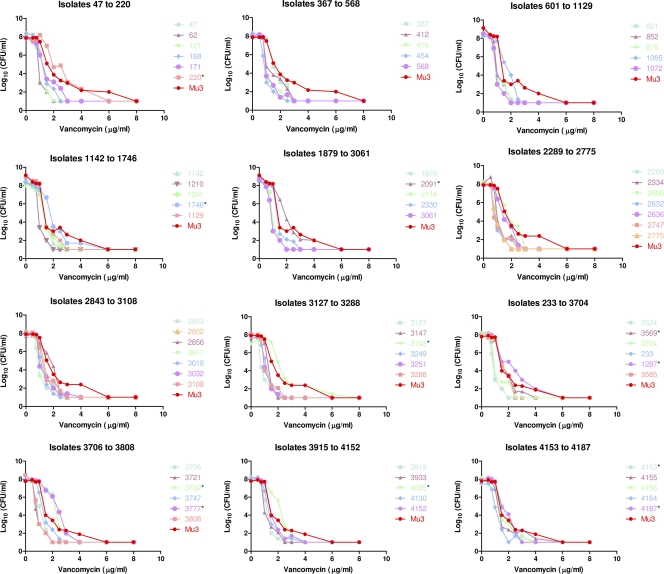
The prevalence of heterogeneous intermediate-level resistance to vancomycin (hVISA) in Staphylococcus aureus was assessed by screening a large collection of recent isolates. Susceptibility testing by the Clinical and Laboratory Standards Institute broth microdilution method and the Etest GRD (glycopeptide resistance detection) method (bioMérieux) was performed on 4,210 clinically significant S. aureus isolates obtained in 2009 from 43 U.S. centers. Isolates with Etest GRD-positive results for hVISA were evaluated further by repeat GRD testing and population analysis profiling-area under the curve (PAP-AUC) analysis. No VISA (vancomycin MIC, 4 to 8 μg/ml) or vancomycin-resistant (MIC ≥ 16 μg/ml) strains were detected. The Etest GRD screen for hVISA was initially positive for 68 isolates (1.6%; all by teicoplanin MIC ≥ 8 μg/ml at 24 or 48 h). Among those 68 isolates, 45 were reproducibly GRD positive. PAP-AUC testing confirmed only 11 isolates as hVISA (all had reproducible GRD-positive results). The 11 hVISA isolates were from nine medical centers and appeared genetically diverse (ten different PFGE types). The rates of resistance (including intermediate) for hVISA were as follows: oxacillin, 82%; erythromycin, 82%; clindamycin, 73%; levofloxacin, 73%; trimethoprim-sulfamethoxazole, 9%; and daptomycin, 9%. All hVISA isolates were susceptible to linezolid, tigecycline, and ceftaroline. Our data suggest that the overall prevalence of hVISA in the United States is low (0.3%). The hVISA isolates represented 10.5% of isolates with vancomycin MICs of 2 μg/ml and 0.1% of isolates with vancomycin MICs of 1 μg/ml. The positive predictive value of GRD Etest for hVISA was 16.2% for initial screen positive and 24.4% for reproducibly positive results.
Figures
References
-
- Charles P. G., Ward P. B., Johnson P. D., Howden B. P., Grayson M. L. 2004. Clinical features associated with bacteremia due to heterogeneous vancomycin-intermediate Staphylococcus aureus. . Clin. Infect. Dis. 38:448–451 - PubMed
-
- Clinical and Laboratory Standards Institute. 2009. Methods for dilution antimicrobial susceptibility tests for bacteria that grow aerobically; approved standard, 8th ed. CLSI document M7–A8. CLSI, Wayne, PA.
-
- Clinical and Laboratory Standards Institute. 2009. Performance standards for antimicrobial susceptibility testing; 19th informational supplement. CLSI document M100–S19. CLSI, Wayne, PA.
-
- Garnier F., et al. 2006. A 1 year surveillance study of glycopeptide-intermediate Staphylococcus aureus strains in a French hospital. J. Antimicrob. Agents Chemother. 57:146–149 - PubMed
Publication types
MeSH terms
Substances
LinkOut - more resources
Full Text Sources
Medical
Research Materials
Miscellaneous