


New perspectives on adolescent motivated behavior: attention and conditioning
- PMID: 21977221
- PMCID: PMC3184422
- DOI: 10.1016/j.dcn.2011.07.013
New perspectives on adolescent motivated behavior: attention and conditioning
Abstract
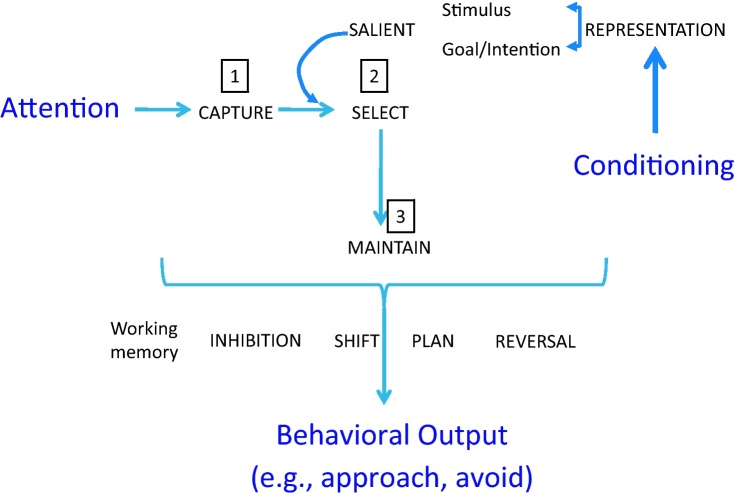
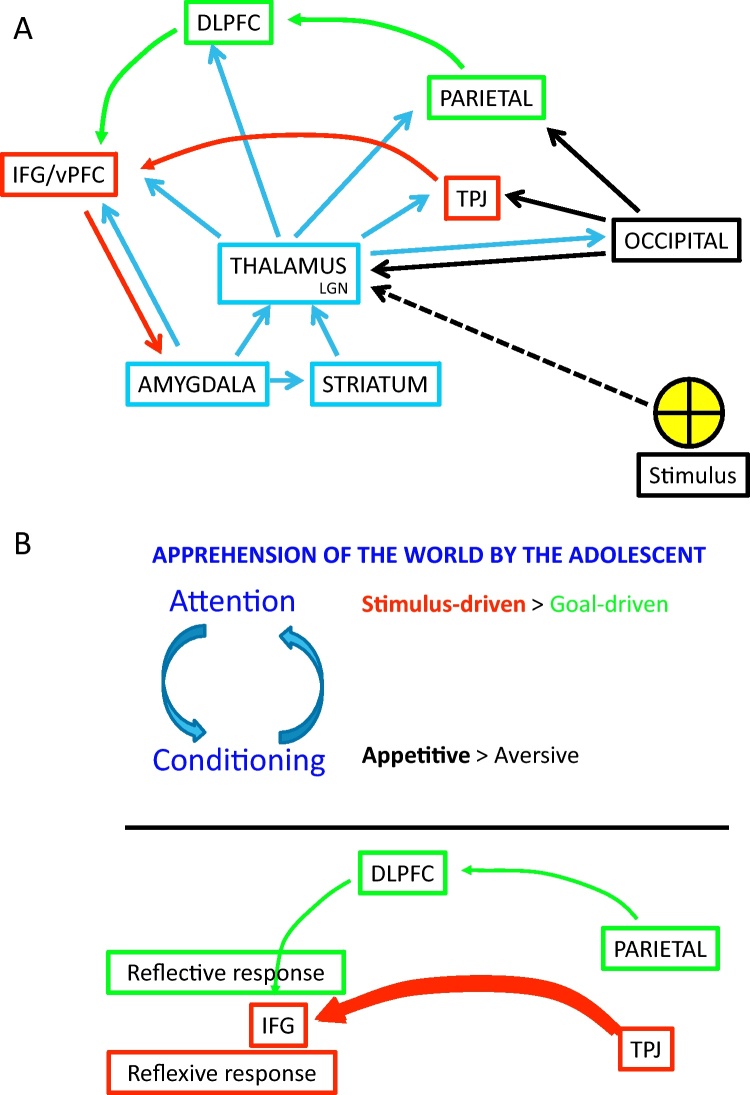
Adolescence is a critical transition period, during which fundamental changes prepare the adolescent for becoming an adult. Heuristic models of the neurobiology of adolescent behavior have emerged, promoting the central role of reward and motivation, coupled with cognitive immaturities. Here, we bring focus to two basic sets of processes, attention and conditioning, which are essential for adaptive behavior. Using the dual-attention model developed by Corbetta and Shulman (2002), which identifies a stimulus-driven and a goal-driven attention network, we propose a balance that favors stimulus-driven attention over goal-driven attention in youth. Regarding conditioning, we hypothesize that stronger associations tend to be made between environmental cues and appetitive stimuli, and weaker associations with aversive stimuli, in youth relative to adults. An attention system geared to prioritize stimulus-driven attention, together with more powerful associative learning with appetitive incentives, contribute to shape patterns of adolescent motivated behavior. This proposed bias in attention and conditioning function could facilitate the impulsive, novelty-seeking and risk-taking behavior that is typical of many adolescents.
Figures
References
-
- Abel L.A., Troost B.T., Dell’Osso L.F. The effects of age on normal saccadic characteristics and their variability. Vision Research. 1983;23:33–37. - PubMed
-
- Arnett J. Reckless behavior in adolescence: a developmental perspective. Developmental Review. 1992;12:339–373.
-
- Badanich K.A., Adler K.J., Kirstein C.L. Adolescents differ from adults in cocaine conditioned place preference and cocaine-induced dopamine in the nucleus accumbens septi. European Journal of Pharmacology. 2006;550:95–106. - PubMed
Publication types
MeSH terms
Grants and funding
LinkOut - more resources
Full Text Sources
Medical
