Review
. 2011 Dec;36(12):642-52.
doi: 10.1016/j.tibs.2011.08.009. Epub 2011 Oct 4.

BAX unleashed: the biochemical transformation of an inactive cytosolic monomer into a toxic mitochondrial pore

Affiliations
Review

BAX unleashed: the biochemical transformation of an inactive cytosolic monomer into a toxic mitochondrial pore

Loren D Walensky et al. Trends Biochem Sci. 2011 Dec.

Abstract

BAX, the BCL-2-associated X protein, is a cardinal proapoptotic member of the BCL-2 family, which regulates the critical balance between cellular life and death. Because so many medical conditions can be categorized as diseases of either too many or too few cells, dissecting the biochemistry of BCL-2 family proteins and developing pharmacological strategies to target them have become high priority scientific objectives. Here, we focus on BAX, a latent, cytosolic and monomeric protein that transforms into a lethal mitochondrial oligomer in response to cellular stress. New insights into the structural location of BAX's 'on switch', and the multi-step conformational changes that ensue upon BAX activation, are providing fresh opportunities to modulate BAX for potential benefit in human diseases characterized by pathologic cell survival or unwanted cellular demise.


Figures

Figure 1
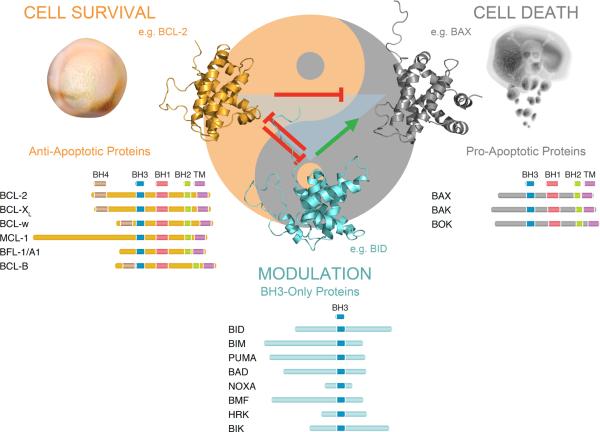
Figure 1. The BCL-2 Family of Anti- and Pro-Apoptotic Proteins
The BCL-2 family comprises three classes of apoptotic proteins, which participate in an interaction network that controls the critical balance between cellular life and death. Multi-BCL-2 homology (BH) domain anti-apoptotic proteins promote cell survival by heterodimerizing with and blocking the oligomerization of multi-BH domain pro-apoptotic proteins and by neutralizing BH3-only proteins. The proapoptotic BH3-only subclass modulates the multi-BH domain proteins through engagement by their single conserved BH3 domain. Walensky and Gavathiotis Figure 01
Figure 2
Figure 2. BCL-2 Family Signaling Dynamics
Mitochondrial apoptosis is regulated by the BH3 domain interactions of apoptotic proteins. In response to stress stimuli, BH3-only proteins promote BAX activation through direct and indirect mechanisms. Select BH3-only proteins bind directly to BAX and trigger its conformational activation, leading to mitochondrial translocation, oligomerization, and permeabilization of the mitochondrial outer membrane. BH3-only proteins also promote BAX oligomerization indirectly by targeting the BH3-binding pocket of anti-apoptotic proteins, releasing BH3-only direct activators and conformationally-active forms of BAX that were sequestered in heterodimeric complex. Conversely, anti-apoptotic proteins prevent BAX-mediated mitochondrial apoptosis by impounding the pro-apoptotic BH3 domains of BH3-only proteins and conformationally-active BAX in a surface groove, effectively suppressing BH3-only direct BAX activation and BAX oligomerization, respectively. Walensky and Gavathiotis Figure 02
Figure 3
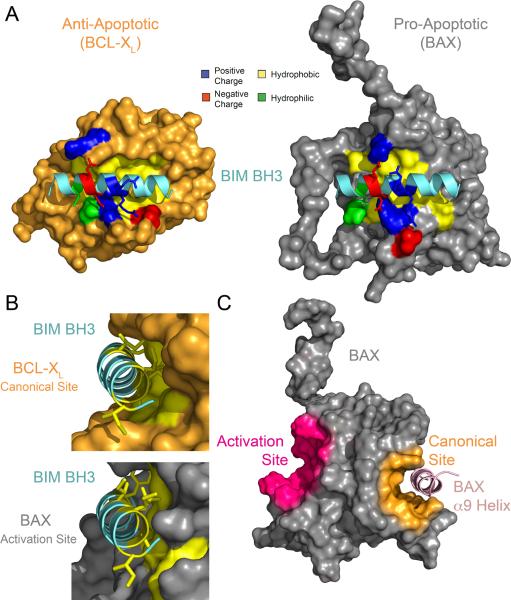
Figure 3. The BH3 Binding Sites of Apoptotic Proteins
The BIM BH3 interaction site on pro-apoptotic BAX is topographically similar but geographically distinct from that on anti-apoptotic BCL-XL. (A) The BH3 interaction sites at the C-terminal face of BCL-XL and N-terminal face of BAX share a similar orientation of polar, positively charged, and negatively charged residues that engage complementary residues of the BIM BH3 α-helix. (B) The bulk of the BIM BH3 binding interfaces with BCL-XL and BAX comprise extensive contacts between the hydrophobic face of the α-helix and the hydrophobic cleft formed at the protein surface by a confluence of residues from BCL-XL α-helices 2, 4, 5, 7, and 8, and BAX α-helices 1 and 6. (C) In the inactive, monomeric form of BAX, the canonical BH3 binding pocket is occupied by BAX's C-terminal α9 helix. By contrast, the surface groove of the BAX activation site, located on the opposite side of the protein, is accessible for BH3 triggering. Walensky and Gavathiotis Figure 03
Figure 4
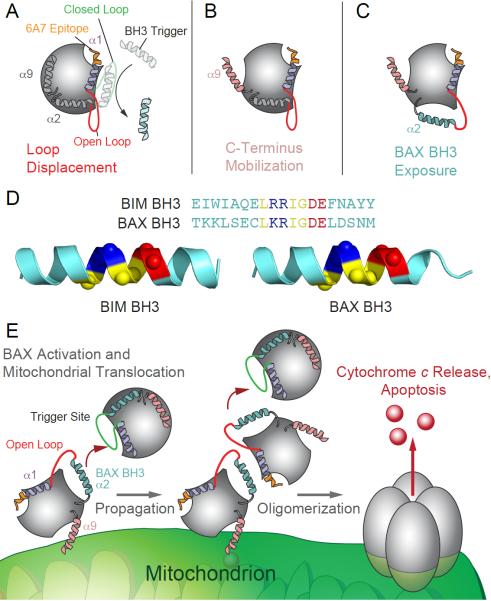
Figure 4. The BH3-triggered Direct BAX Activation Pathway
BAX activation is triggered by BIM BH3 and self-propagated by BAX BH3 through direct engagement of the α1/α6 binding site. (A) The triggering interaction between BIM BH3 and BAX unleashes a series of structural changes, starting with displacement of the α1-α2 loop, converting it from a closed (green) to an open (red) position, and resultant exposure of the 6A7 activation epitope (orange). The BIM BH3 binding interaction and initiating conformational change at the N-terminal face induces (B) the mobilization of BAX's C-terminal mitochondrial membrane insertion helix (pink) and (C) exposure of the hydrophobic interaction surface of the BAX BH3 domain (cyan). (D) Sequence and structural alignments of the BIM and BAX BH3 domains demonstrate striking amino acid identity and orientation of the core BH3 sequences that engage the BAX trigger site. (E) Consequently, once triggered, BAX propagates its activation through interactions between the exposed BAX BH3 domain of fully activated monomers and the α1/α6 binding site of inactive monomers. BAX assembles into a structurally undefined homo-oligomeric pore that promotes apoptosis by releasing mitochondrial factors such as cytochrome c. Walensky and Gavathiotis Figure 04

References

    1. Pegoraro L, et al. A 14;18 and an 8;14 chromosome translocation in a cell line derived from an acute B-cell leukemia. Proc Natl Acad Sci U S A. 1984;81:7166–7170. - PMC - PubMed
    1. Bakhshi A, et al. Cloning the chromosomal breakpoint of t(14;18) human lymphomas: clustering around JH on chromosome 14 and near a transcriptional unit on 18. Cell. 1985;41:899–906. - PubMed
    1. Cleary ML, Sklar J. Nucleotide sequence of a t(14;18) chromosomal breakpoint in follicular lymphoma and demonstration of a breakpoint-cluster region near a transcriptionally active locus on chromosome 18. Proc Natl Acad Sci U S A. 1985;82:7439–7443. - PMC - PubMed
    1. Tsujimoto Y, et al. Cloning of the chromosome breakpoint of neoplastic B cells with the t(14;18) chromosome translocation. Science. 1984;226:1097–1099. - PubMed
    1. McDonnell TJ, et al. bcl-2-immunoglobulin transgenic mice demonstrate extended B cell survival and follicular lymphoproliferation. Cell. 1989;57:79–88. - PubMed

Publication types

Substances