


(In)activity-dependent alterations in resting and reflex control of splanchnic sympathetic nerve activity
- PMID: 21979802
- PMCID: PMC3233897
- DOI: 10.1152/japplphysiol.00961.2011
(In)activity-dependent alterations in resting and reflex control of splanchnic sympathetic nerve activity
Abstract
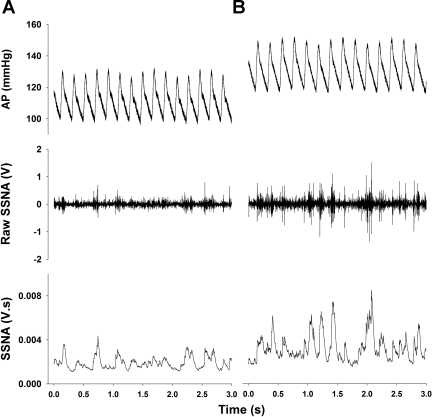
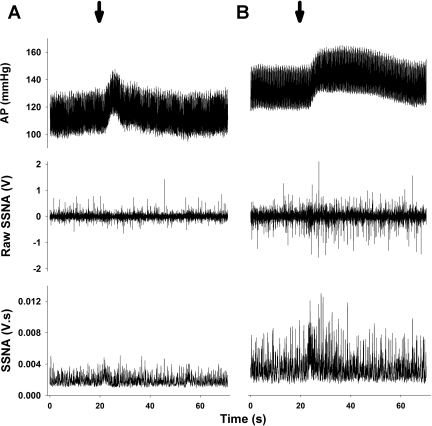
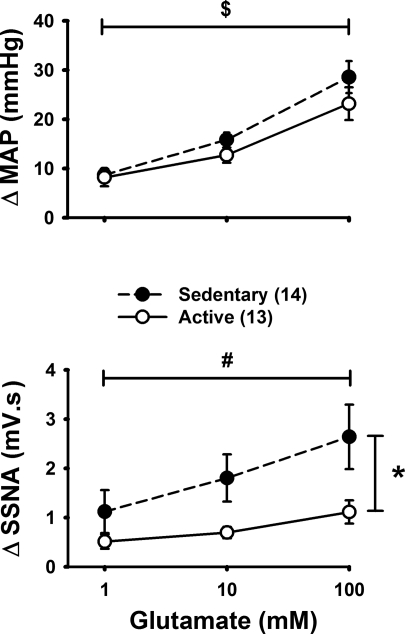
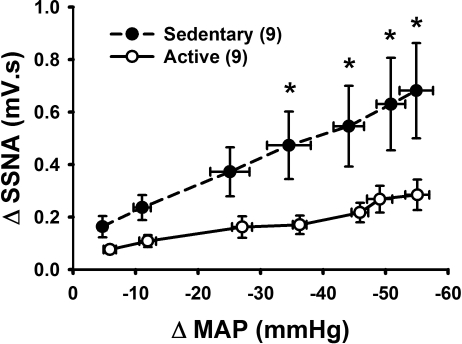
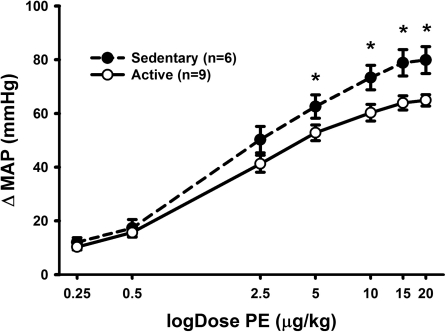
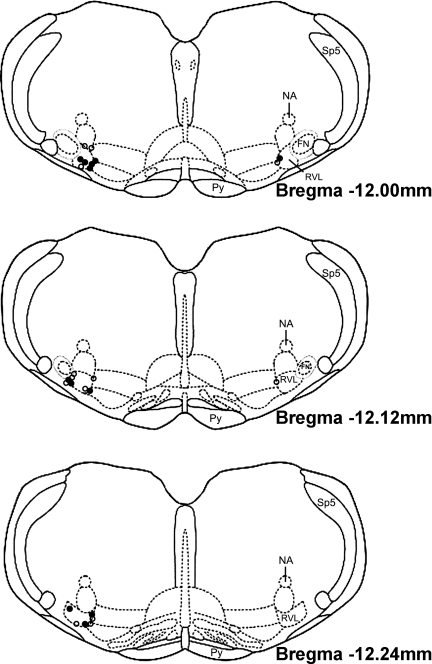
The negative effects of sympathetic overactivity on long-term cardiovascular health are becoming increasingly clear. Moreover, recent work done in animal models of cardiovascular disease suggests that sympathetic tone to the splanchnic vasculature may play an important role in the development and maintenance of these disease states. Work from our laboratory and others led us to hypothesize that a lack of chronic physical activity increases resting and reflex-mediated splanchnic sympathetic nerve activity, possibly through changes occurring in a key brain stem center involved in sympathetic regulation, the rostral ventrolateral medulla (RVLM). To address this hypothesis, we recorded mean arterial pressure (MAP) and splanchnic sympathetic nerve activity (SSNA) in a group of active and sedentary animals that had been housed for 10-13 wk with or without running wheels, respectively. In experiments performed under Inactin anesthesia, we tested responses to RVLM microinjections of glutamate, responses to baroreceptor unloading, and vascular reactivity, the latter of which was performed under conditions of autonomic blockade. Sedentary animals exhibited enhanced resting SSNA and MAP, augmented increases in SSNA to RVLM activation and baroreceptor unloading, and enhanced vascular reactivity to α(1)-receptor mediated vasoconstriction. Our results suggest that a sedentary lifestyle increases the risk of cardiovascular disease by augmenting resting and reflex-mediated sympathetic output to the splanchnic circulation and also by increasing vascular sensitivity to adrenergic stimulation. We speculate that regular physical exercise offsets or reverses the progression of these disease processes via similar or disparate mechanisms and warrant further examination into physical (in)activity-induced sympathetic nervous system plasticity.
Figures
References
-
- Adams JM, Madden CJ, Sved AF, Stocker SD. Increased dietary salt enhances sympathoexcitatory and sympathoinhibitory responses from the rostral ventrolateral medulla. Hypertension 50: 354–359, 2007 - PubMed
-
- Blair SN. Physical inactivity: the biggest public health problem of the 21st century. Br J Sports Med 43: 1–2, 2009 - PubMed
-
- Blomqvist CG, Saltin B. Cardiovascular adaptations to physical training. Ann Rev Physiol 45: 169–189, 1983 - PubMed
-
- Burgi K, Cavalleri MT, Alves AS, Britto LR, Antunes VR, Michelini LC. Tyrosine hydroxylase immunoreactivity as indicator of sympathetic activity: simultaneous evaluation in different tissues of hypertensive rats. Am J Physiol Regul Integr Comp Physiol 300: R264–R271, 2011 - PubMed
-
- Burke SL, Lambert E, Head GA. New approaches to quantifying sympathetic nerve activity. Curr Hypertens Rep 13: 249–257, 2011 - PubMed
Publication types
MeSH terms
Substances
Grants and funding
LinkOut - more resources
Full Text Sources
