doi: 10.1038/embor.2011.195.
Natural immunity. Biodiversity loss and inflammatory diseases are two global megatrends that might be related
Affiliations
- PMID: 21979814
- PMCID: PMC3207110
- DOI: 10.1038/embor.2011.195
Item in Clipboard
Natural immunity. Biodiversity loss and inflammatory diseases are two global megatrends that might be related
EMBO Rep.
.
No abstract available
Conflict of interest statement
The authors declare that they have no conflict of interest.
Figures

Two global megatrends in biodiversity and public health. (A) Declining biodiversity since 1970 as measured by three indices. LPI, Living Planet Index; WBI, World Bird Index; WPSI, Waterbird Population Status Index (Butchart et al, 2010). (B) Increasing trends in the prevalence of inflammatory diseases. Asthma and allergic rhinitis among military conscripts from 1966 to 2003 (Latvala et al, 2005) are shown as an example.
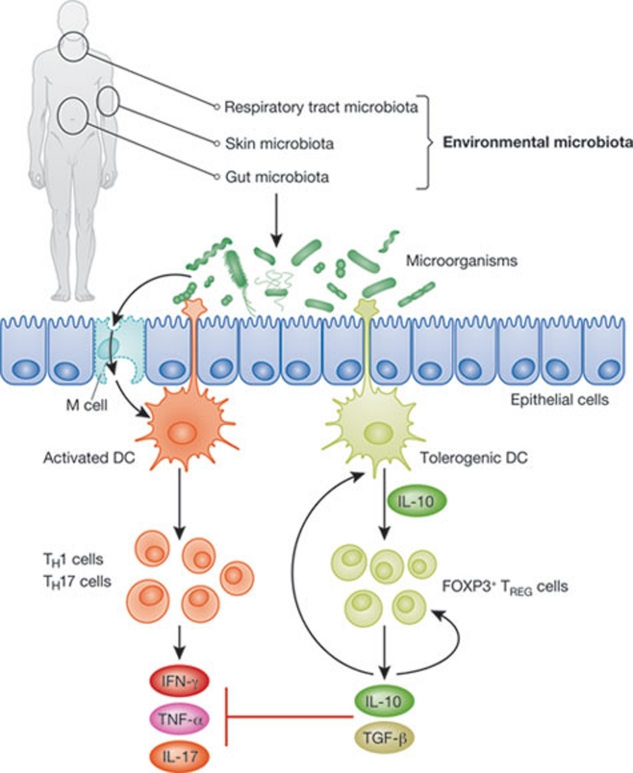
Epithelial cells in the respiratory tract, skin and gut are constantly exposed to both environmental and indigenous microorganisms. In addition to active transport of antigens by specialized gut epithelial cells (M cells) and their constant sampling by dendritic cells (DCs), epithelial cells recognize bacterial antigens directly through Toll-like receptors. Similarly to mucosal epithelial cells, skin epidermal cells, keratinocytes and Langerhans cells, also express a broad range of Toll-like receptors. In steady-state conditions, TREG cells, through continuous stimulation of epithelial and innate immune cells, prevent inappropriate inflammatory responses by IL-10/TGF-β production. Microorganisms might also be involved in the epigenetic modulation of immune responses. FOXP3, forkhead box P3; IL, interleukin; IFN-γ, interferon-γ; TGF-β, transforming growtth factor-β; TNF-α, tumour necrosis factor-α.
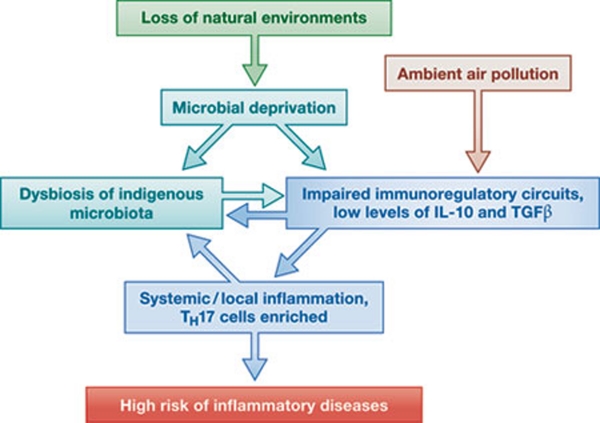
In the absence of sufficient microbial stimuli, immunoregulatory circuits are not induced adequately resulting in low levels of interleukin (IL)-10/transforming growth factor (TGF)-β. An inflammatory milieu, in turn, enhances the conversion of TREG cells to TH17 cells and favours the enrichment of bacteria in the gut (and other microbiota) that tolerate inflammatory mediators, creating a self-perpetuating system. Ambient air pollution might act in synergy and further strengthen immune dysregulation by inactivating FOXP3+ TREG cells by epigenetic mechanisms. Together, these factors probably contribute to the increase in inflammatory diseases in developed countries.

Leena von Hertzen

Tari Haahtela

Ilkka Hanski
References
-
- Alenius H et al. (2008) Contrasting immunological effects of two disparate dusts—preliminary observations. Int Arch Allergy Immunol 149: 81–90 - PubMed
-
- Butchart S et al. (2010) Global biodiversity: indicators of recent decline. Science 328: 1164–1168 - PubMed
-
- Casimir GJ, Jean-Louis G, Butler S, Zizi F, Nunes J, Brady L (2010) Perceived insomnia, anxiety, and depression among older Russian immigrants. Psychol Rep 106: 589–597 - PubMed
MeSH terms
Grants and funding
LinkOut - more resources
Full Text Sources