


Immunogenic Eimeria tenella glycosylphosphatidylinositol-anchored surface antigens (SAGs) induce inflammatory responses in avian macrophages
- PMID: 21980402
- PMCID: PMC3182191
- DOI: 10.1371/journal.pone.0025233
Immunogenic Eimeria tenella glycosylphosphatidylinositol-anchored surface antigens (SAGs) induce inflammatory responses in avian macrophages
Abstract
Background: At least 19 glycosylphosphatidylinositol (GPI)-anchored surface antigens (SAGs) are expressed specifically by second-generation merozoites of Eimeria tenella, but the ability of these proteins to stimulate immune responses in the chicken is unknown.
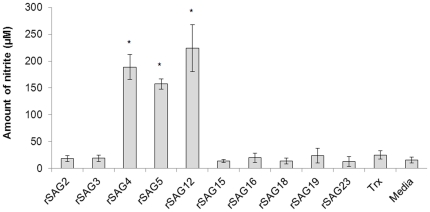
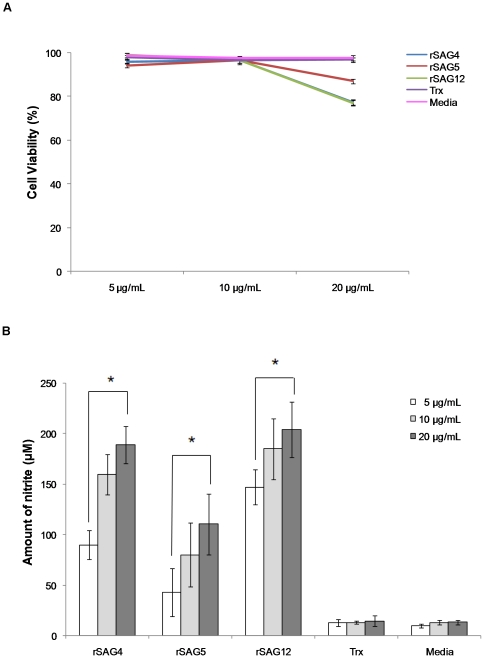
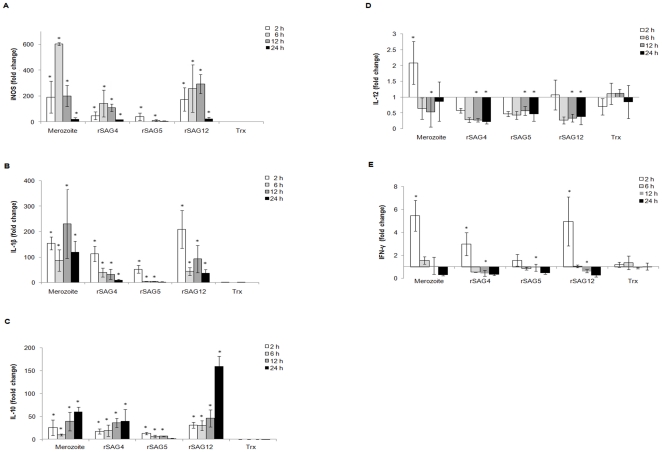
Methodology/principal findings: Ten SAGs, belonging to two previously defined multigene families (A and B), were expressed as soluble recombinant (r) fusion proteins in E. coli. Chicken macrophages were treated with purified rSAGs and changes in macrophage nitrite production, and in mRNA expression profiles of inducible nitric oxide synthase (iNOS) and of a panel of cytokines were measured. Treatment with rSAGs 4, 5, and 12 induced high levels of macrophage nitric oxide production and IL-1β mRNA transcription that may contribute to the inflammatory response observed during E. tenella infection. Concomitantly, treatment with rSAGs 4, 5 and 12 suppressed the expression of IL-12 and IFN-γ and elevated that of IL-10, suggesting that during infection these molecules may specifically impair the development of cellular mediated immunity.
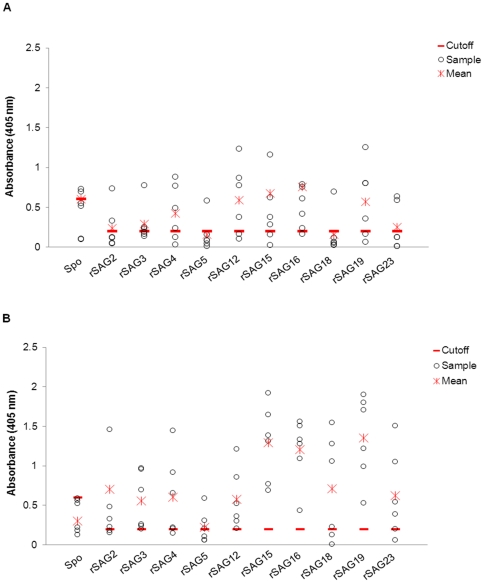
Conclusions/significance: In summary, some E. tenella SAGs appear to differentially modulate chicken innate and humoral immune responses and those derived from multigene family A (especially rSAG 12) may be more strongly linked with E. tenella pathogenicity associated with the endogenous second generation stages.
Conflict of interest statement
Figures
References
-
- Dalloul RA, Lillehoj HS. Poultry coccidiosis: recent advancements in control measures and vaccine development. Expert Rev Vaccines. 2006;5:143–163. - PubMed
-
- Fernando MA, Lawn AM, Rose ME, Al-Attar MA. Invasion of chicken caecal and intestinal lamina propria by crypt epithelial cells infected with coccidian. Parasitol. 1983;86:391–398. - PubMed
-
- Allen P. Nitric oxide production during Eimeria tenella infections in chickens. Poult Sci. 1997;76:810–813. - PubMed
-
- McDonald V, Wisher MH, Rose ME, Jeffers TK. Eimeria tenella: immunological diversity between asexual generations. Parasite Immunol. 1988;10:649–60. - PubMed
-
- Constantinoiu CC, Molloy JB, Jorgensen WK, Coleman GT. Antibody response against endogenous stages of an attenuated strain of Eimeria tenella. Vet Parasitol. 2008;154:193–204. - PubMed
Publication types
MeSH terms
Substances
Grants and funding
LinkOut - more resources
Full Text Sources
