Comparative Study
. 2011 Dec 15;257(3):377-87.
doi: 10.1016/j.taap.2011.09.021. Epub 2011 Sep 29.

Differential state-dependent modification of rat Na(v)1.6 sodium channels expressed in human embryonic kidney (HEK293) cells by the pyrethroid insecticides tefluthrin and deltamethrin

Affiliations
Comparative Study

Differential state-dependent modification of rat Na(v)1.6 sodium channels expressed in human embryonic kidney (HEK293) cells by the pyrethroid insecticides tefluthrin and deltamethrin

Bingjun He et al. Toxicol Appl Pharmacol. .

Abstract

We expressed rat Na(v)1.6 sodium channels in combination with the rat β1 and β2 auxiliary subunits in human embryonic kidney (HEK293) cells and evaluated the effects of the pyrethroid insecticides tefluthrin and deltamethrin on expressed sodium currents using the whole-cell patch clamp technique. Both pyrethroids produced concentration-dependent, resting modification of Na(v)1.6 channels, prolonging the kinetics of channel inactivation and deactivation to produce persistent "late" currents during depolarization and tail currents following repolarization. Both pyrethroids also produced concentration dependent hyperpolarizing shifts in the voltage dependence of channel activation and steady-state inactivation. Maximal shifts in activation, determined from the voltage dependence of the pyrethroid-induced late and tail currents, were ~25mV for tefluthrin and ~20mV for deltamethrin. The highest attainable concentrations of these compounds also caused shifts of ~5-10mV in the voltage dependence of steady-state inactivation. In addition to their effects on the voltage dependence of inactivation, both compounds caused concentration-dependent increases in the fraction of sodium current that was resistant to inactivation following strong depolarizing prepulses. We assessed the use-dependent effects of tefluthrin and deltamethrin on Na(v)1.6 channels by determining the effect of trains of 1 to 100 5-ms depolarizing prepulses at frequencies of 20 or 66.7Hz on the extent of channel modification. Repetitive depolarization at either frequency increased modification by deltamethrin by ~2.3-fold but had no effect on modification by tefluthrin. Tefluthrin and deltamethrin were equally potent as modifiers of Na(v)1.6 channels in HEK293 cells using the conditions producing maximal modification as the basis for comparison. These findings show that the actions of tefluthrin and deltamethrin of Na(v)1.6 channels in HEK293 cells differ from the effects of these compounds on Na(v)1.6 channels in Xenopus oocytes and more closely reflect the actions of pyrethroids on channels in their native neuronal environment.


Conflict of interest statement

Conflict of Interest Statements for Authors

Neither B. He nor D. M. Soderlund have conflicts of interest regarding the research described in this manuscript.

Figures
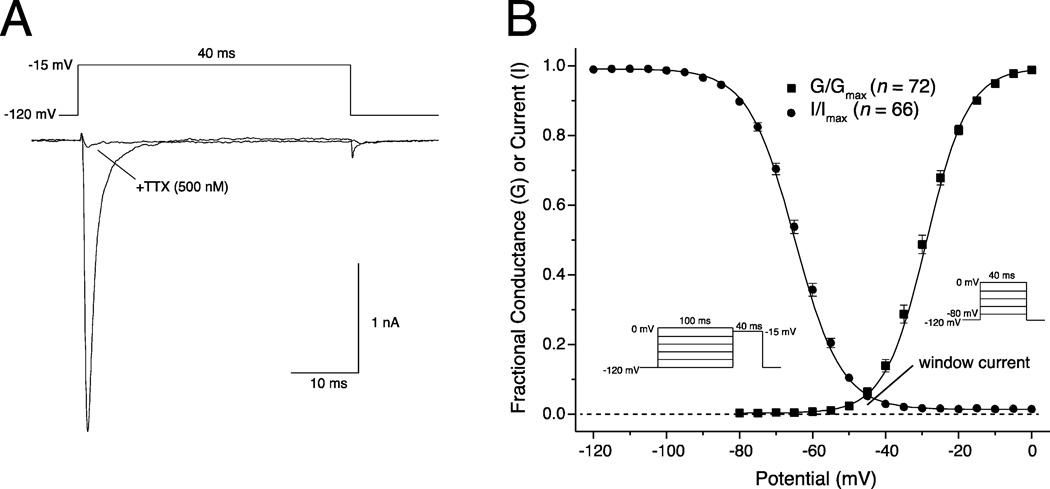
Fig. 1
Fig. 1
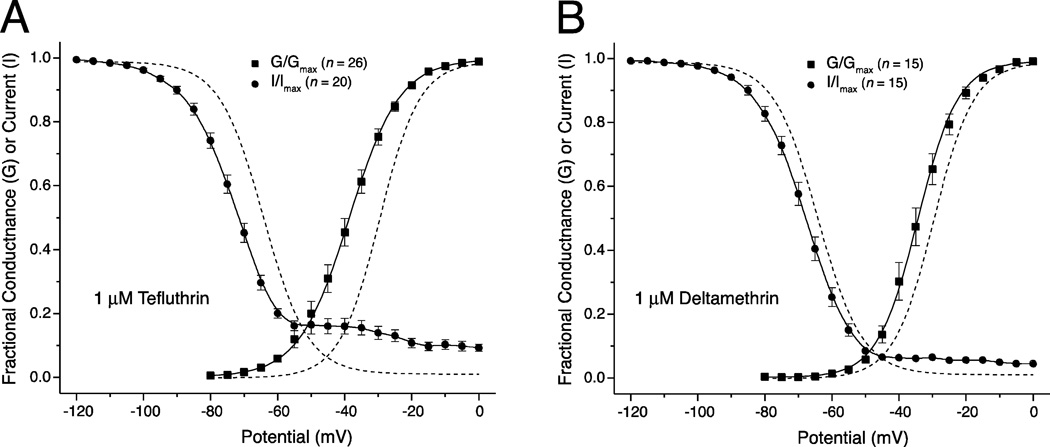
Properties of sodium currents expressed in HEK-Nav1.6 cells. (A) Representative current trace recorded during a 40-ms step depolarization from −120 mV to −15 mV before and after application of TTX (500 nM) in the perfusion medium. (B) Voltage dependence of activation and steady-state inactivation. For activation, normalized conductance (G/Gmax) was derived from the current-voltage relationship obtained using the indicated pulse protocol by dividing peak transient current (INa) by the driving force (VVrev) and normalizing to the maximum conductance observed in each cell. For inactivation, peak transient currents were measured using the indicated pulse protocol and normalized to the maximal peak transient current in each experiment (I/Imax). Values for G/Gmax and I/Imax were plotted as a function of test (activation) or prepulse (inactivation) potential and curves were drawn by fitting mean values to the Boltzmann equation. Values are the means of the indicated number of determinations with different cells; bars show SE values larger than the data point symbols. The dashed line indicates zero conductance or current.
Fig. 2
Fig. 2
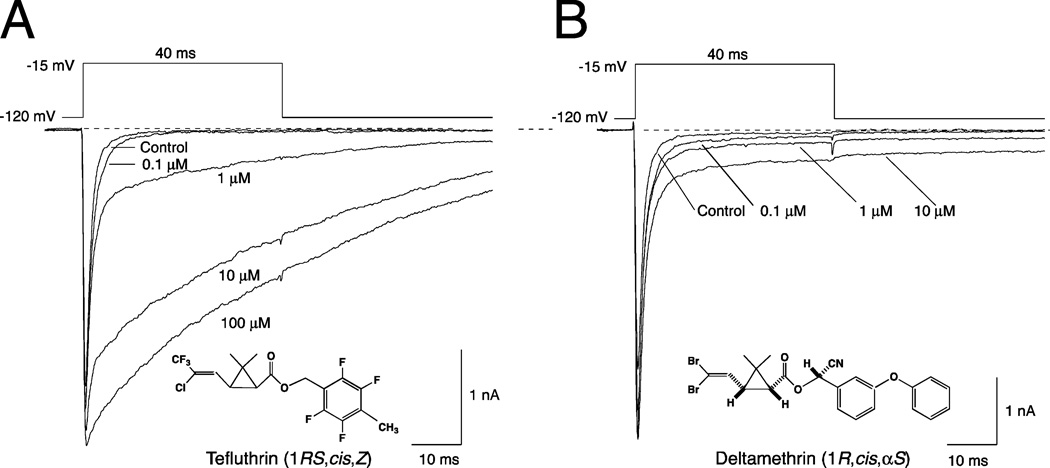
Concentration-dependent modification of sodium currents in HEK-Nav1.6 cells by tefluthrin (A) and deltamethrin (B). Traces for each compound were recorded from a single cell prior to pyrethroid exposure (control) and following equilibration with increasing concentrations of pyrethroid. Dashed lines indicate zero current.
Fig. 3
Fig. 3
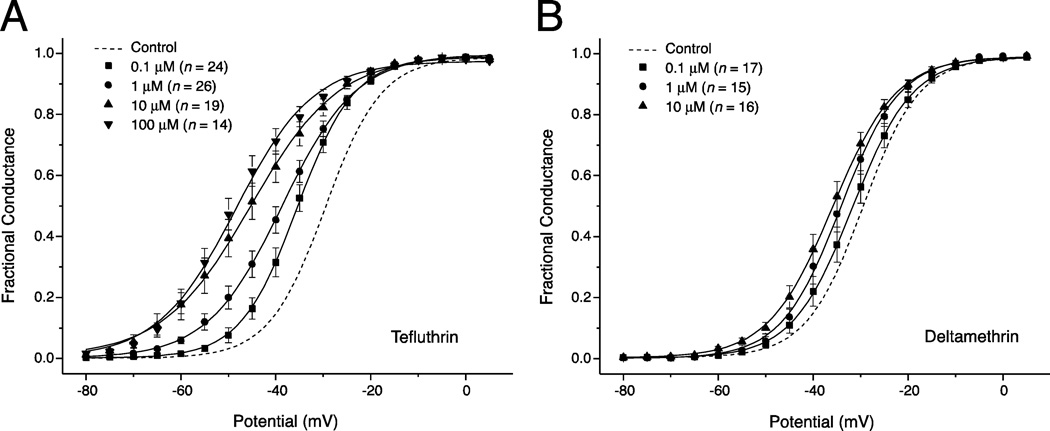
Concentration-dependent modification of the voltage dependence of activation of sodium channels in HEK-Nav1.6 cells by tefluthrin (A) and deltamethrin (B). Values for the conductance of peak sodium current were plotted as a function of test potential and curves were drawn by fitting mean values to the Boltzmann equation. Values are the means of the indicated number of determinations with different cells; bars show SE values larger than the data point symbols. Dashed lines show the curve obtained by fitting mean control values to the Boltzmann equation (from Fig. 1B).
Fig. 4
Fig. 4
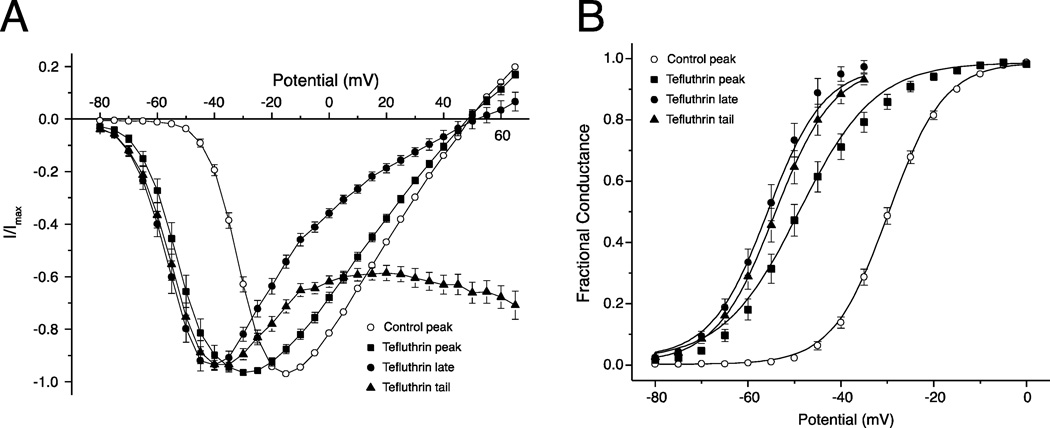
Comparison of the voltage dependence of the peak, late and tail currents induced by 100 µM tefluthrin. (A) Normalized current – voltage plots for control peak sodium currents and for the peak currents (as in Fig. 3A), late currents (measured at the end of a 40-ms depolarizing pulse) and tail currents (measured immediately following repolarization) following exposure to tefluthrin. Values are the means of 72 (control) or 14 (+tefluthrin) determinations with different cells; bars show SE values larger than the data point symbols. (B) Plots of the conductance transformations of data in Fig. 4A; curves were drawn by fitting mean values to the Boltzmann equation.
Fig. 5
Fig. 5
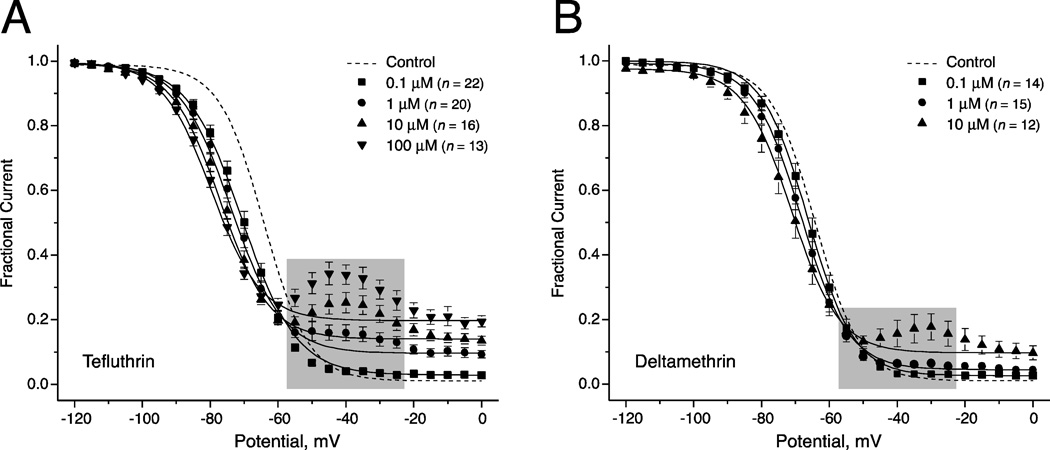
Concentration-dependent modification of the voltage dependence of steady-state inactivation of sodium channels in HEK-Nav1.6 cells by tefluthrin (A) and deltamethrin (B). Normalized amplitudes of peak sodium currents were plotted as a function of test potential and curves were drawn by fitting mean values to the Boltzmann equation. Data points in the shaded regions were omitted from the fits of data obtained in the presence of pyrethroids (see text for details). Values are the means of the indicated number of determinations with different cells; bars show SE values larger than the data point symbols. Dashed lines show the curve obtained by fitting mean control values to the Boltzmann equation (from Fig. 1B).
Fig. 6
Fig. 6
Effects of 1 µM tefluthrin (A) and 1 µM deltamethrin (B) on sodium window currents in HEK-Nav1.6 cells. Each panel shows voltage dependence plots for activation and steady-state inactivation in the presence of 1 µM pyrethroid taken from data in Figs. 3 and 5. Dashed lines show the curves obtained by fitting mean control values for activation and steady-state inactivation to the Boltzmann equation (from Fig. 1B).
Fig. 7
Fig. 7
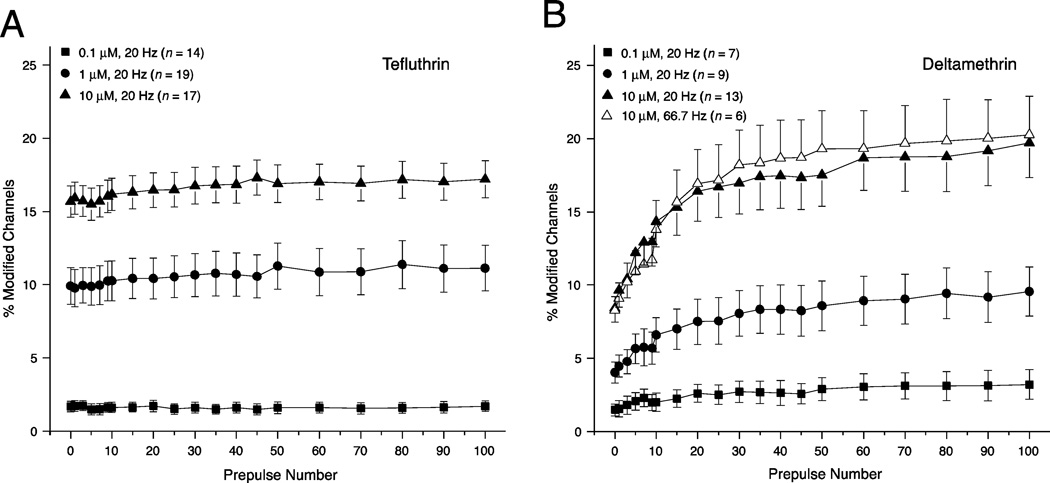
(A) Effects of repeated 5-ms depolarizing prepulses delivered at 20 Hz on the extent of modification of sodium channels in HEK-Nav1.6 cells by tefluthrin. (B) Effects of repeated 5-ms depolarizing prepulses delivered at 20 Hz or 66.7 Hz on the extent of modification of sodium channels in HEK-Nav1.6 cells by deltamethrin. Values are the means of the indicated number of determinations with different cells; bars show SE values larger than the data point symbols.
Fig. 8
Fig. 8
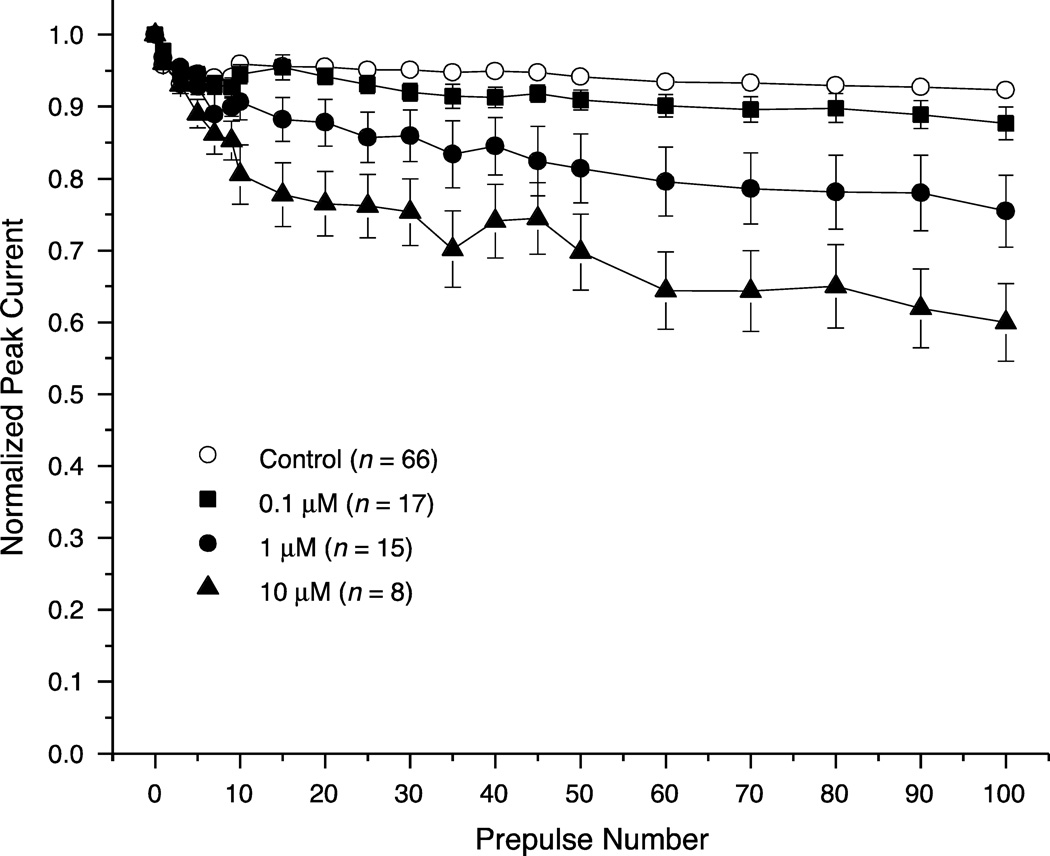
Effects of repeated 5-ms depolarizing prepulses delivered at 20 Hz on the normalized amplitude of peak sodium currents in HEK-Nav1.6 cells before (control) or after exposure to deltamethrin. Values are the means of the indicated number of determinations with different cells; bars show SE values larger than the data point symbols.
Fig. 9
Fig. 9
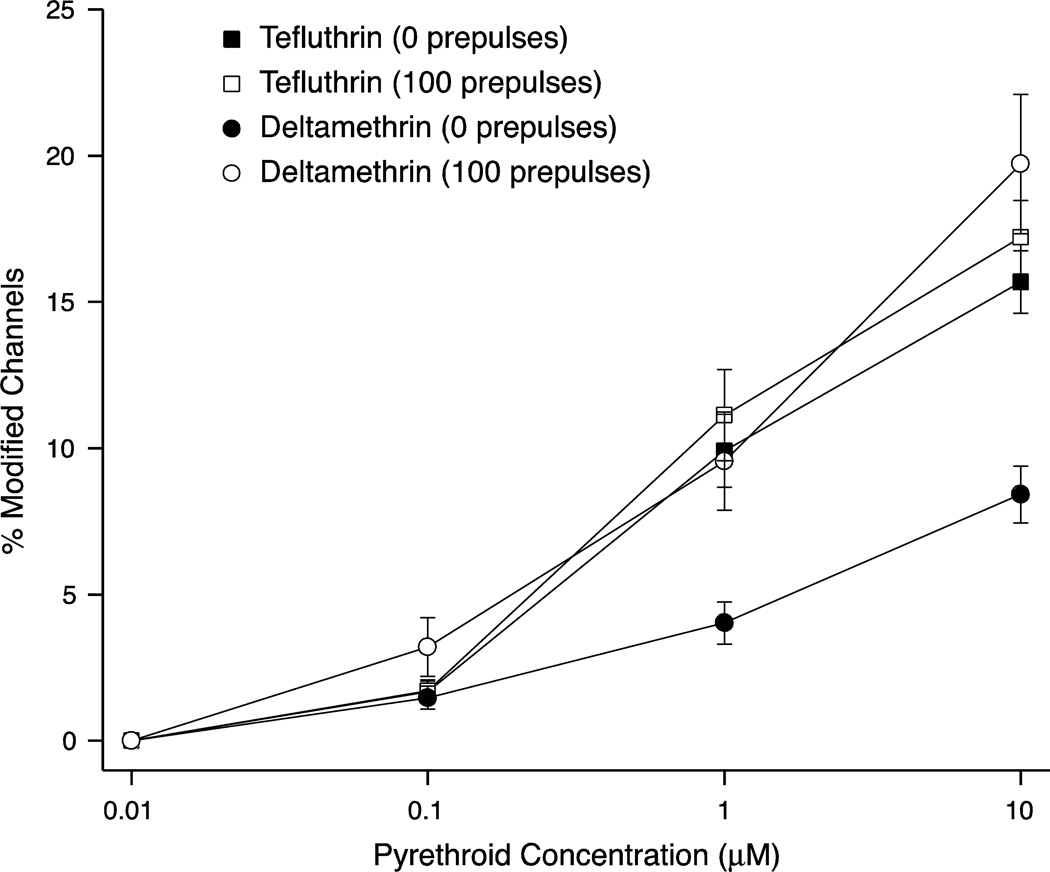
Concentration dependence of resting (0 prepulses) and maximal use-dependent (100 prepulses) modification of sodium channels in HEK-Nav1.6 cells by tefluthrin and deltamethrin. Data points for 0.1, 1 and 10 µM are taken from the plots in Fig. 7.

References

    1. Ahn H-S, Dib-Hajj SD, Cox JJ, Tyrrell L, Elmslie FV, Clarke AA, Drenth JPH, Woods CG, Waxman SG. A new sodium channel gene mutation I234T in a child with severe pain. European Journal of Pain. 2010;14:944–950. - PubMed
    1. Attwell D, Cohen I, Eisner D, Ohba M, Ojeda C. The steady state TTX-sensitive ("window") sodium current in cardiac Purkinje fibres. Pflugers Arch. 1979;379:137–142. - PubMed
    1. Auld VJ, Goldin AL, Krafte DS, Marshall J, Dunn JM, Catterall WA, Lester HA, Davidson N, Dunn RJ. A rat brain Na+ channel α subunit with novel gating properties. Neuron. 1988;1:449–461. - PubMed
    1. Bezanilla F, Armstrong CM. Inactivation of the sodium channel. J. Gen. Physiol. 1977;70:549–566. - PMC - PubMed
    1. Breckenridge CB, Holden L, Sturgess N, Weiner M, Sheets L, Sargent D, Soderlund DM, Choi J-S, Symington S, Clark JM, Burr S, Ray D. Evidence for a separate mechanism of toxicity for the Type I and Type II pyrethroid insecticides. Neurotoxicology. 2009;30:S17–S31. - PubMed

Publication types

MeSH terms

Substances