


SPACE for physical activity--a multicomponent intervention study: study design and baseline findings from a cluster randomized controlled trial
- PMID: 21985278
- PMCID: PMC3202239
- DOI: 10.1186/1471-2458-11-777
SPACE for physical activity--a multicomponent intervention study: study design and baseline findings from a cluster randomized controlled trial
Abstract
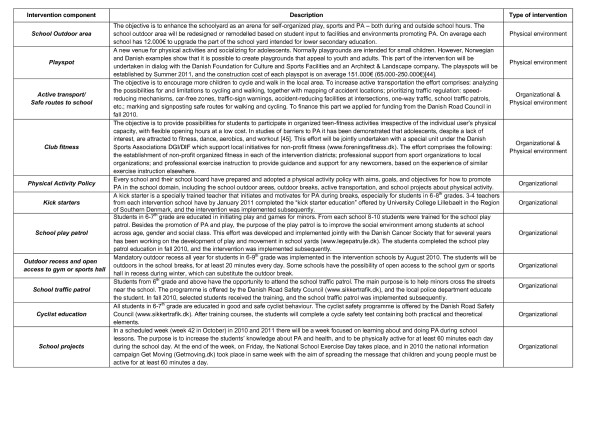
Background: The aim of the School site, Play Spot, Active transport, Club fitness and Environment (SPACE) Study was to develop, document, and assess a comprehensive intervention in local school districts that promote everyday physical activity (PA) among 11-15-year-old adolescents. The study is based on a social ecological framework, and is designed to implement organizational and structural changes in the physical environment.
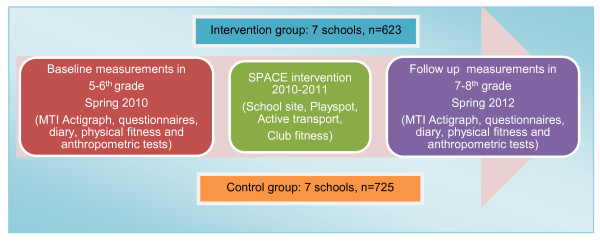
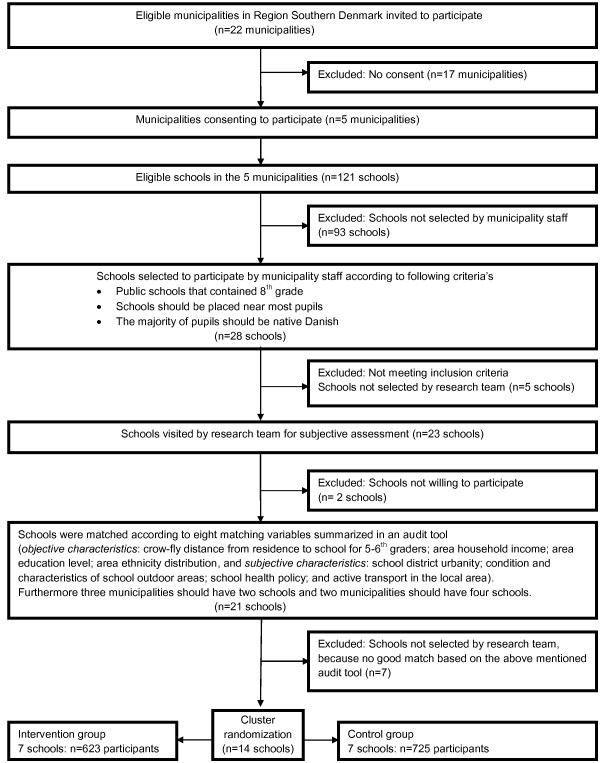
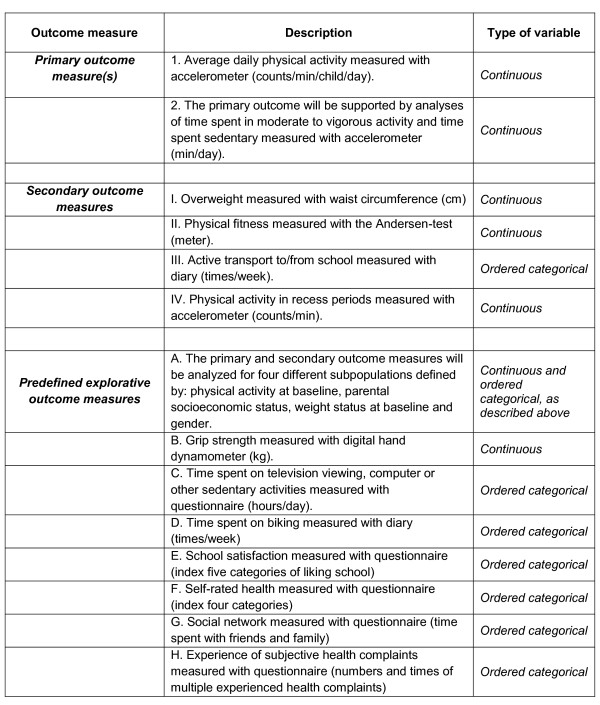
Methods/design: The SPACE Study used a cluster randomized controlled study design. Twenty-one eligible schools in the Region of Southern Denmark were matched and randomized in seven pairs according to eight matching variables summarized in an audit tool (crow-fly distance from residence to school for 5-6th graders; area household income; area education level; area ethnicity distribution; school district urbanity; condition and characteristics of school outdoor areas; school health policy; and active transport in the local area). Baseline measurements with accelerometers, questionnaires, diaries, and physical fitness tests were obtained in Spring 2010 in 5-6th grade in 7 intervention and 7 control schools, with follow-up measurements to be taken in Spring 2012 in 7-8th grade. The primary outcome measure is objective average daily physical activity and will be supported by analyses of time spent in moderate to vigorous activity and time spent sedentary. Other secondary outcome measures will be obtained, such as, overweight, physical fitness, active commuting to/from school and physical activity in recess periods.
Discussion: A total of 1348 adolescents in 5-6th grade in the Region of Southern Denmark participated at baseline (n = 14 schools). The response rate was high in all type of measurements (72.6-97.4%). There were no significant differences between intervention and control groups at baseline according to selected background variables and outcome measures: gender (p = .54), age (p = .17), BMI (p = .59), waist circumference (p = .17), physical fitness (p = .93), and physical activity (accelerometer) (p = .09). The randomization and matched pair design produced equivalent groups according to central outcome measures and background variables. The SPACE for physical activity Study will provide new insights on the effectiveness of multicomponent interventions to improve adolescents' physical activity level.
Trial registration: Current Controlled Trials ISRCTN79122411.
Figures
References
-
- Andersen LB, Sardinha LB, Froberg K, Riddoch CJ, Page AS, Anderssen SA. Fitness, fatness and clustering of cardiovascular risk factors in children from Denmark, Estonia and Portugal: the European Youth Heart Study. Int J Pediatr Obes. 2008;11(Suppl 1):58–66. - PubMed
-
- Andersen LB, Hasselstrom H, Gronfeldt V, Hansen SE, Karsten F. The relationship between physical fitness and clustered risk, and tracking of clustered risk from adolescence to young adulthood: eight years follow-up in the Danish Youth and Sport Study. Int J Behav Nutr Phys Act. 2004;11:6. doi: 10.1186/1479-5868-1-6. - DOI - PMC - PubMed
Publication types
MeSH terms
Associated data
LinkOut - more resources
Full Text Sources
Medical
