


The influence of laparoscopic sleeve gastrectomy on metabolic syndrome parameters in obese patients in own material
- PMID: 21986646
- PMCID: PMC3257432
- DOI: 10.1007/s11695-011-0530-y
The influence of laparoscopic sleeve gastrectomy on metabolic syndrome parameters in obese patients in own material
Abstract
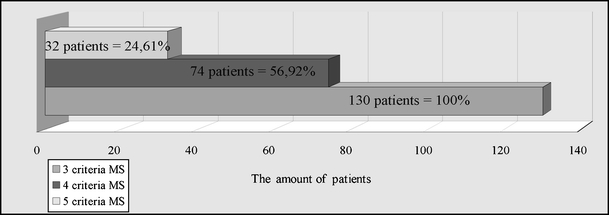
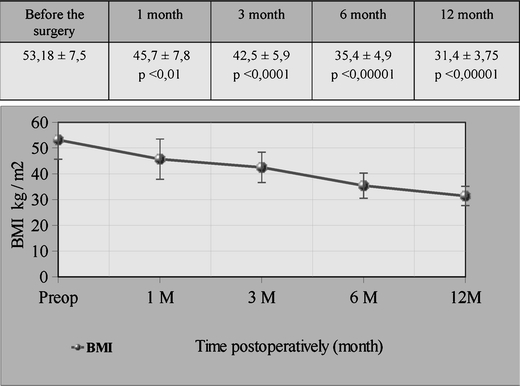
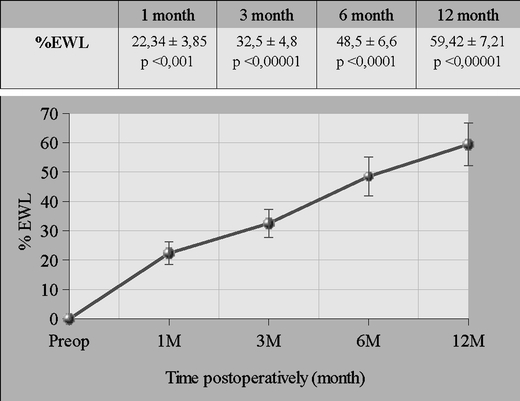
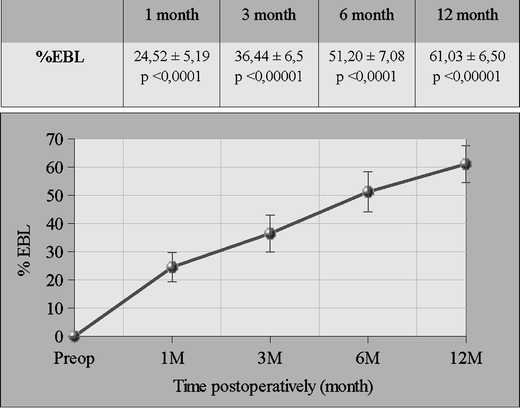
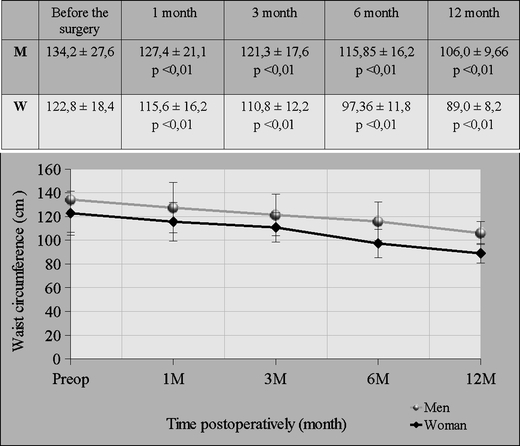
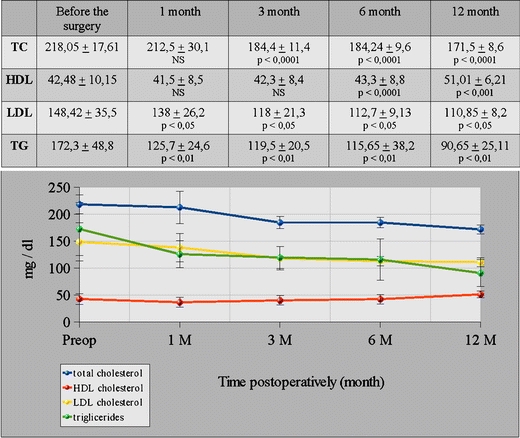
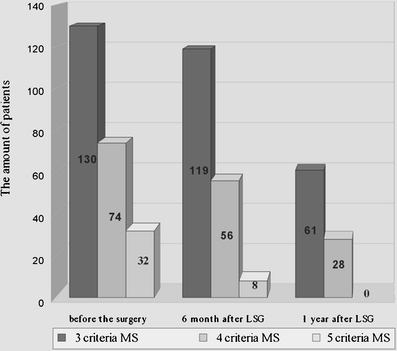
Popularity of laparoscopic sleeve gastrectomy (LSG) has been growing gradually. The aim of this study was to determine changes in metabolic syndrome parameters as well as insulin, total cholesterol, and LDL cholesterol, and to describe the influence of body weight loss on co-morbidities in obese patients after LSG with 1-year follow-up. The material consists of 130 patients who underwent LSG (2007-2010) in order to treat morbid obesity and who had met before the surgery at least three criteria necessary for the diagnosis of metabolic syndrome according to the International Diabetes Federation. The influence of LSG on co-morbidities was also analyzed. During 1-year follow-up after LSG, we obtained a statistically significant decrease in BMI (from 53.18 ± 7.5 kg/m(2) to 31.4 ± 3.75 kg/m(2), p < 0.00001) and a reduction in waist circumference. Twelve months after the surgery, excess weight loss (EWL) was 59.42 ± 7.21% and excess body mass index loss (EBL) was 61.03 ± 6.50%. One year after LSG, the amount of patients with diagnosed metabolic syndrome decreased in 61 patients (53.08%). After 1 year, none of the patients met five criteria of metabolic syndrome. According to efficiency in body mass loss presented by %EWL and %EBL, LSG is gaining approval as a method of obesity and metabolic syndrome treatment, although it is a relatively new procedure. LSG is rather an easy procedure; the time of performance and hospitalization are shorter which entails normalization in all parameters of metabolic syndrome and decreases the percentage of obese patients with metabolic syndrome.
Figures
References
-
- Finucane MM, Stevens GA, Cowan MJ, et al. National, regional, and global trends in body-mass index since 1980: systematic analysis of health examination surveys and epidemiological studies with 960 country-years and 9.1 million participants. Lancet. 2011;377:557–567. doi: 10.1016/S0140-6736(10)62037-5. - DOI - PMC - PubMed
MeSH terms
Substances
LinkOut - more resources
Full Text Sources
Medical
Miscellaneous
