Assessment of enamel-dentin caries lesions detection using bitewing PSP digital images
- PMID: 21986650
- PMCID: PMC3984191
- DOI: 10.1590/s1678-77572011000500005
Assessment of enamel-dentin caries lesions detection using bitewing PSP digital images
Abstract
Objectives: The aim of this study was to evaluate the detection of enamel-dentin occlusal caries using photostimulable phosphor plates.
Material and methods: The ability to detect enamel-dentin occlusal caries in 607 premolars and molars from 47 patients between 10 and 18 years old, referred to the School of Dentistry of the Federal University of Bahia, Brazil, was evaluated based on clinical and radiographic examinations, using the criteria proposed in a previous study. A total of 156 bitewing digital images were obtained using Digora® (Soredex Medical Systems, Helsinki, Finland) phosphor plates. The plates were scanned and the images were captured and displayed on a computer screen. Image evaluation was done using Digora® for Windows 2.1 software, Soredex®. The radiologists were allowed to use enhancement tools to obtain better visibility during scoring of the teeth based on the radiographic criteria proposed in a previous study. Descriptive analysis and chi-squared proportion tests were done at 5% significance level.
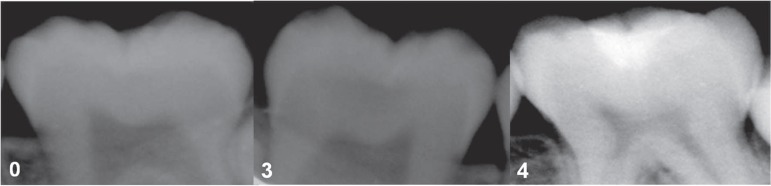
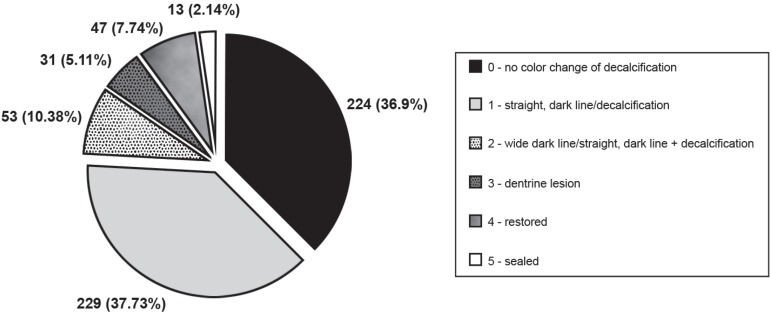
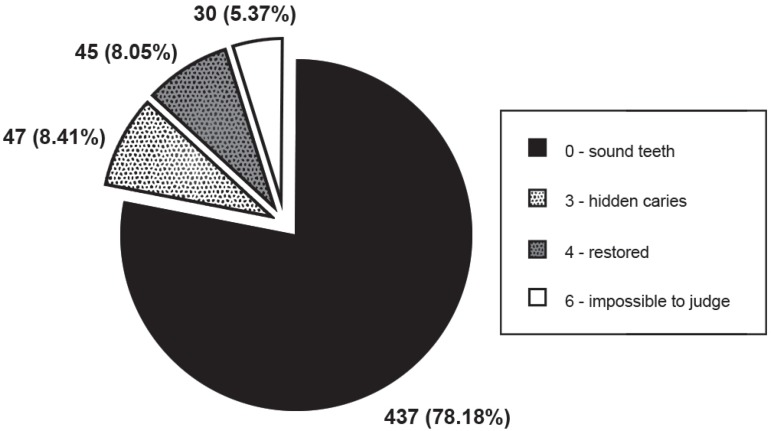
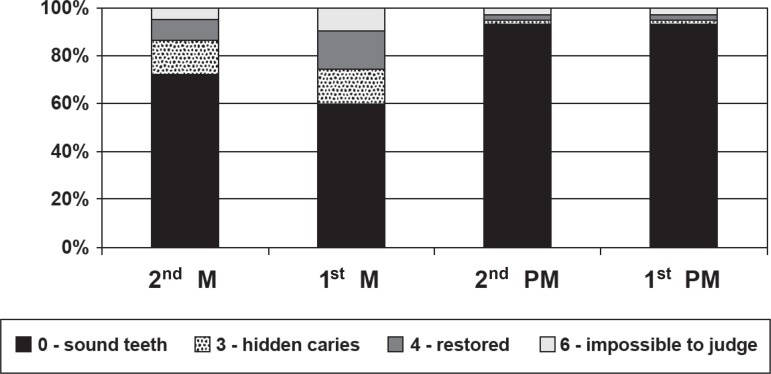
Results: The results of clinical examination showed a higher prevalence of teeth with a straight dark line or demineralization of the occlusal fissure (score 1) and a lower prevalence of sealed teeth (score 5). In the bitewing digital images, 47 teeth presented visible radiolucency, circumscribed, in dentin under occlusal enamel (enamel-dentin caries lesions).
Conclusions: Correlating the clinical and radiographic findings, it was found that in the majority of teeth diagnosed by radiographic images as having enamel-dentin caries, no caries could be detected by clinical examination.
Figures
References
-
- American Dental Association Council on Scientific Affairs The use of dental radiographs: update and recommendations. J Am Dent Assoc. 2006;137:1304–1312. - PubMed
-
- Alvarez JO, Navia JM. Nutritional status, tooth eruption, and dental caries: a review. Am J Clin Nutr. 1989;49:417–426. - PubMed
-
- Assaf AV, Meneghim MC, Zanin L, Mialhe FL, Pereira AC, Ambrosano GMB. Assessment of different methods for diagnosing dental caries in epidemiological surveys. Commun Dent Oral Epidemiol. 2004;32:418–425. - PubMed
-
- Castro VM, Katz JO, Hardman PK, Glaros AG, Spencer P. In vitro comparison of conventional film and direct digital imaging in the detection of approximal caries. Dentomaxillofac Radiol. 2007;36:138–142. - PubMed
-
- Civera VG, Silla JMA, Company JMM, Navarro LF. Clinical and radiographic diagnosis of approximal and occlusal dental caries in a low risk population. Med Oral Patol Oral Cir Bucal. 2007;12:E252–E257. - PubMed
Publication types
MeSH terms
Substances
LinkOut - more resources
Full Text Sources
Medical
Miscellaneous