Motivational enhancement therapy for African American substance users: a randomized clinical trial
- PMID: 21988576
- PMCID: PMC3422370
- DOI: 10.1037/a0025437
Motivational enhancement therapy for African American substance users: a randomized clinical trial
Abstract
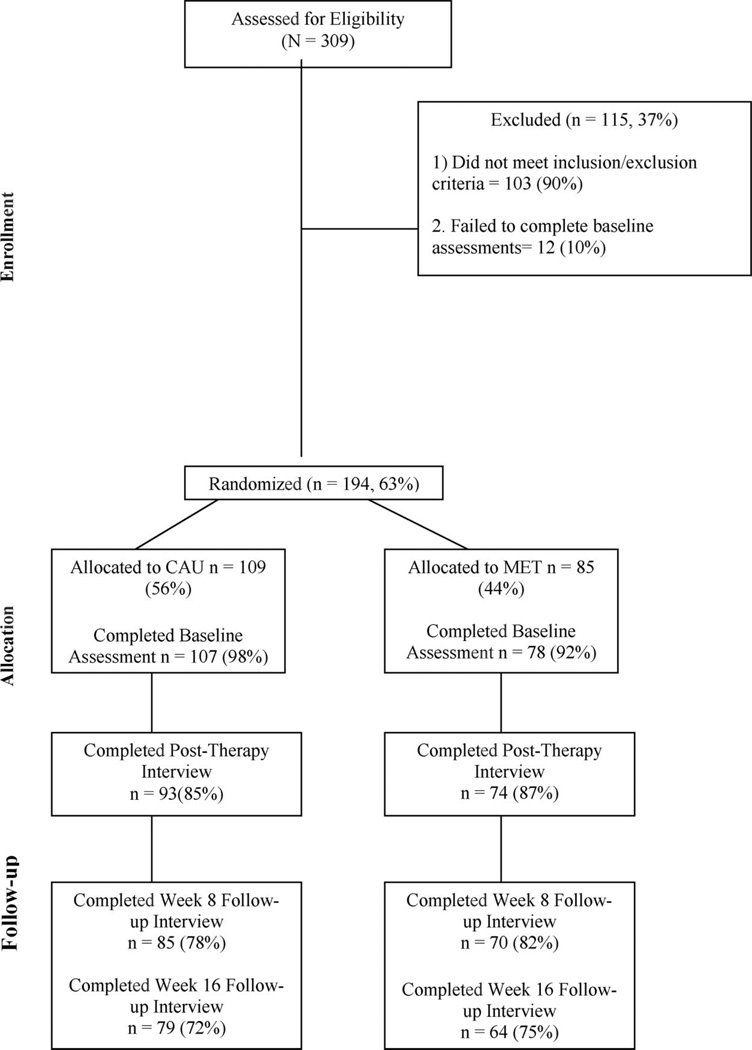
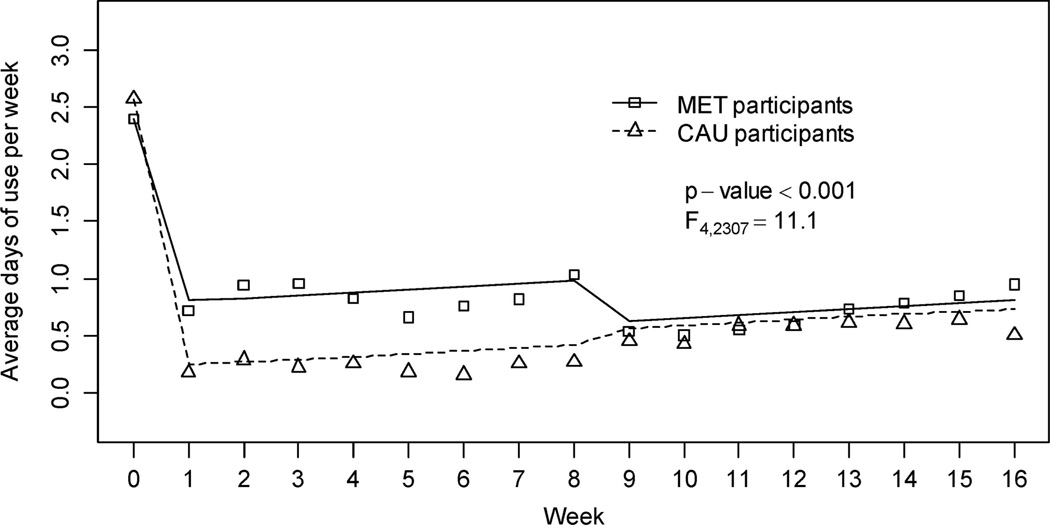
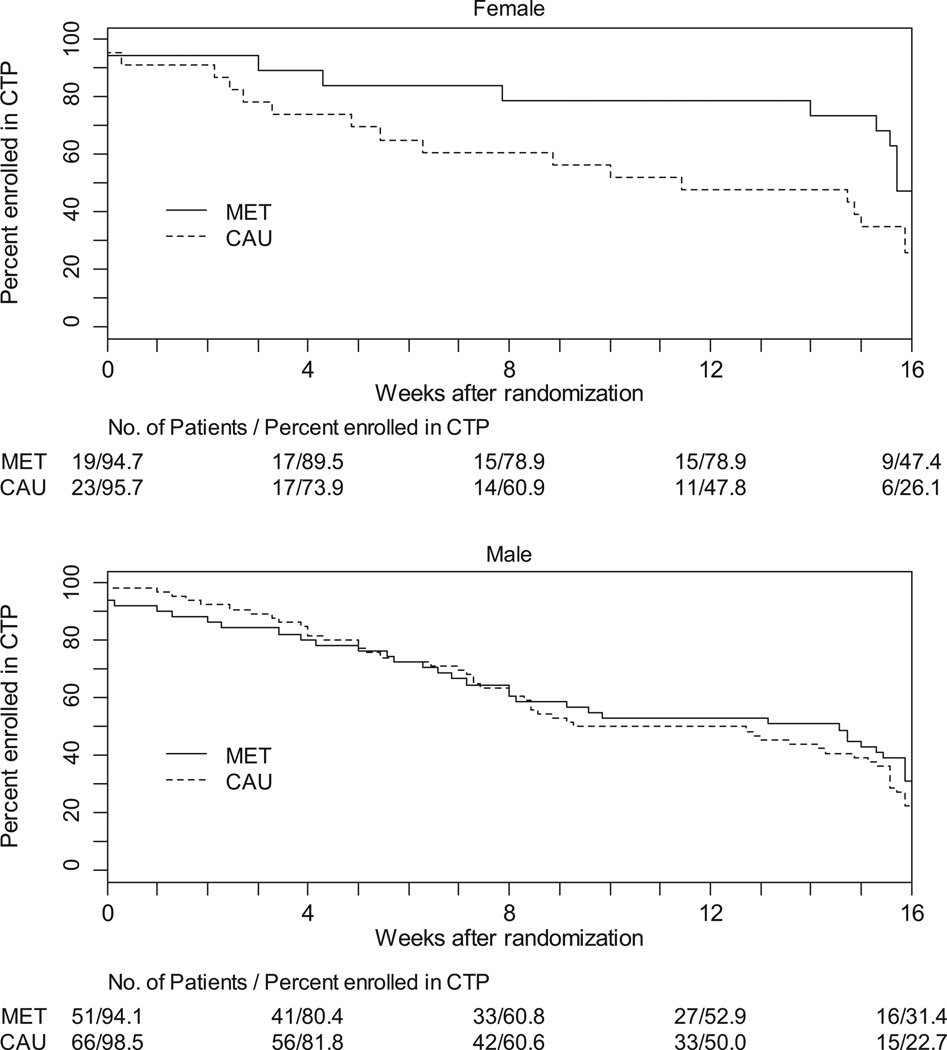
Limited empirical evidence concerning the efficacy of substance abuse treatments among African Americans reduces opportunities to evaluate and improve program efficacy. The current study, conducted as a secondary analysis of a randomized clinical trial conducted by the Clinical Trials Network of the National Institute of Drug Abuse, addressed this knowledge gap by examining the efficacy of motivational enhancement therapy (MET) compared with counseling as usual (CAU) among 194 African American adults seeking outpatient substance abuse treatment at 5 participating sites. The findings revealed higher retention rates among women in MET than in CAU during the initial 12 weeks of the 16-week study. Men in MET and CAU did not differ in retention. However, MET participants self-reported more drug-using days per week than participants in CAU. Implications for future substance abuse treatment research with African Americans are discussed.
Figures
References
-
- Agosti V, Nunes EV, Ocepeck-Welikson K. Patient factors related to early attrition from an outpatient cocaine research clinic. American Journal of Drug and Alcohol Abuse. 1996;22:29–39. - PubMed
-
- Amaro H, Blake SM, Schwartz PM, Flinchbaugh LJ. Developing theory-based substance abuse prevention programs for young adolescent girls. Journal of Early Adolescence. 2001;21:256–293.
-
- Amhrein PC, Miller WR, Yahne, Palmer CE, Fulcher L. Client commitment language during motivational interviewing predicts drug use outcomes. Journal of Consulting and Clinical Psychology. 2003;71:862–878. - PubMed
Publication types
MeSH terms
Grants and funding
LinkOut - more resources
Full Text Sources
Medical
Miscellaneous