


The effect of nano-scale topography on keratinocyte phenotype and wound healing following burn injury
- PMID: 21988618
- PMCID: PMC3313614
- DOI: 10.1089/ten.TEA.2011.0307
The effect of nano-scale topography on keratinocyte phenotype and wound healing following burn injury
Abstract
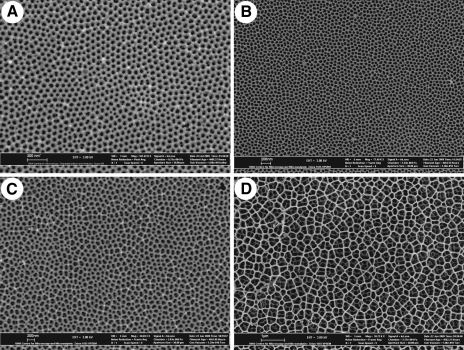
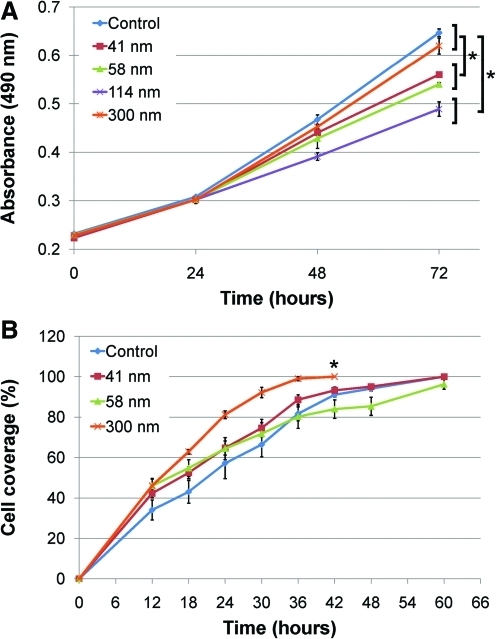
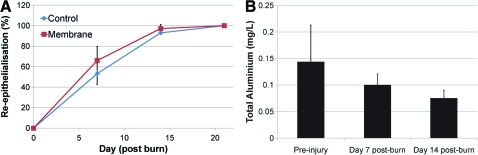
Topographic modulation of tissue response is an important consideration in the design and manufacture of a biomaterial. In developing new tissue therapies for skin, all levels of architecture, including the nanoscale need to be considered. Here we show that keratinocyte phenotype is affected by nanoscale changes in topography with cell morphology, proliferation, and migration influenced by the pore size in anodic aluminum oxide membranes. A membrane with a pore size of 300 nm, which enhanced cell phenotype in vitro, was used as a dressing to cover a partial thickness burn injury in the pig. Wounds dressed with the membrane showed evidence of advanced healing with significantly less organizing granulation tissue and more mature epidermal layers than control wounds dressed with a standard burns dressing. The results demonstrate the importance of nanoscale topography in modulating keratinocyte phenotype and skin wound healing.
Figures



References
-
- Chou L. Firth J.D. Uitto V.-J. Brunette D.M. Substratum surface topography alters cell shape and regulates fibronectin mRNA level, mRNA stability, secretion and assembly in human fibroblasts. J Cell Sci. 1995;108:1563. - PubMed
-
- Curtis A. Wilkinson C. Topographical control of cells. Biomaterials. 1997;18:1573. - PubMed
-
- Zeltinger J. Sherwood J.K. Graham D.A. Mueller R. Griffith L.G. Effect of pore size and void fraction on cellular adhesion, proliferation, and matrix deposition. Tissue Eng. 2001;7:557. - PubMed
-
- O'Brien F.J. Harley B.A. Yannas I.V. Gibson L.J. The effect of pore size on cell adhesion in collagen-GAG scaffolds. Biomaterials. 2005;26:433. - PubMed
-
- McMillan J.R. Akiyama M. Tanaka M. Yamamoto S. Goto M. Abe R. Sawamura D. Shimomura M. Shimizu H. Small-diameter porous poly (epsilon-caprolactone) films enhance adhesion and growth of human cultured epidermal keratinocyte and dermal fibroblast cells. Tissue Eng. 2007;13:789. - PubMed
Publication types
MeSH terms
Substances
LinkOut - more resources
Full Text Sources
Medical
