


A regulatory mechanism involving TBP-1/Tat-Binding Protein 1 and Akt/PKB in the control of cell proliferation
- PMID: 21991300
- PMCID: PMC3186787
- DOI: 10.1371/journal.pone.0022800
A regulatory mechanism involving TBP-1/Tat-Binding Protein 1 and Akt/PKB in the control of cell proliferation
Retraction in
-
Retraction: A Regulatory Mechanism Involving TBP-1/Tat-Binding Protein 1 and Akt/PKB in the Control of Cell Proliferation.PLoS One. 2019 Sep 4;14(9):e0222287. doi: 10.1371/journal.pone.0222287. eCollection 2019. PLoS One. 2019. PMID: 31483838 Free PMC article. No abstract available.
Abstract
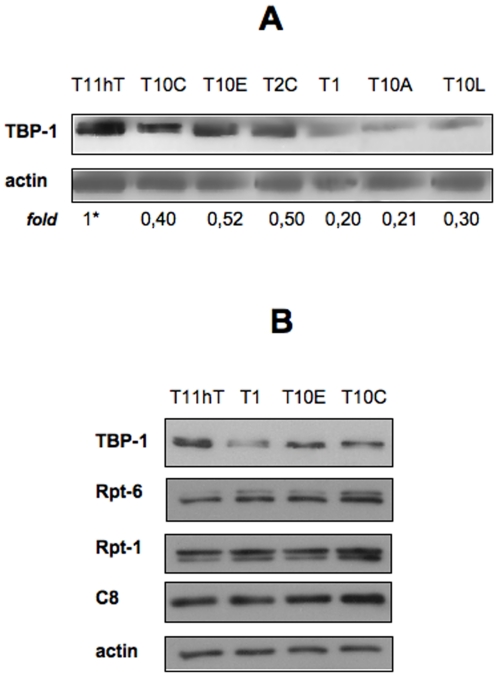
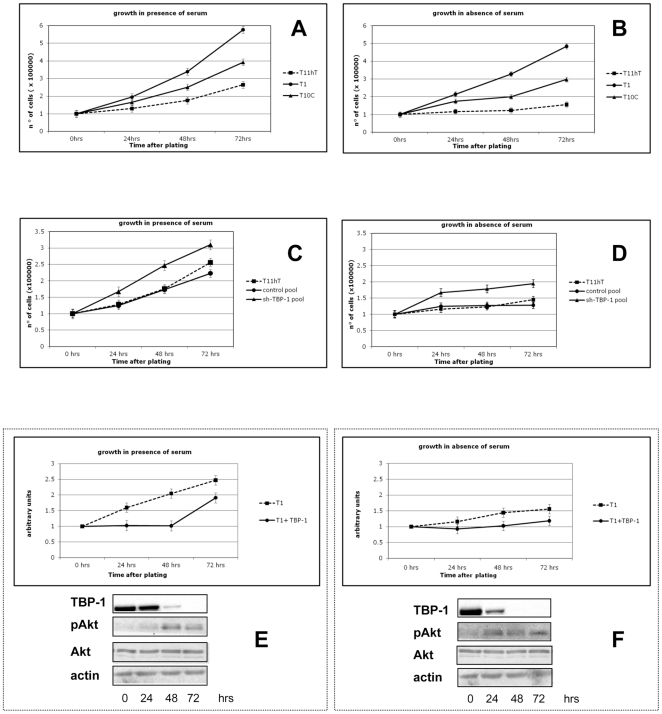
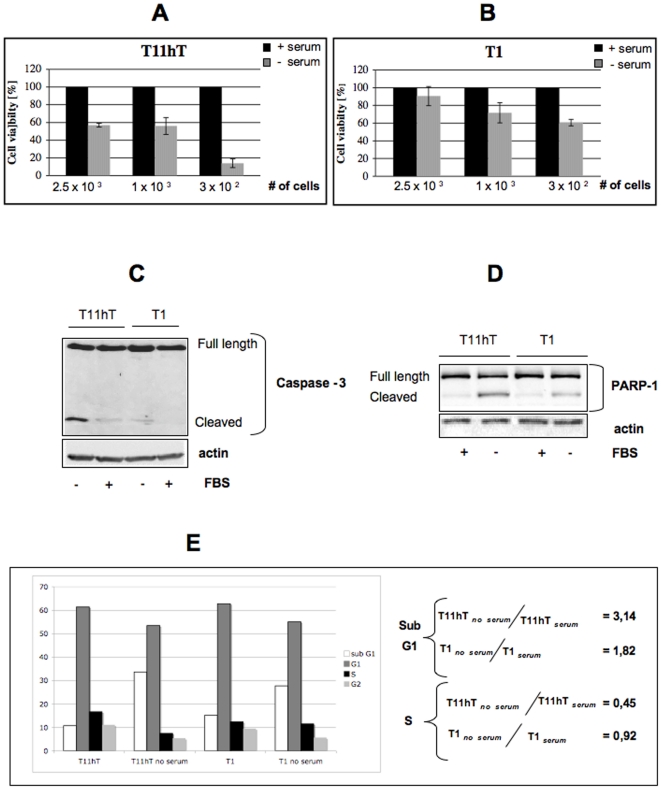
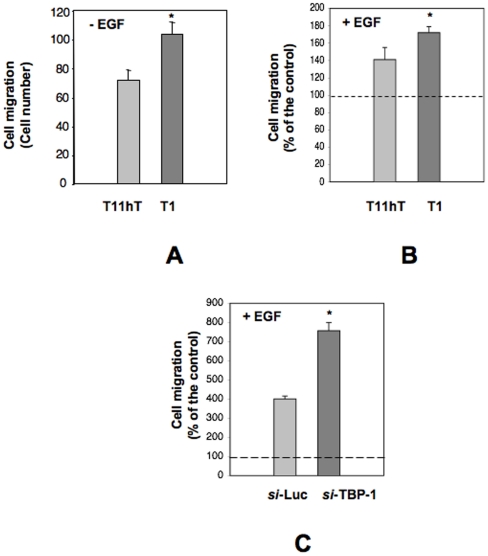
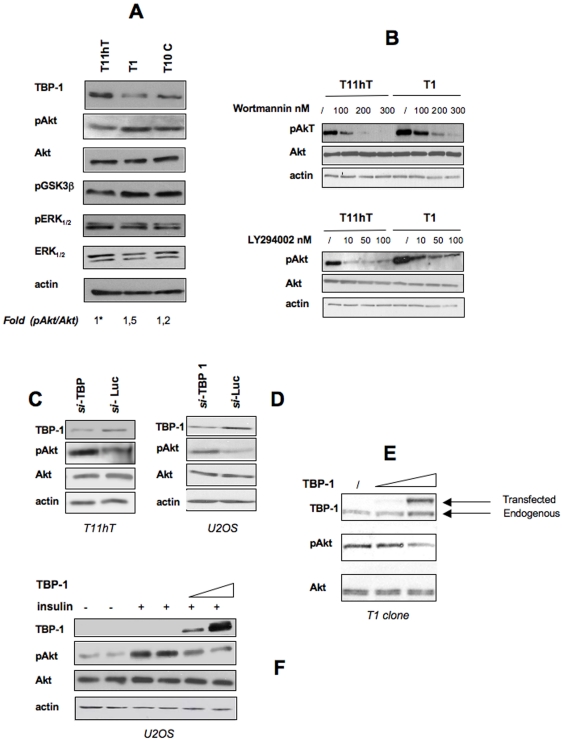
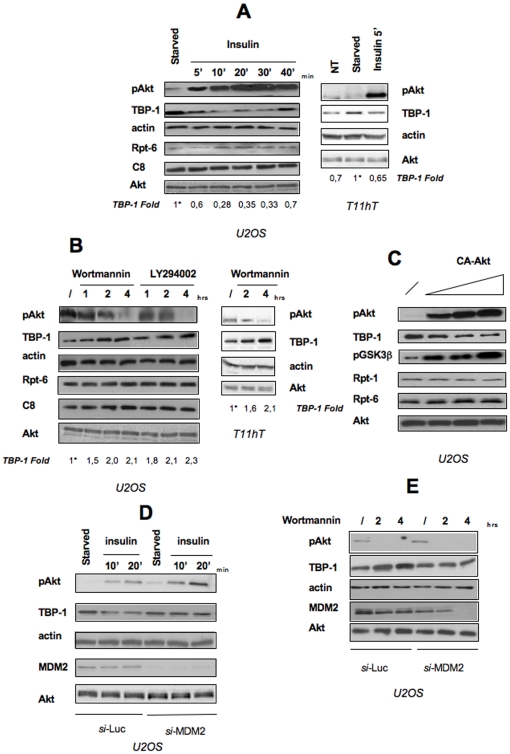
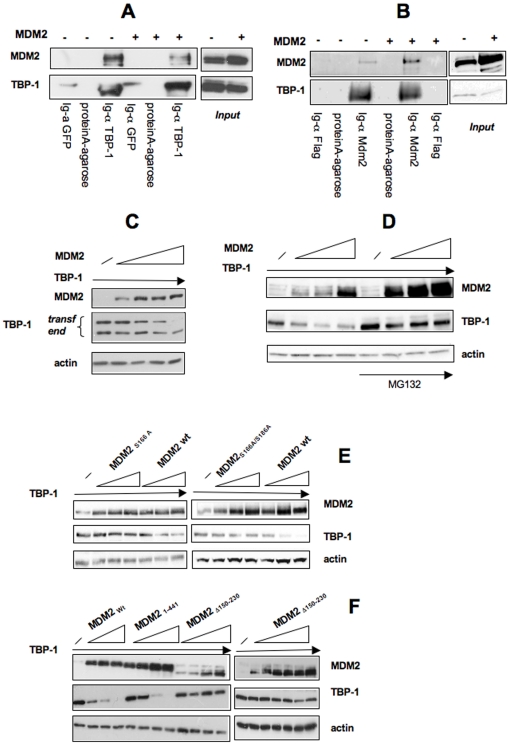
TBP-1 /Tat-Binding Protein 1 (also named Rpt-5, S6a or PSMC3) is a multifunctional protein, originally identified as a regulator of HIV-1-Tat mediated transcription. It is an AAA-ATPase component of the 19S regulative subunit of the proteasome and, as other members of this protein family, fulfils different cellular functions including proteolysis and transcriptional regulation. We and others reported that over expression of TBP-1 diminishes cell proliferation in different cellular contexts with mechanisms yet to be defined. Accordingly, we demonstrated that TBP-1 binds to and stabilizes the p14ARF oncosuppressor increasing its anti-oncogenic functions. However, TBP-1 restrains cell proliferation also in the absence of ARF, raising the question of what are the molecular pathways involved. Herein we demonstrate that stable knock-down of TBP-1 in human immortalized fibroblasts increases cell proliferation, migration and resistance to apoptosis induced by serum deprivation. We observe that TBP-1 silencing causes activation of the Akt/PKB kinase and that in turn TBP-1, itself, is a downstream target of Akt/PKB. Moreover, MDM2, a known Akt target, plays a major role in this regulation. Altogether, our data suggest the existence of a negative feedback loop involving Akt/PKB that might act as a sensor to modulate TBP-1 levels in proliferating cells.
Conflict of interest statement
Figures
References
-
- DeMartino GN, Gillette TG. Proteasome: Machines for all reasons. Cell. 2007;129:659–662. - PubMed
-
- Pickart CM, Cohen RE. Proteasomes and their kin: proteases in the machine age. Nat Rev Mol Cell Biol. 2004;5(3):177–87. - PubMed
-
- Lavabre-Bertrand T, Henry L, Carillo S, Guiraud I, Ouali A, et al. Plasma proteasome level is a potential marker in patients with solid tumors and hemopoietic malignancies. Cancer. 2001;92(10):2493–500. - PubMed
-
- Adams J. The proteasome: a suitable antineoplastic target. Nat Rev Cancer. 2004;4(5):349–60. - PubMed
-
- Corn PG, McDonald R, III, Herman JG, El-Deiry WS. Tat-binding protein-1, a component of the 26S proteasome, contributes to the E3 ubiquitin ligase function of the von Hippel-Lindau protein. Nat Gen. 2003;35:229–237. - PubMed
Publication types
MeSH terms
Substances
LinkOut - more resources
Full Text Sources
Research Materials
Miscellaneous
