


Activated chemoreceptor arrays remain intact and hexagonally packed
- PMID: 21992450
- PMCID: PMC3641884
- DOI: 10.1111/j.1365-2958.2011.07854.x
Activated chemoreceptor arrays remain intact and hexagonally packed
Abstract
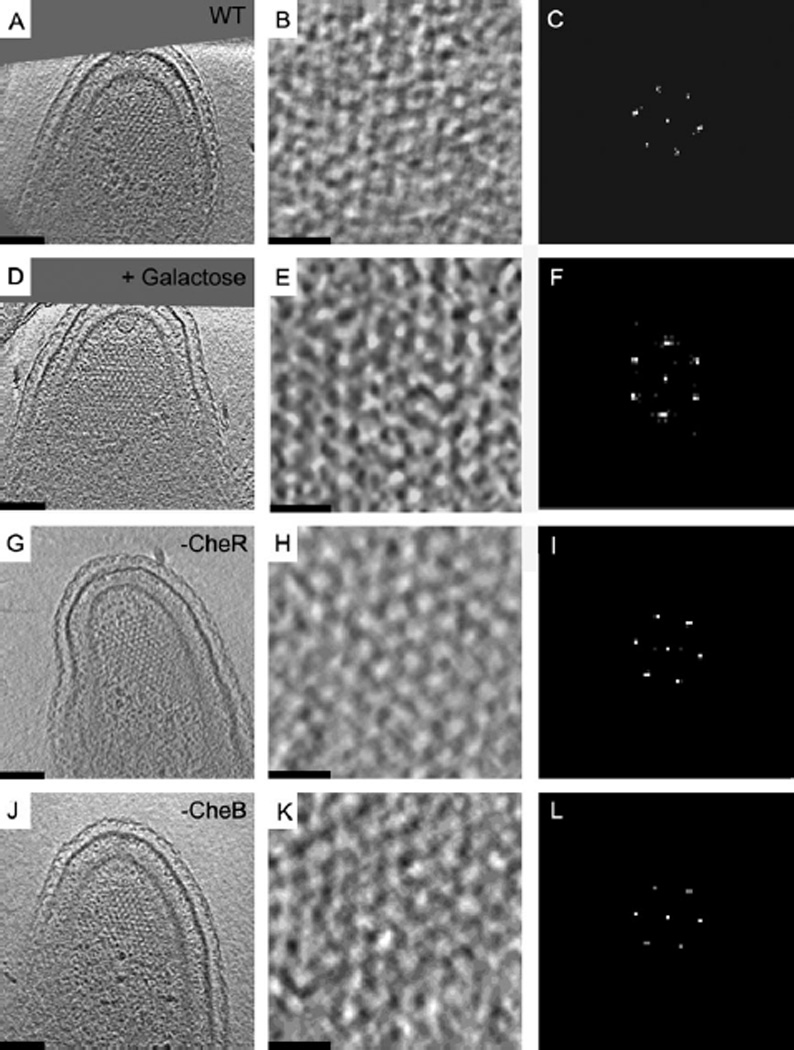
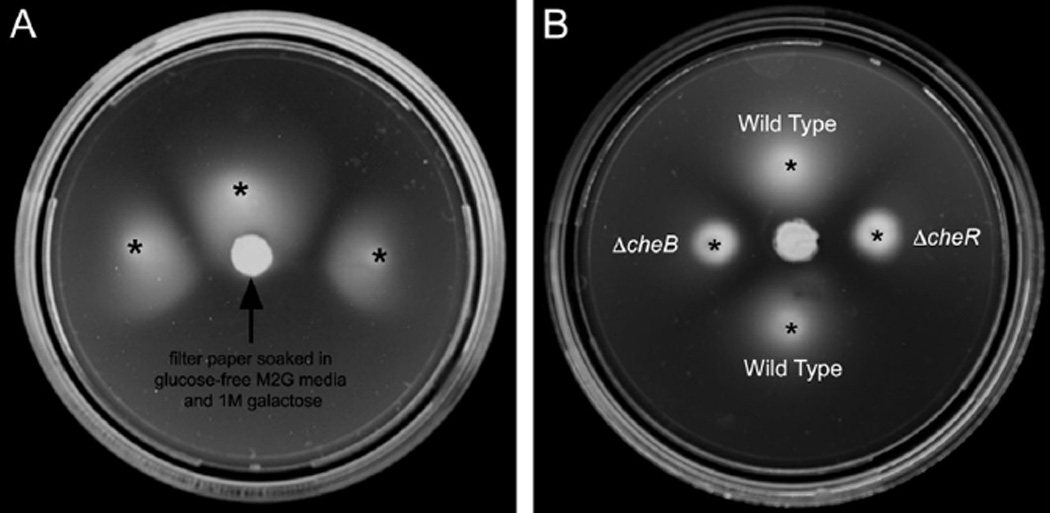
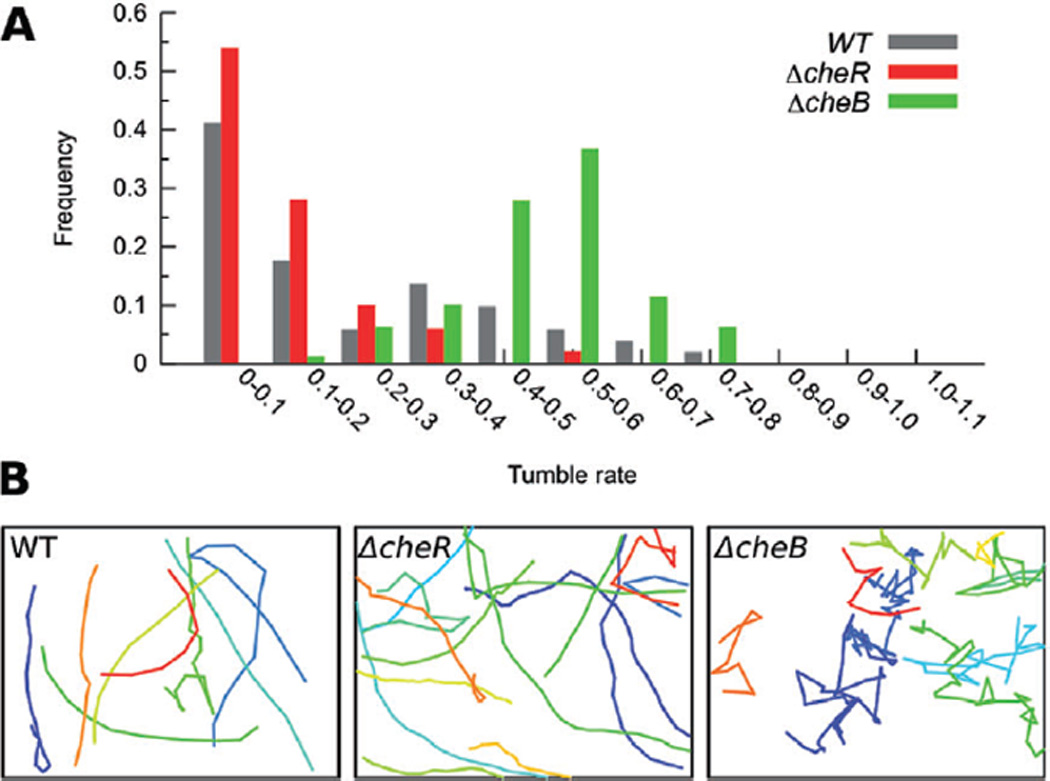
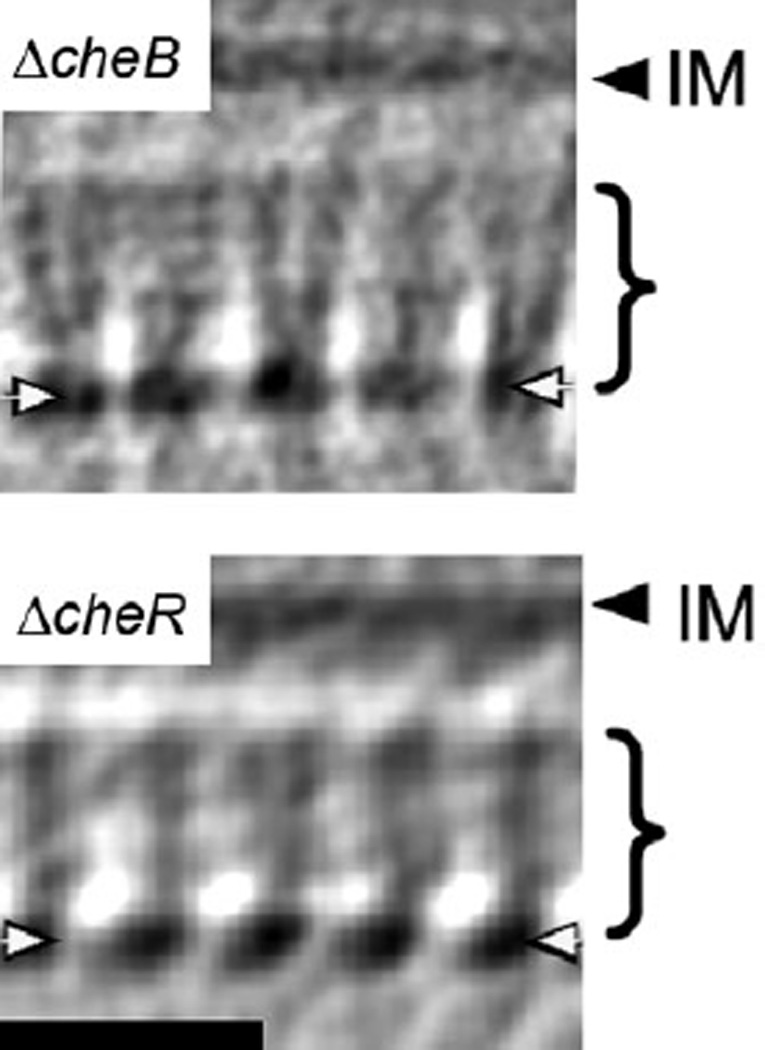
Bacterial chemoreceptors cluster into exquisitively sensitive, tunable, highly ordered, polar arrays. While these arrays serve as paradigms of cell signalling in general, it remains unclear what conformational changes transduce signals from the periplasmic tips, where attractants and repellents bind, to the cytoplasmic signalling domains. Conflicting reports support and contest the hypothesis that activation causes large changes in the packing arrangement of the arrays, up to and including their complete disassembly. Using electron cryotomography, here we show that in Caulobacter crescentus, chemoreceptor arrays in cells grown in different media and immediately after exposure to the attractant galactose all exhibit the same 12 nm hexagonal packing arrangement, array size and other structural parameters. ΔcheB and ΔcheR mutants mimicking attractant- or repellent-bound states prior to adaptation also show the same lattice structure. We conclude that signal transduction and amplification must be accomplished through only small, nanoscale conformational changes.
© 2011 Blackwell Publishing Ltd.
Figures
References
-
- Borrock MJ, Kolonko EM, Kiessling LL. Chemical probes of bacterial signal transduction reveal that repellents stabilize and attractants destabilize the chemoreceptor array. ASC Chem Biol. 2008;3:101–109. - PubMed
-
- Boukhvalova MS, Dahlquist FW, Stewart RC. CheW binding interactions with CheA and Tar: importance for chemotaxis signaling in E. coli. J Biol Chem. 2002;277:22251–22259. - PubMed
Publication types
MeSH terms
Substances
Grants and funding
LinkOut - more resources
Full Text Sources
