ATM gene alterations in chronic lymphocytic leukemia patients induce a distinct gene expression profile and predict disease progression
- PMID: 21993670
- PMCID: PMC3248930
- DOI: 10.3324/haematol.2011.049270
ATM gene alterations in chronic lymphocytic leukemia patients induce a distinct gene expression profile and predict disease progression
Abstract
Background: The genetic characterization of chronic lymphocytic leukemia cells correlates with the behavior, progression and response to treatment of the disease.
Design and methods: Our aim was to investigate the role of ATM gene alterations, their biological consequences and their value in predicting disease progression. The ATM gene was analyzed by denaturing high performance liquid chromatography and multiplex ligation probe amplification in a series of patients at diagnosis. The results were correlated with immunoglobulin gene mutations, cytogenetic abnormalities, ZAP-70 and CD38 expression, TP53 mutations, gene expression profile and treatment-free interval.
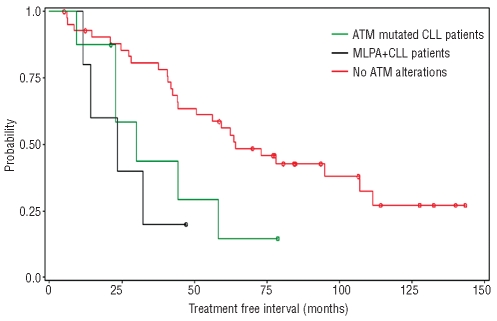
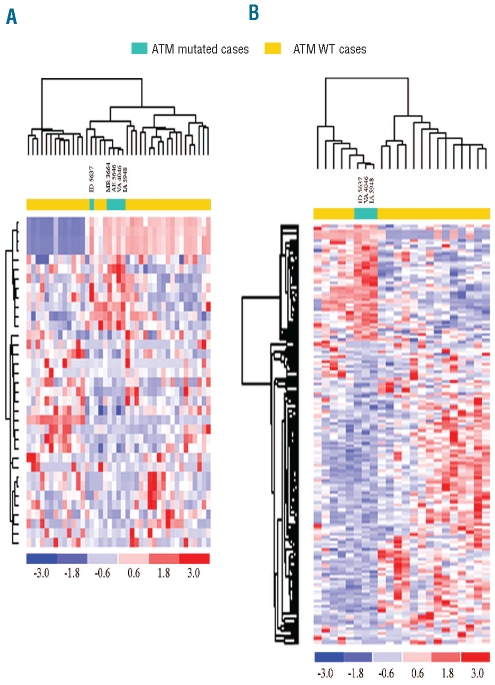
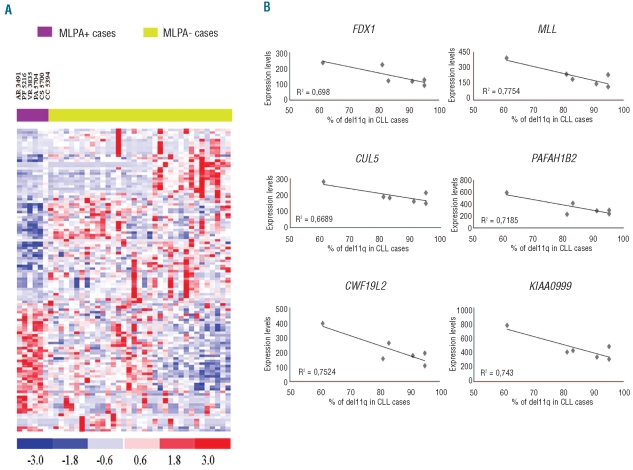
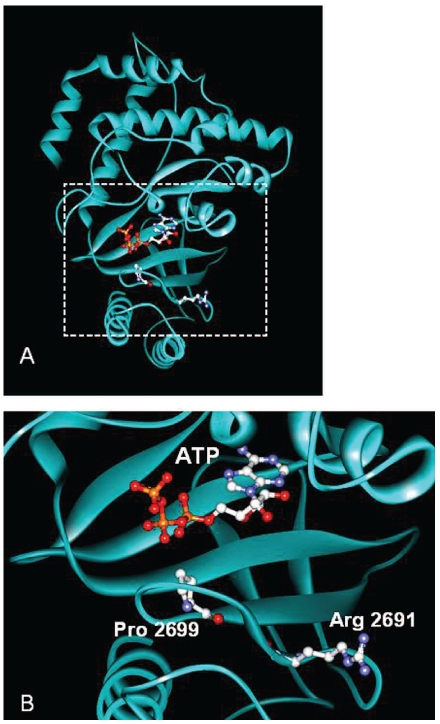
Results: Mutational screening of the ATM gene identified point mutations in 8/57 cases (14%). Multiplex ligation probe amplification analysis identified six patients with 11q deletion: all of them had at least 20% of deleted cells, analyzed by fluorescent in situ hybridization. Overall, ATM point mutations and deletions were detected in 14/57 (24.6%) cases at presentation, representing the most common unfavorable genetic anomalies in chronic lymphocytic leukemia, also in stage A patients. Patients with deleted or mutated ATM had a significantly shorter treatment-free interval compared to patients without ATM alterations. ATM-mutated cases had a peculiar gene expression profile characterized by the deregulation of genes involved in apoptosis and DNA repair. Finally, definition of the structure of the ATM-mutated protein led to a hypothesis that functional abnormalities are responsible for the unfavorable clinical course of patients carrying these point mutations.
Conclusions: ATM alterations are present at diagnosis in about 25% of individuals with chronic lymphocytic leukemia; these alterations are associated with a peculiar gene expression pattern and a shorter treatment-free interval.
Figures
Comment in
-
ATM and chronic lymphocytic leukemia: mutations, and not only deletions, matter.Haematologica. 2012 Jan;97(1):5-8. doi: 10.3324/haematol.2011.057109. Haematologica. 2012. PMID: 22210328 Free PMC article. No abstract available.
References
-
- Rozman C, Montserrat E. Chronic lymphocytic leukemia. N Engl J Med. 1995;333(16):1052–7. - PubMed
-
- Hamblin TJ, Davis Z, Gardiner A, Oscier DG, Stevenson FK. Unmutated Ig VH genes associated with a more aggressive form of chronic lymphocytic leukemia. Blood. 1999;94(6):1848–54. - PubMed
-
- Döhner H, Stingelbauer S, Benner A, Leupolt E, Kröber A, Bullinger L, et al. Genomic aberration and survival in cronic lymphocytic leukemia. N Engl J Med. 2000;343(26):1910–6. - PubMed
-
- Ibrahim S, Keating M, Do KA, O'Brien S, Huh YO, Jilani I, et al. CD38 expression as an important prognostic factor in B-cell chronic lymphocytic leukemia. Blood. 2001;98(1):181–6. - PubMed
-
- Rassenti LZ, Huynh L, Toy TL, Chen L, Keating MJ, Gribben JG, et al. ZAP-70 compared with immunoglobulin heavy-chain gene mutation status as a predictor of disease progression in chronic lymphocytic leukemia. N Engl J Med. 2004;351(9):893–901. - PubMed
Publication types
MeSH terms
Substances
LinkOut - more resources
Full Text Sources
Research Materials
Miscellaneous