


Plasmacytoid dendritic cells and the control of herpesvirus infections
- PMID: 21994554
- PMCID: PMC3185500
- DOI: 10.3390/v1030383
Plasmacytoid dendritic cells and the control of herpesvirus infections
Abstract
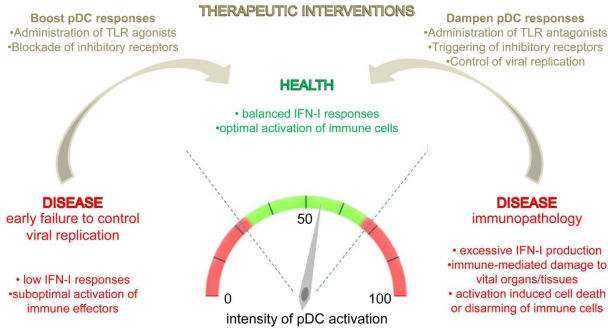
Type-I interferons (IFN-I) are cytokines essential for vertebrate antiviral defense, including against herpesviruses. IFN-I have potent direct antiviral activities and also mediate a multiplicity of immunoregulatory functions, which can either promote or dampen antiviral adaptive immune responses. Plasmacytoid dendritic cells (pDCs) are the professional producers of IFN-I in response to many viruses, including all of the herpesviruses tested. There is strong evidence that pDCs could play a major role in the initial orchestration of both innate and adaptive antiviral immune responses. Depending on their activation pattern, pDC responses may be either protective or detrimental to the host. Here, we summarize and discuss current knowledge regarding pDC implication in the physiopathology of mouse and human herpesvirus infections, and we discuss how pDC functions could be manipulated in immunotherapeutic settings to promote health over disease.
Keywords: herpesvirus type 1; herpesvirus type 2; human cytomegalovirus; immunotherapy; mouse cytomegalovirus; plasmacytoid dendritic cell; type-I interferon.
Figures


References
-
- Schleiss MR. Persistent and recurring viral infections: the human herpesviruses. Curr Probl Pediatr Adolesc Health Care. 2009;39:7–23. - PubMed
-
- Siegal FP, Kadowaki N, Shodell M, Fitzgerald-Bocarsly PA, Shah K, Ho S, Antonenko S, Liu YJ. The nature of the principal type 1 interferon-producing cells in human blood. Science. 1999;284:1835–1837. - PubMed
-
- Cederarv M, Soderberg-Naucler C, Odeberg J. HCMV infection of PDCs deviates the NK cell response into cytokine-producing cells unable to perform cytotoxicity. Immunobiology. 2009;214:331–341. - PubMed
LinkOut - more resources
Full Text Sources
