


HCV innate immune responses
- PMID: 21994583
- PMCID: PMC3185522
- DOI: 10.3390/v1031073
HCV innate immune responses
Abstract
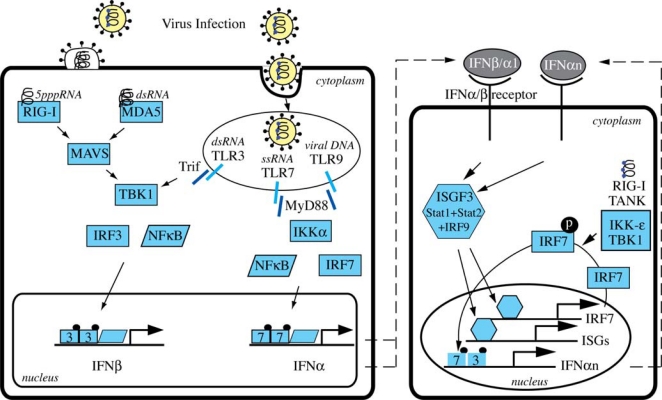
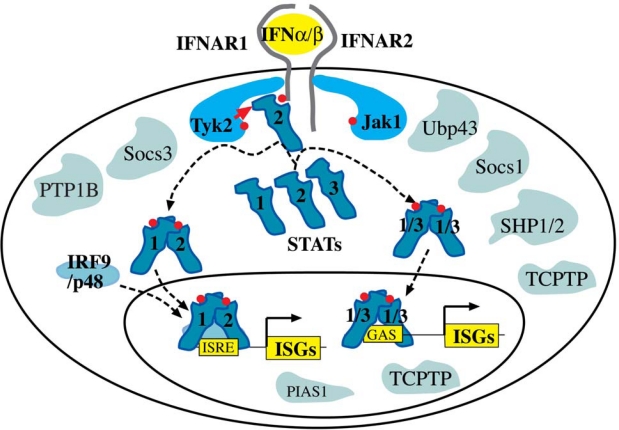
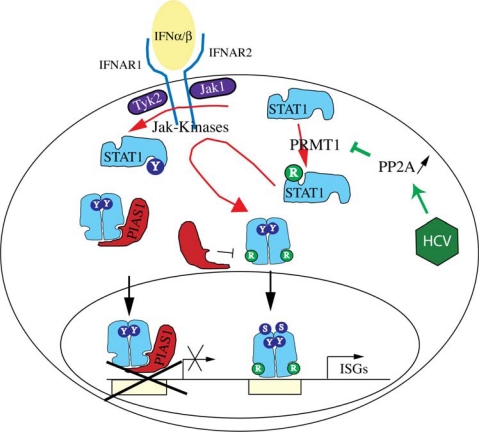
Hepatitis C virus (HCV) establishes a persistent infection in more than 70% of infected individuals. This striking ability to evade the powerful innate immune system results from viral interference occurring at several levels of the interferon (IFN) system. There is strong evidence from cell culture experiments that HCV can inhibit the induction of IFNβ by cleaving important proteins in the virus sensory pathways of cells such as MAVS and TRIF. There is also evidence that HCV interferes with IFNα signaling through the Jak-STAT pathway, and that HCV proteins target IFN effector systems such as protein kinase R (PKR). These in vitro findings will have to be confirmed in clinical trials investigating the molecular mechanisms of HCV interference with the innate immune system in liver samples.
Keywords: HCV; Jak-STAT; MAVS; Toll-like receptors; interferon; viral interference.
Figures
References
-
- Isaacs A, Lindenmann J. Virus interference. I. The interferon. Proc R Soc Lond B Biol Sci. 1957;147:258–267. - PubMed
-
- Pestka S. The interferons: 50 years after their discovery, there is much more to learn. J Biol Chem. 2007;282:20047–20051. - PubMed
-
- Pestka S, Krause CD, Walter MR. Interferons, interferon-like cytokines, and their receptors. Immunol Rev. 2004;202:8–32. - PubMed
-
- Uze G, Lutfalla G, Gresser I. Genetic transfer of a functional human interferon alpha receptor into mouse cells: cloning and expression of its cDNA. Cell. 1990;60:225–234. - PubMed
-
- Novick D, Cohen B, Rubinstein M. The human interferon alpha/beta receptor: characterization and molecular cloning. Cell. 1994;77:391–400. - PubMed
LinkOut - more resources
Full Text Sources
Miscellaneous
