


The HTLV-1 Virological Synapse
- PMID: 21994688
- PMCID: PMC3185711
- DOI: 10.3390/v2071427
The HTLV-1 Virological Synapse
Abstract
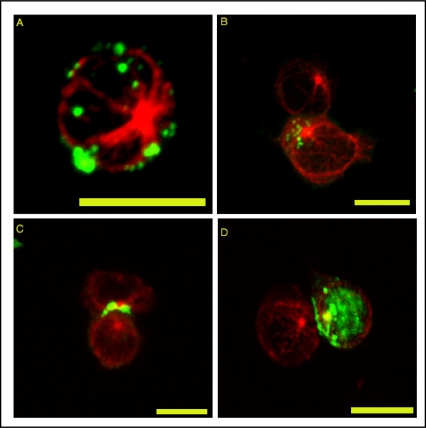
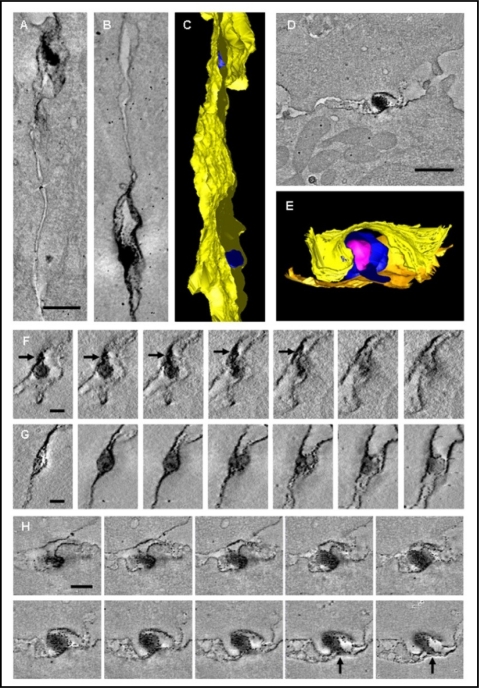
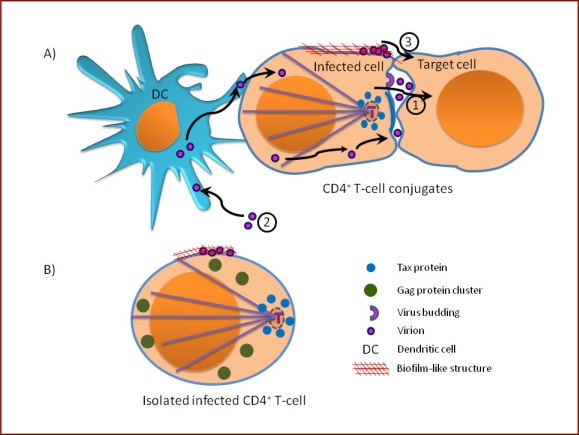
Human T-lymphotropic virus-1 (HTLV-1) spreads efficiently between T-cells via a tight and highly organized cell-cell contact known as the virological synapse. It is now thought that many retroviruses and other viruses spread via a virological synapse, which may be defined as a virus-induced, specialized area of cell-to-cell contact that promotes the directed transmission of the virus between cells. We summarize here the mechanisms leading to the formation of the HTLV-1 virological synapse and the role played by HTLV-1 Tax protein. We propose a model of HTLV-1 transmission between T-cells based on the three-dimensional ultrastructure of the virological synapse. Finally, in the light of recent advances, we discuss the possible routes of HTLV-1 spread across the virological synapse.
Keywords: HTLV-1 virological synapse; cytoskeleton; polarization; viral proteins.
Figures
References
-
- Uchiyama T, Yodoi J, Sagawa K, Takatsuki K, Uchino H. Adult T-cell leukemia: clinical and hematologic features of 16 cases. Blood. 1977;50:481–492. - PubMed
-
- Gessain A, Barin F, Vernant JC, Gout O, Maurs L, Calender A, de The G. Antibodies to human T-lymphotropic virus type-I in patients with tropical spastic paraparesis. Lancet. 1985;2:407–410. - PubMed
-
- Osame M, Izumo S, Igata A, Matsumoto M, Matsumoto T, Sonoda S, Tara M, Shibata Y. Blood transfusion and HTLV-I associated myelopathy. Lancet. 1986;2:104–105. - PubMed
-
- Wattel E, Cavrois M, Gessain A, Wain-Hobson S. Clonal expansion of infected cells: a way of life for HTLV-I. J Acquir Immune Defic Syndr Hum Retrovirol. 1996;13:S92–99. - PubMed
-
- Richardson JH, Hollsberg P, Windhagen A, Child LA, Hafler DA, Lever AM. Variable immortalizing potential and frequent virus latency in blood-derived T-cell clones infected with human T-cell leukemia virus type I. Blood. 1997;89:3303–3314. - PubMed
LinkOut - more resources
Full Text Sources
