


Morphological integration of soft-tissue facial morphology in Down Syndrome and siblings
- PMID: 21996933
- PMCID: PMC3258662
- DOI: 10.1002/ajpa.21583
Morphological integration of soft-tissue facial morphology in Down Syndrome and siblings
Abstract
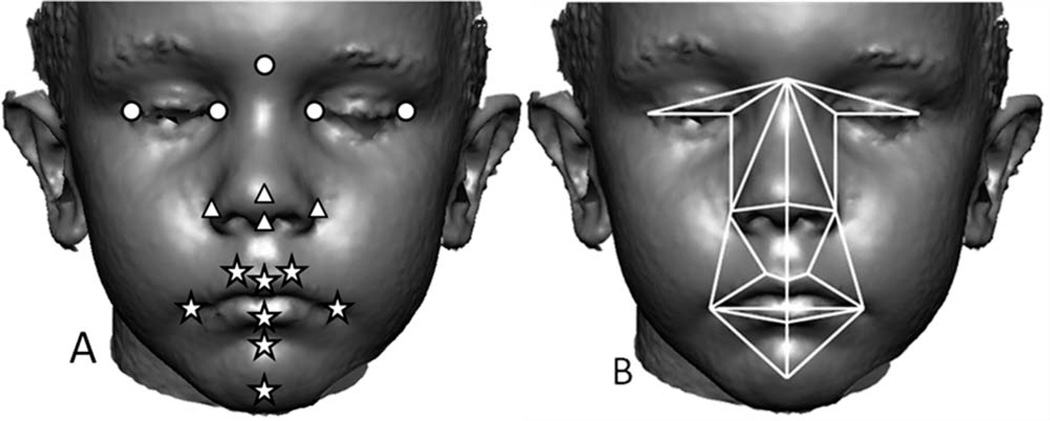
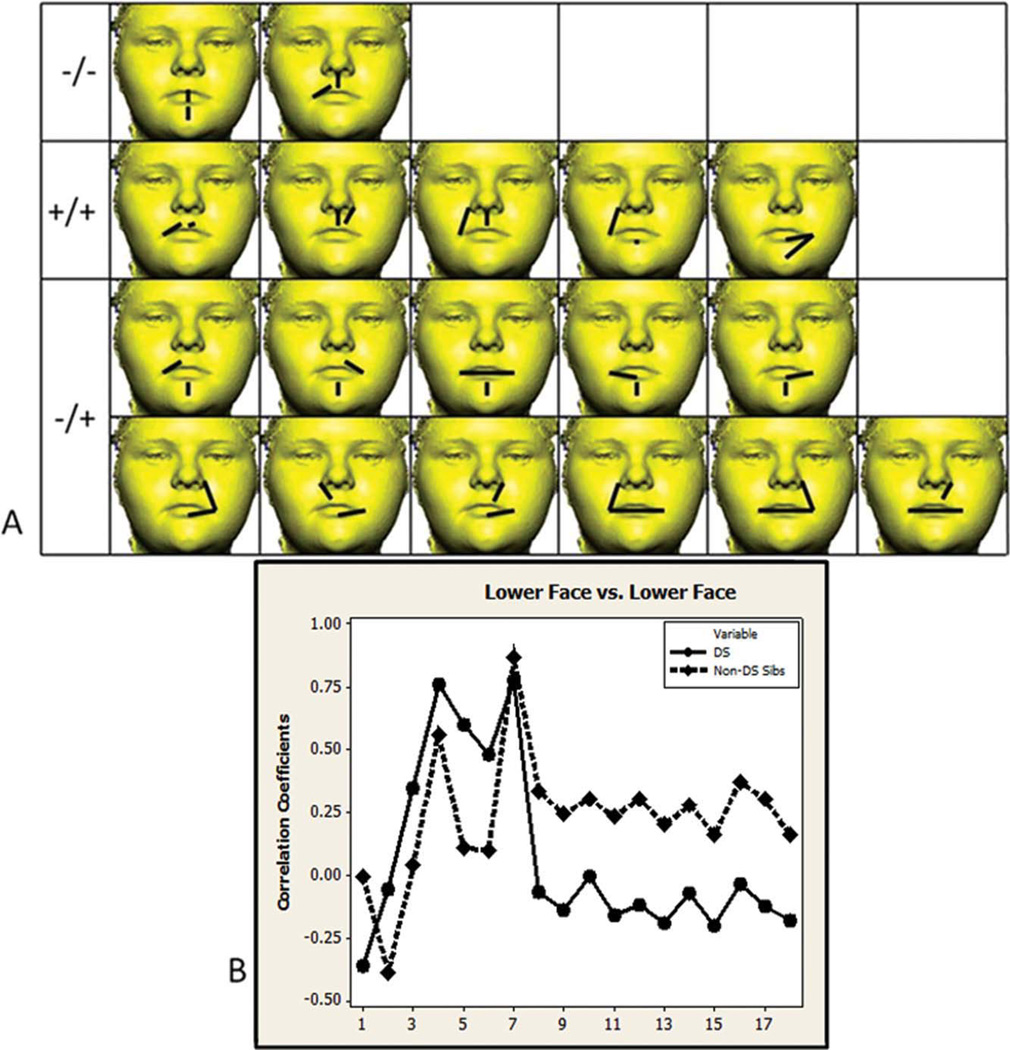
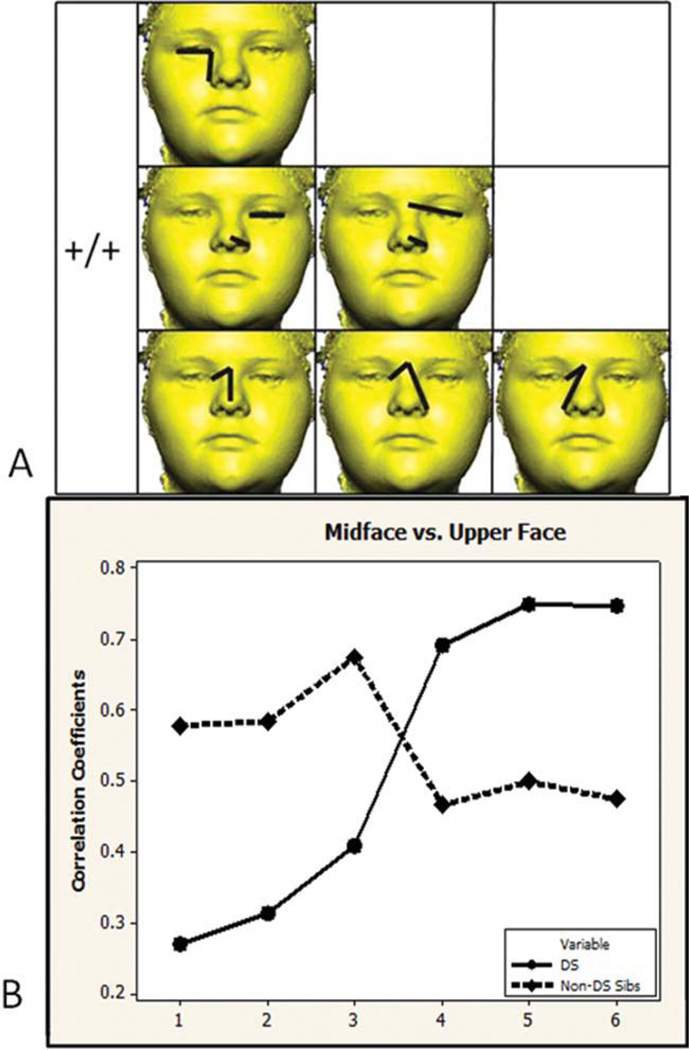
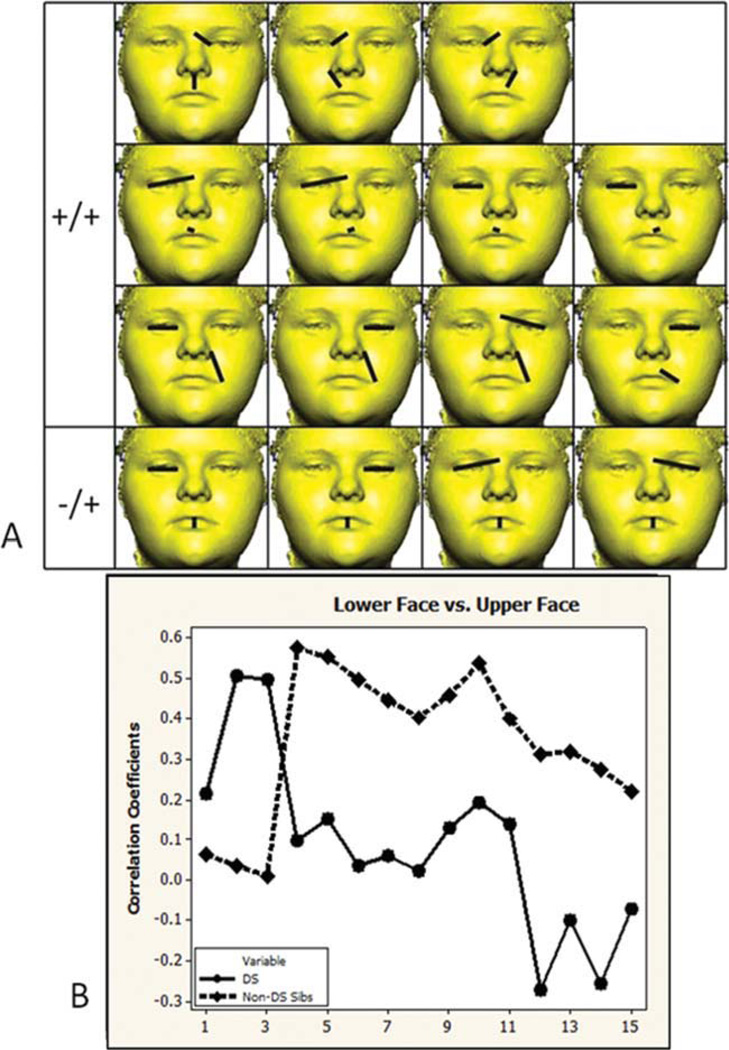
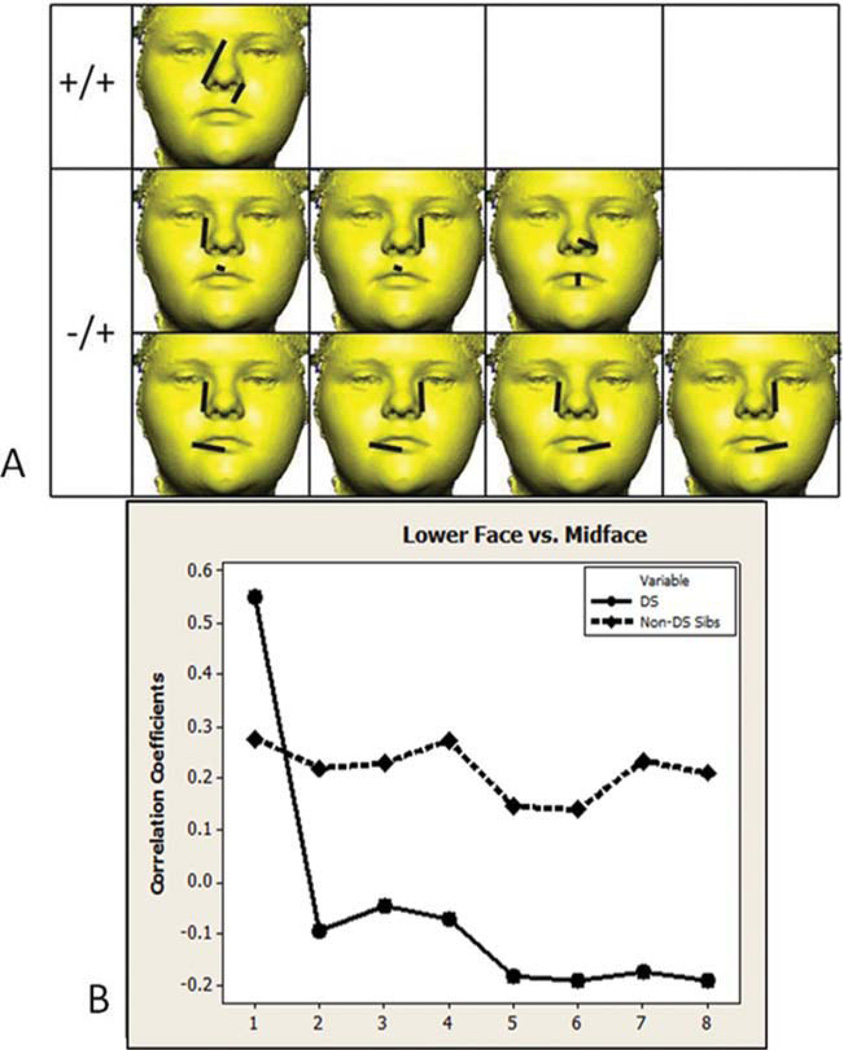
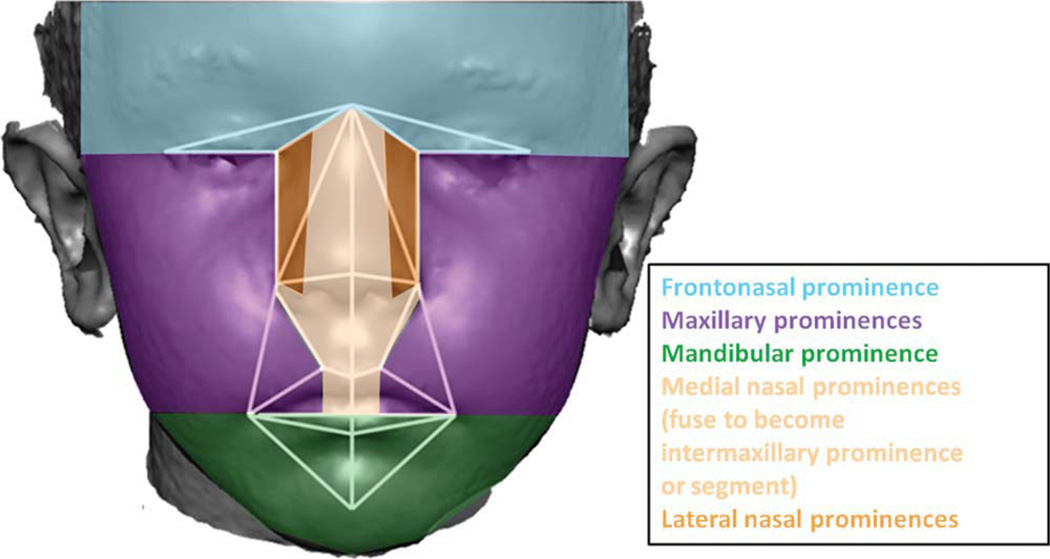
Down syndrome (DS), resulting from trisomy of chromosome 21, is the most common live-born human aneuploidy. The phenotypic expression of trisomy 21 produces variable, though characteristic, facial morphology. Although certain facial features have been documented quantitatively and qualitatively as characteristic of DS (e.g., epicanthic folds, macroglossia, and hypertelorism), all of these traits occur in other craniofacial conditions with an underlying genetic cause. We hypothesize that the typical DS face is integrated differently than the face of non-DS siblings, and that the pattern of morphological integration unique to individuals with DS will yield information about underlying developmental associations between facial regions. We statistically compared morphological integration patterns of immature DS faces (N = 53) with those of non-DS siblings (N = 54), aged 6-12 years using 31 distances estimated from 3D coordinate data representing 17 anthropometric landmarks recorded on 3D digital photographic images. Facial features are affected differentially in DS, as evidenced by statistically significant differences in integration both within and between facial regions. Our results suggest a differential affect of trisomy on facial prominences during craniofacial development.
2011 Wiley Periodicals, Inc.
Figures
References
-
- [Accessed on 18 June, 2011];3dMDface photogrammatic system. Available at: http://3dmd.com/
-
- Adams GL, Gansky SA, Miller AJ, Harrell WE, Jr, Hatcher DC. Comparison between traditional 2-dimensional cephalometry and a 3-dimensional approach on human dry skulls. Am J Orthod Dentofac Orthop. 2004;126:397–409. - PubMed
-
- Allanson JE, O’Hara P, Farkas LG, Nair RC. Anthropometric craniofacial pattern profiles in Down syndrome. Am J Med Genet. 1993;47:748–752. - PubMed
-
- Brugmann SA, Goodnough LH, Gregorieff A, Leucht P, ten Berge D, Fuerer C, Clevers H, Nusse R, Helms JA. Wnt signaling mediates regional specification in the vertebrate face. Development. 2007;134:3283–3295. - PubMed
Publication types
MeSH terms
Grants and funding
LinkOut - more resources
Full Text Sources
Medical
