


The relation of weight suppression and BMI to bulimic symptoms
- PMID: 21997424
- PMCID: PMC4852137
- DOI: 10.1002/eat.20881
The relation of weight suppression and BMI to bulimic symptoms
Abstract
Objective: High levels of weight suppression have been associated with greater binge eating and weight gain as well as poorer treatment outcome in bulimia nervosa. This study examined the relationship between weight suppression and bulimia nervosa symptoms and explored how weight suppression might interact with body mass index (BMI) in accounting for level of symptomatology at presentation for treatment.
Method: Participants were 64 women with threshold or sub-threshold bulimia nervosa. A clinical interview assessed binge eating and purging.
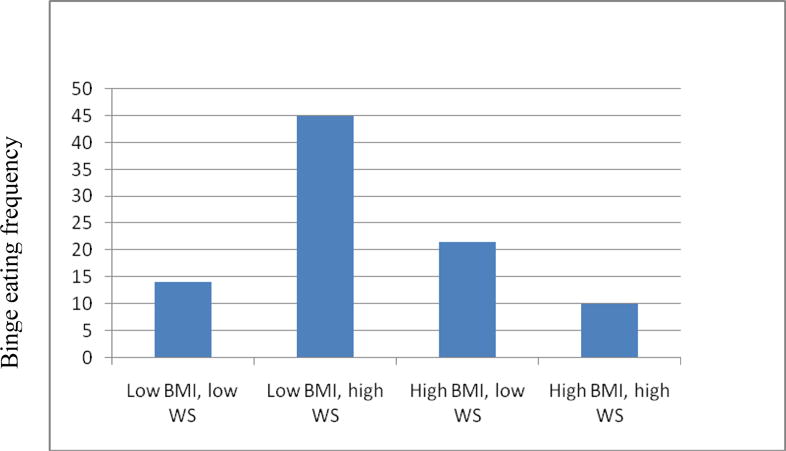
Results: Weight suppression and the interaction between BMI and weight suppression predicted frequency of binge eating such that participants with low BMI and high weight suppression engaged in the most binge eating. High levels of weight suppression also predicted more frequent purging.
Discussion: Additional research is warranted to examine mediators of these relationships.
Copyright © 2010 Wiley Periodicals, Inc.
Figures
References
-
- Butryn M, Lowe M, Safer D, Agras W. Weight suppression is a robust predictor of outcome in the cognitive-behavioral treatment of BN. Journal of Abnormal Psychology. 2006;115:62–67. - PubMed
-
- Lowe M, Davis W, Lucks D, Annunziato R, Butryn M. Weight suppression predicts weight gain during inpatient treatment of BN. Physiology and Behavior. 2006;87:487–492. - PubMed
-
- Lowe MR, Annunziato RA, Markowitz JT, Didie E, Bellace DL, Riddell L, Maille C, McKinney S, Stice E. Multiple types of dieting prospectively predict weight gain during the freshman year of college. Appetite. 2006;47(1):83–90. - PubMed
-
- Wilson G, Grilo C, Vitousek K. Psychological treatment of eating disorders. American Psychologist. 2007;62:199–216. - PubMed
