


Functional promiscuity of the COG0720 family
- PMID: 21999246
- PMCID: PMC3262898
- DOI: 10.1021/cb200329f
Functional promiscuity of the COG0720 family
Abstract
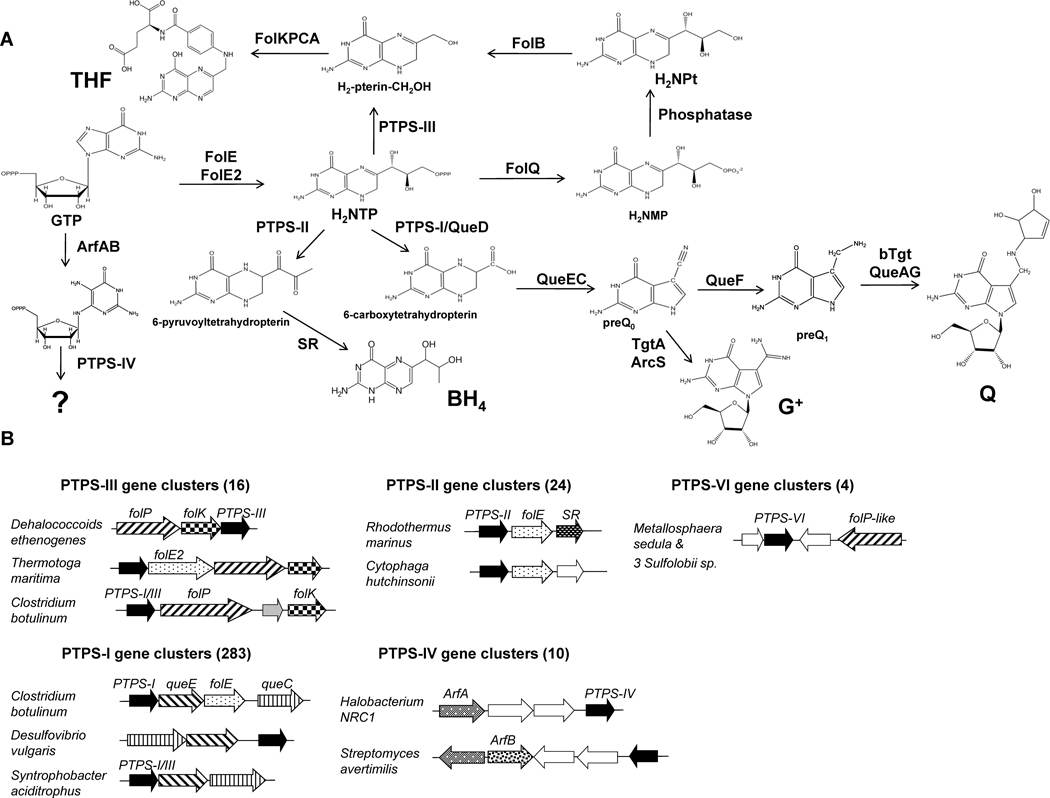
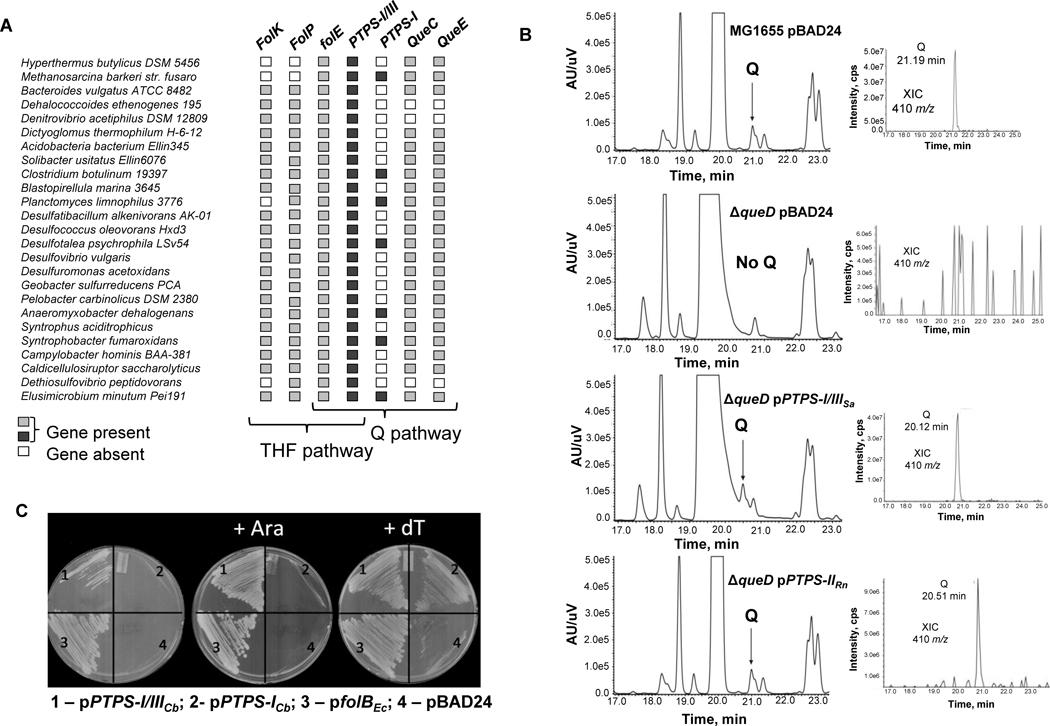
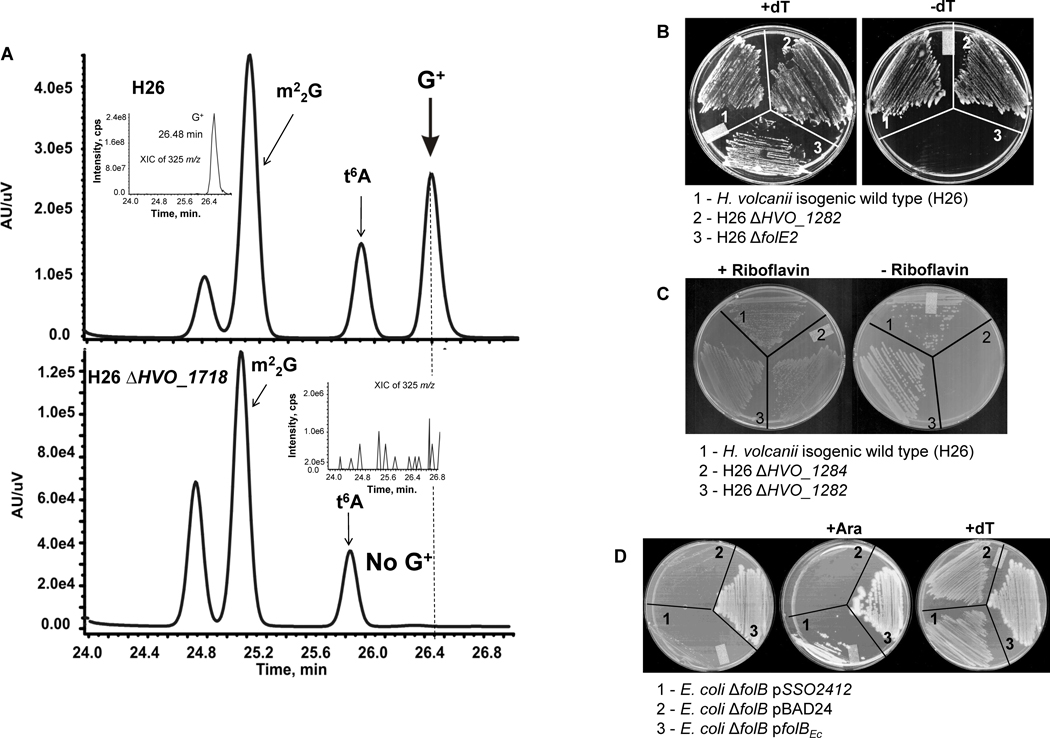
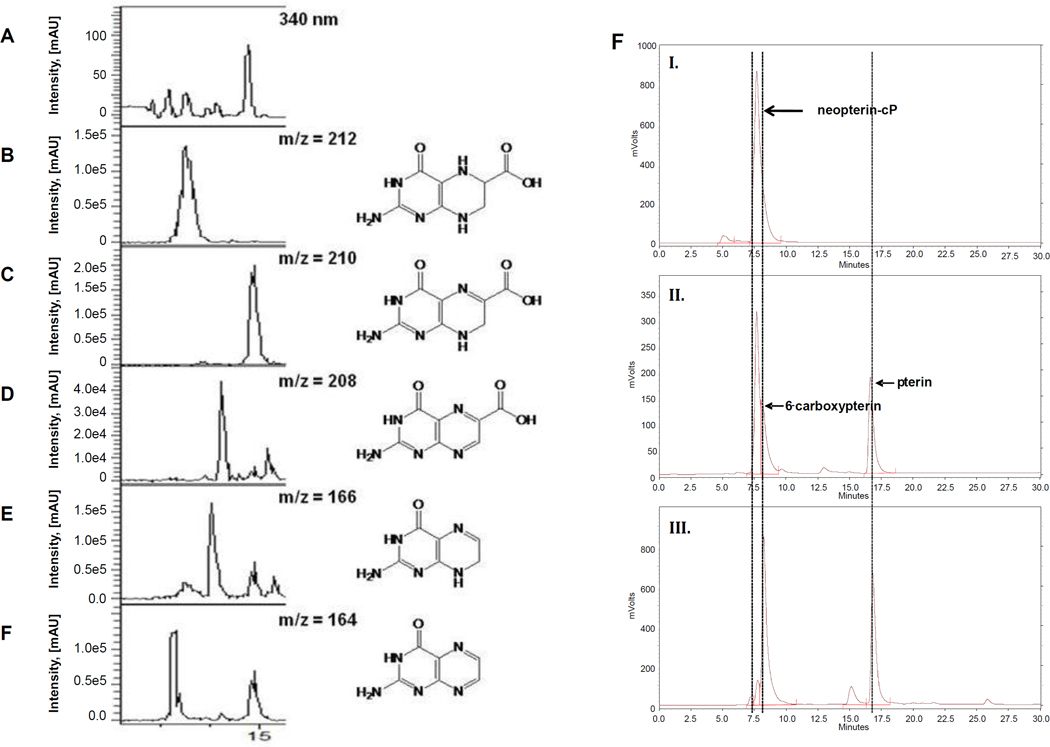
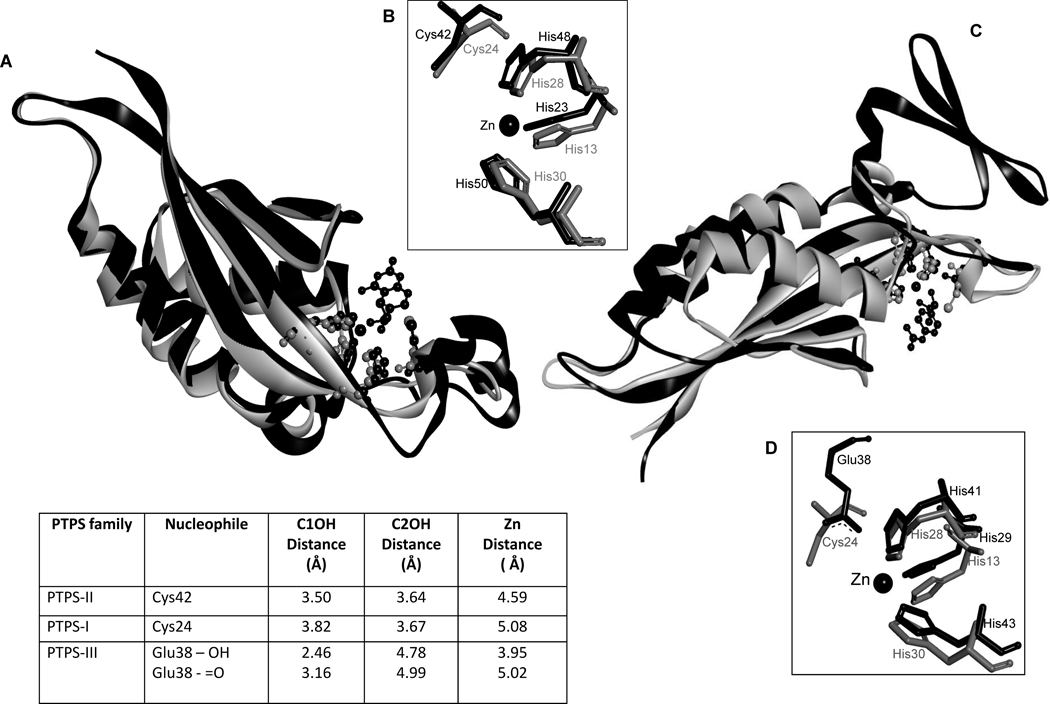
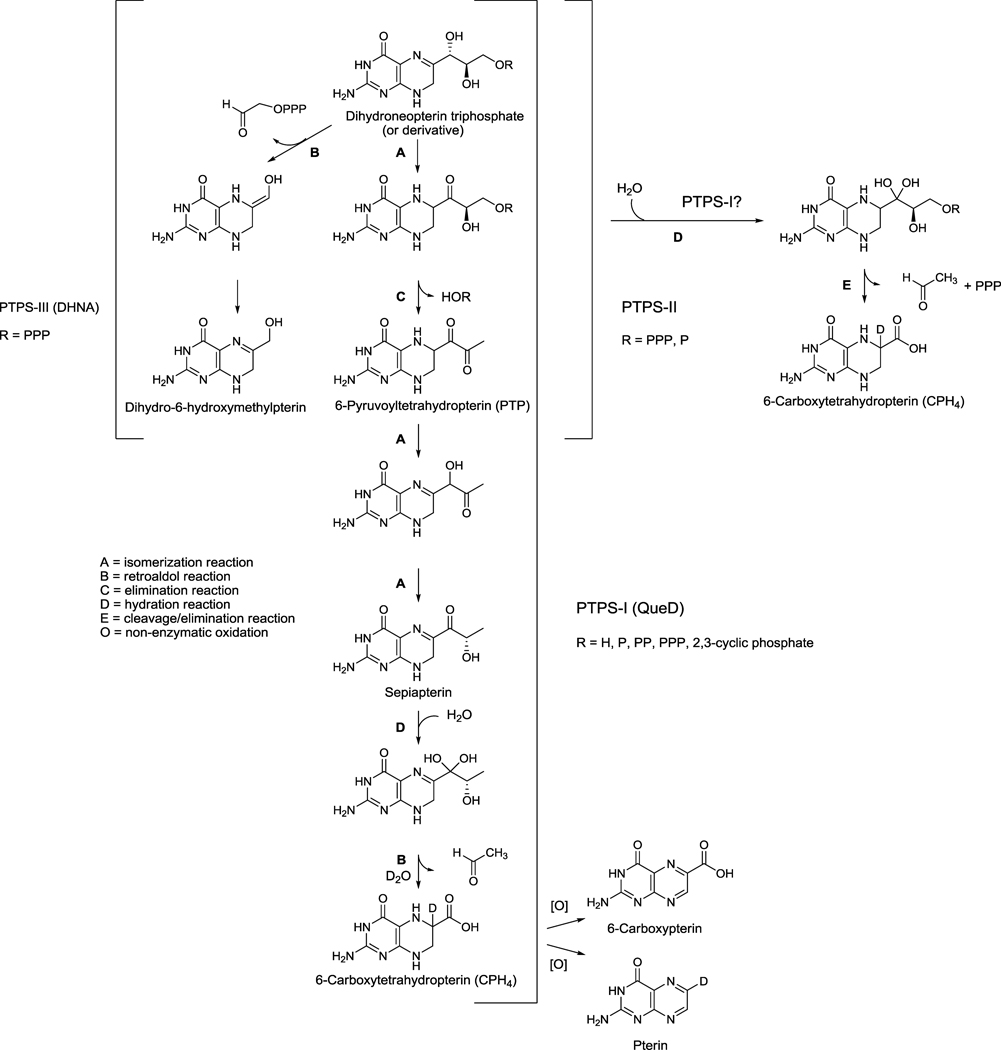
The biosynthesis of GTP derived metabolites such as tetrahydrofolate (THF), biopterin (BH(4)), and the modified tRNA nucleosides queuosine (Q) and archaeosine (G(+)) relies on several enzymes of the Tunnel-fold superfamily. A subset of these proteins includes the 6-pyruvoyltetrahydropterin (PTPS-II), PTPS-III, and PTPS-I homologues, all members of the COG0720 family that have been previously shown to transform 7,8-dihydroneopterin triphosphate (H(2)NTP) into different products. PTPS-II catalyzes the formation of 6-pyruvoyltetrahydropterin in the BH(4) pathway, PTPS-III catalyzes the formation of 6-hydroxylmethyl-7,8-dihydropterin in the THF pathway, and PTPS-I catalyzes the formation of 6-carboxy-5,6,7,8-tetrahydropterin in the Q pathway. Genes of these three enzyme families are often misannotated as they are difficult to differentiate by sequence similarity alone. Using a combination of physical clustering, signature motif, phylogenetic codistribution analyses, in vivo complementation studies, and in vitro enzymatic assays, a complete reannotation of the COG0720 family was performed in prokaryotes. Notably, this work identified and experimentally validated dual function PTPS-I/III enzymes involved in both THF and Q biosynthesis. Both in vivo and in vitro analyses showed that the PTPS-I family could tolerate a translation of the active site cysteine and was inherently promiscuous, catalyzing different reactions on the same substrate or the same reaction on different substrates. Finally, the analysis and experimental validation of several archaeal COG0720 members confirmed the role of PTPS-I in archaeosine biosynthesis and resulted in the identification of PTPS-III enzymes with variant signature sequences in Sulfolobus species. This study reveals an expanded versatility of the COG0720 family members and illustrates that for certain protein families extensive comparative genomic analysis beyond homology is required to correctly predict function.
Figures
References
-
- Colloc'h N, Poupon A, Mornon JP. Sequence and structural features of the T-fold, an original tunnelling building unit. Proteins. 2000;39:142–154. - PubMed
-
- Auerbach G, Nar H. The pathway from GTP to tetrahydrobiopterin: three-dimensional structures of GTP cyclohydrolase I and 6-pyruvoyl tetrahydropterin synthase. Biol. Chem. 1997;378:185–192. - PubMed
-
- Yim JJ, Brown GM. Characteristics of guanosine triphosphate cyclohydrolase I purified from Escherichia coli. J. Biol. Chem. 1976;251:5087–5094. - PubMed
Publication types
MeSH terms
Substances
Grants and funding
LinkOut - more resources
Full Text Sources
Molecular Biology Databases
