


Recent clinical and molecular insights into emerging artemisinin resistance in Plasmodium falciparum
- PMID: 22001944
- PMCID: PMC3268008
- DOI: 10.1097/QCO.0b013e32834cd3ed
Recent clinical and molecular insights into emerging artemisinin resistance in Plasmodium falciparum
Abstract
Purpose of review: Artemisinin-based combination therapies (ACTs) have been deployed globally with remarkable success for more than 10 years without having lost their malaria treatment efficacy. However, recent reports from the Thai-Cambodian border reveal evidence of emerging resistance to artemisinins. The latest published clinical and molecular findings are summarized herein.
Recent findings: Clinical studies have identified delayed parasite clearance time as the most robust marker of artemisinin resistance. Resistance has only been documented from South-east Asia and has been observed in isolates that show no significant decrease in drug susceptibility in vitro. Genetic investigations have yet to uncover robust molecular markers. In-vitro studies have identified parasite quiescence or dormancy mechanisms that protect early 'ring-stage' intra-erythrocytic parasites against short-term artemisinin exposure. This might be achieved by reducing the rate of hemoglobin degradation, important for artemisinin bioactivation.
Summary: Should ACTs fail, no suitable alternatives exist as first-line treatments of P. falciparum malaria. Intensified efforts are essential to monitor the spread of resistance, define therapeutic and operational strategies to counter its impact, and understand its molecular basis. Success in these areas is critical to ensuring that recent gains in reducing the burden of malaria are not lost.
Conflict of interest statement
There are no conflicts of interest.
Figures
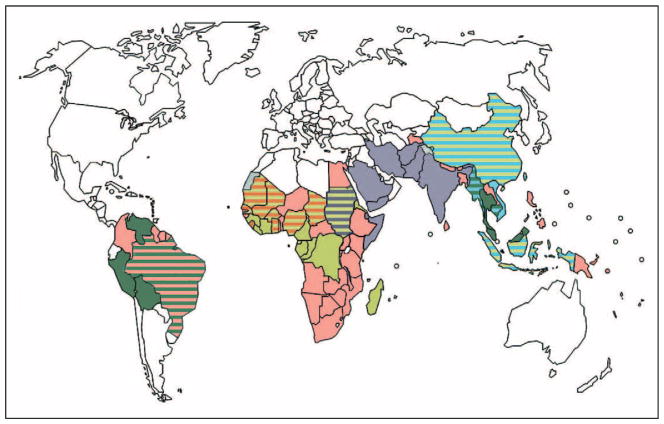
 , Artemether–lumefantrine;
 , dihydroartemisinin–piperaquine;
 , artesunate–amodiaquine;
 , artesunate–mefloquine;
 , artesunate–sulphadoxine/pyrimethamine.
References
-
- World Health Organization. WHO global report on antimalarial drug efficacy and drug resistance: 2000–2010. Geneva, Switzerland: WHO Press; [[accessed 1 August 2010].]. http://www.who.int/malaria/publications/atoz/9789241500470/en/index.html.
-
- Snow RW, Trape JF, Marsh K. The past, present and future of childhood malaria mortality in Africa. Trends Parasitol. 2001;17:593–597. - PubMed
-
- Crawley J, Chu C, Mtove G, Nosten F. Malaria in children. Lancet. 2010;375:1468–1481. An outstanding clinical review that covers epidemiology and disease burden, clinical presentation, diagnosis, treatment, prevention through prophylaxis, vector control, and approaches to developing a malaria vaccine. - PubMed
-
- White NJ. Qinghaosu (artemisinin): the price of success. Science. 2008;320:330–334. - PubMed
Publication types
MeSH terms
Substances
Grants and funding
LinkOut - more resources
Full Text Sources
Research Materials
