


Convergence of miRNA expression profiling, α-synuclein interacton and GWAS in Parkinson's disease
- PMID: 22003392
- PMCID: PMC3189215
- DOI: 10.1371/journal.pone.0025443
Convergence of miRNA expression profiling, α-synuclein interacton and GWAS in Parkinson's disease
Abstract
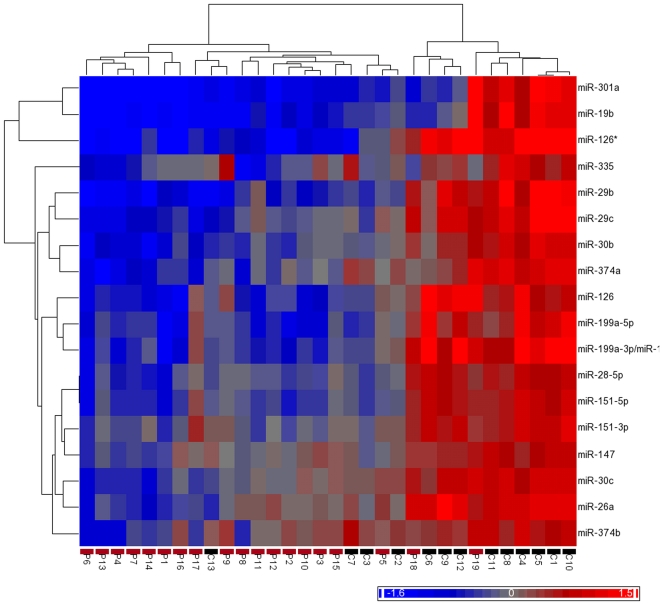
miRNAs were recently implicated in the pathogenesis of numerous diseases, including neurological disorders such as Parkinson's disease (PD). miRNAs are abundant in the nervous system, essential for efficient brain function and play important roles in neuronal patterning and cell specification. To further investigate their involvement in the etiology of PD, we conducted miRNA expression profiling in peripheral blood mononuclear cells (PBMCs) of 19 patients and 13 controls using microarrays. We found 18 miRNAs differentially expressed, and pathway analysis of 662 predicted target genes of 11 of these miRNAs revealed an over-representation in pathways previously linked to PD as well as novel pathways. To narrow down the genes for further investigations, we undertook a parallel approach using chromatin immunoprecipitation-sequencing (ChIP-seq) analysis to uncover genome-wide interactions of α-synuclein, a molecule with a central role in both monogenic and idiopathic PD. Convergence of ChIP-seq and miRNomics data highlighted the glycosphingolipid biosynthesis and the ubiquitin proteasome system as key players in PD. We then tested the association of target genes belonging to these pathways with PD risk, and identified nine SNPs in USP37 consistently associated with PD susceptibility in three genome-wide association studies (GWAS) datasets (0.46≤OR≤0.63) and highly significant in the meta-dataset (3.36×10⁻⁴<p <1.94×10⁻³). A SNP in ST8SIA4 was also highly associated with PD (p = 6.15×10⁻³) in the meta-dataset. These findings suggest that several miRNAs may act as regulators of both known and novel biological processes leading to idiopathic PD.
Conflict of interest statement
Figures
References
Publication types
MeSH terms
Substances
Grants and funding
LinkOut - more resources
Full Text Sources
Other Literature Sources
Medical
Molecular Biology Databases
