


Network position and sexual dysfunction: implications of partner betweenness for men
- PMID: 22003520
- PMCID: PMC3622553
- DOI: 10.1086/661079
Network position and sexual dysfunction: implications of partner betweenness for men
Abstract
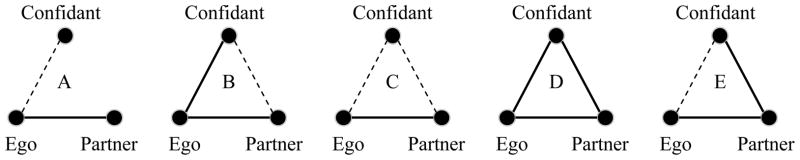
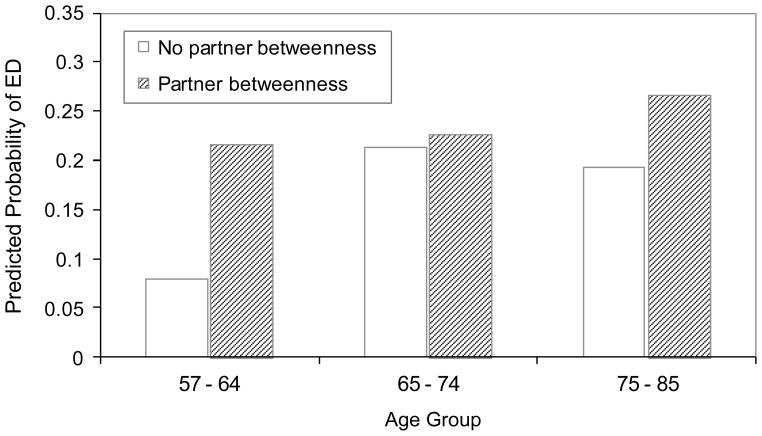
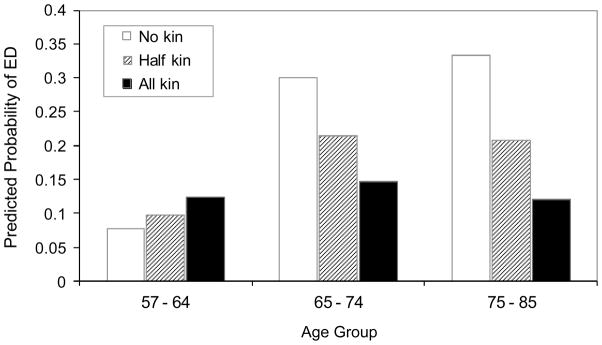
This article combines relational perspectives on gender identity with social network structural perspectives on health to understand men's sexual functioning. The authors argue that network positions that afford independence and control over social resources are consistent with traditional masculine roles and may therefore affect men's sexual performance. For example, when a heterosexual man's female partner has more frequent contact with his confidants than he does--which the authors refer to as partner betweenness--his relational autonomy, privacy, and control are constrained. Analyses of data from the National Social Life, Health, and Aging Project (NSHAP) show that about a quarter of men experience partner betweennessa and that these men are 92% more likely to report erectile dysfunction. Partner betweenness is strongest among the youngest men in the sample, which may reflect changing conceptions of masculinity in later life. The authors consider several explanations for these findings and urge additional research on the links between health, gender, and network structure.
Figures
References
-
- Adams Rebecca G, Ueno Koji. Middle-Aged and Older Adult Men’s Friendships. In: Bedford Victoria Hilkevitch, Turner Barbara F., editors. Men in Relationships: A New Look from a Life Course Perspective. New York: Springer; 2006. pp. 103–24.
-
- Avison William R, Cairney John. Social Structure, Stress, and Personal Control. In: Zarit Steven H, Pearlin Leonard I, Warner Schaie K., editors. Personal Control in Social and Life Contexts. New York: Springer; 2003. pp. 127–64.
-
- Bearman Peter S, Parigi Paolo. Cloning Headless Frogs and Other Important Matters: Conversation Topics and Network Structure. Social Forces. 2004;83:535–57.
-
- Berkman Lisa F, Glass Thomas, Brissette Ian, Seeman Teresa E. From Social Integration to Health: Durkheim in the New Millennium. Social Science & Medicine. 2000;51:843–57. - PubMed
-
- Braun Virginia, Gavey Nicola, McPhillips Kathryn. The ‘Fair Deal’? Unpacking Accounts of Reciprocity in Heterosex. Sexualities. 2003;6:237–61.
Publication types
MeSH terms
Grants and funding
LinkOut - more resources
Full Text Sources
Medical