


Mechanical properties and neural control of human hand motor units
- PMID: 22005677
- PMCID: PMC3249035
- DOI: 10.1113/jphysiol.2011.215236
Mechanical properties and neural control of human hand motor units
Abstract
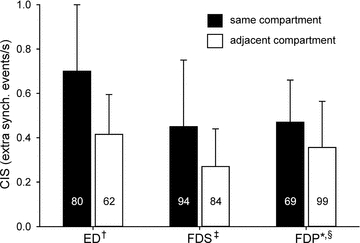
Motor units serve both as the mechanical apparatus and the final stage of neural processing through which motor behaviours are enacted. Therefore, knowledge about the contractile properties and organization of the neural inputs to motor units supplying finger muscles is essential for understanding the control strategies underlying the diverse motor functions of the human hand. In this brief review, basic contractile properties of motor units residing in human hand muscles are described. Hand motor units are not readily categorized into the classical physiological types as established in the cat gastrocnemius muscle. In addition, the distribution of descending synaptic inputs to motor nuclei supplying different hand muscles is outlined. Motor neurons innervating intrinsic muscles appear to have relatively independent lines of input from supraspinal centres whereas substantial divergence of descending input is seen across motor nuclei supplying extrinsic hand muscles. The functional significance of such differential organizations of descending inputs for the control of hand movements is discussed.
Figures
References
-
- An KN, Hui FC, Morrey BF, Linscheid RL, Chao EY. Muscles across the elbow joint: a biomechanical analysis. J Biomech. 1981;14:659–669. - PubMed
-
- Bakels R, Kernell D. Average but not continuous speed match between motoneurons and muscle units of rat tibialis anterior. J Neurophysiol. 1993;70:1300–1306. - PubMed
-
- Bigland-Ritchie B, Fuglevand AJ, Thomas CK. Contractile properties of human motor units: is man a cat? Neuroscientist. 1998;4:240–249.
-
- Bromberg MB. Updating motor unit number estimation (MUNE) Clin Neurophysiol. 2007;118:1–8. - PubMed
Publication types
MeSH terms
Grants and funding
LinkOut - more resources
Full Text Sources
Miscellaneous
