


A peek into the complex realm of histone phosphorylation
- PMID: 22006017
- PMCID: PMC3233023
- DOI: 10.1128/MCB.05631-11
A peek into the complex realm of histone phosphorylation
Abstract
Although discovered long ago, posttranslational phosphorylation of histones has been in the spotlight only recently. Information is accumulating almost daily on phosphorylation of histones and their roles in cellular physiology and human diseases. An extensive cross talk exists between phosphorylation and other posttranslational modifications, which together regulate various biological processes, including gene transcription, DNA repair, and cell cycle progression. Recent research on histone phosphorylation has demonstrated that nearly all histone types are phosphorylated at specific residues and that these modifications act as a critical intermediate step in chromosome condensation during cell division, transcriptional regulation, and DNA damage repair. As with all young fields, apparently conflicting and sometimes controversial observations about histone phosphorylations and their true functions in different species are found in the literature. Accumulating evidence suggests that instead of functioning strictly as part of a general code, histone phosphorylation probably functions by establishing cross talk with other histone modifications and serving as a platform for recruitment or release of effector proteins, leading to a downstream cascade of events. Here we extensively review published information on the complexities of histone phosphorylation, the roles of proteins recognizing these modifications and the resuting physiological outcome, and, importantly, future challenges and opportunities in this fast-moving field.
Figures
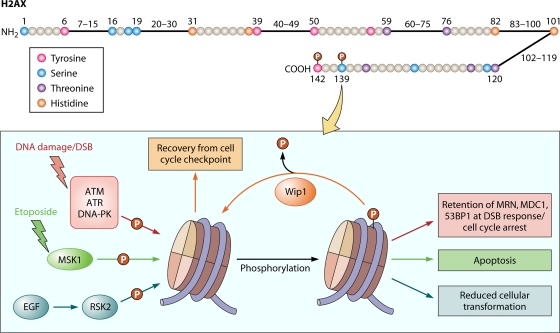
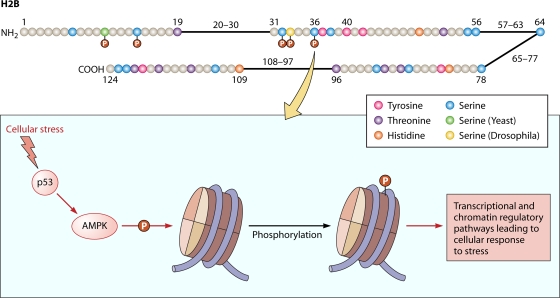
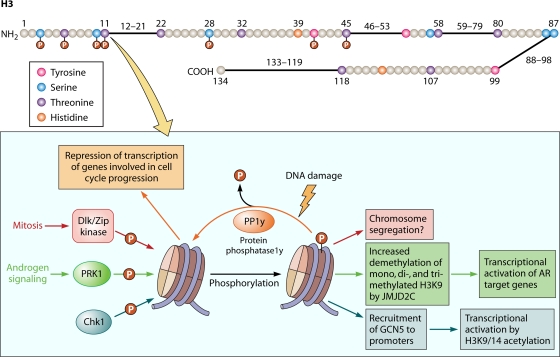
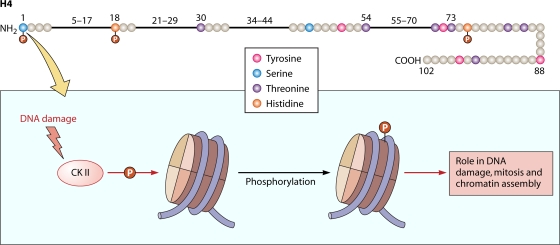
References
-
- Ahn S. H., et al. 2005. Sterile 20 kinase phosphorylates histone H2B at serine 10 during hydrogen peroxide-induced apoptosis in S. cerevisiae. Cell 120:25–36 - PubMed
-
- Ajiro K. 2000. Histone H2B phosphorylation in mammalian apoptotic cells. An association with DNA fragmentation. J. Biol. Chem. 275:439–443 - PubMed
-
- Ajiro K., Borun T. W., Cohen L. H. 1981. Phosphorylation states of different histone 1 subtypes and their relationship to chromatin functions during the HeLa S-3 cell cycle. Biochemistry 20:1445–1454 - PubMed
-
- Anest V., Cogswell P. C., Baldwin A. S., Jr 2004. IκB kinase α and p65/RelA contribute to optimal epidermal growth factor-induced c-fos gene expression independent of IκBα degradation. J. Biol. Chem. 279:31183–31189 - PubMed
Publication types
MeSH terms
Substances
Grants and funding
LinkOut - more resources
Full Text Sources
Research Materials
