Temporal and spatial cooperation of Snail1 and Twist1 during epithelial-mesenchymal transition predicts for human breast cancer recurrence
- PMID: 22006115
- PMCID: PMC4922748
- DOI: 10.1158/1541-7786.MCR-11-0371
Temporal and spatial cooperation of Snail1 and Twist1 during epithelial-mesenchymal transition predicts for human breast cancer recurrence
Abstract
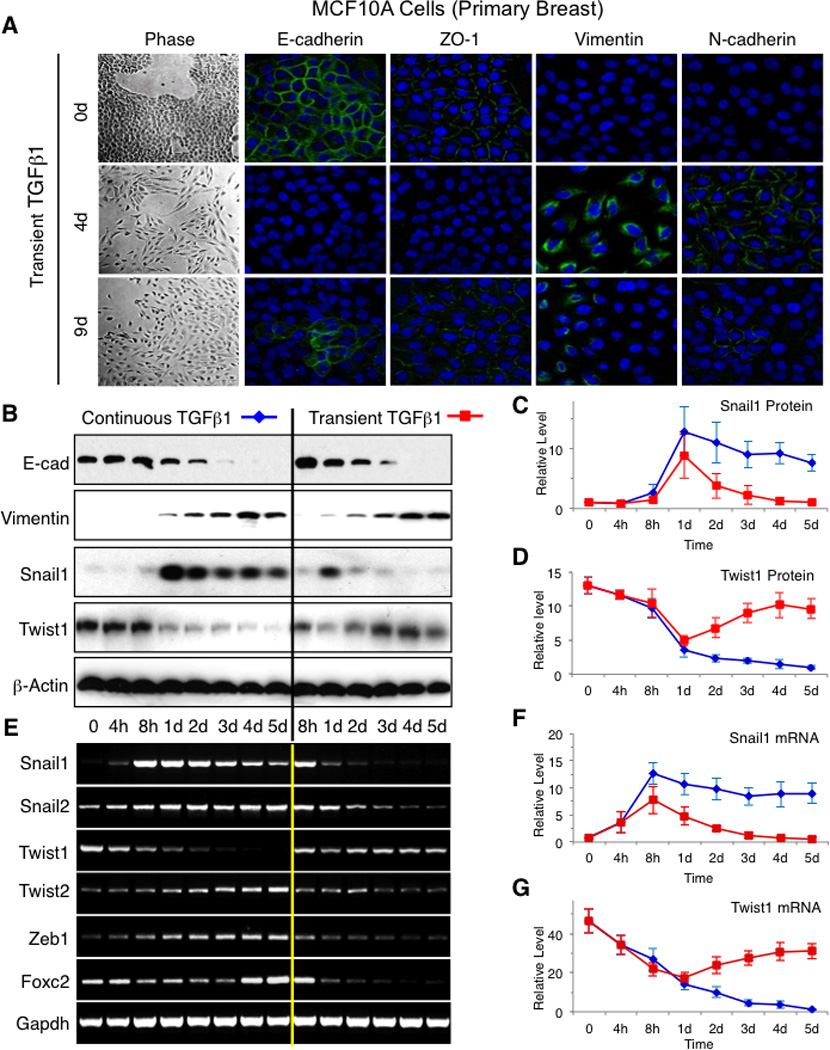
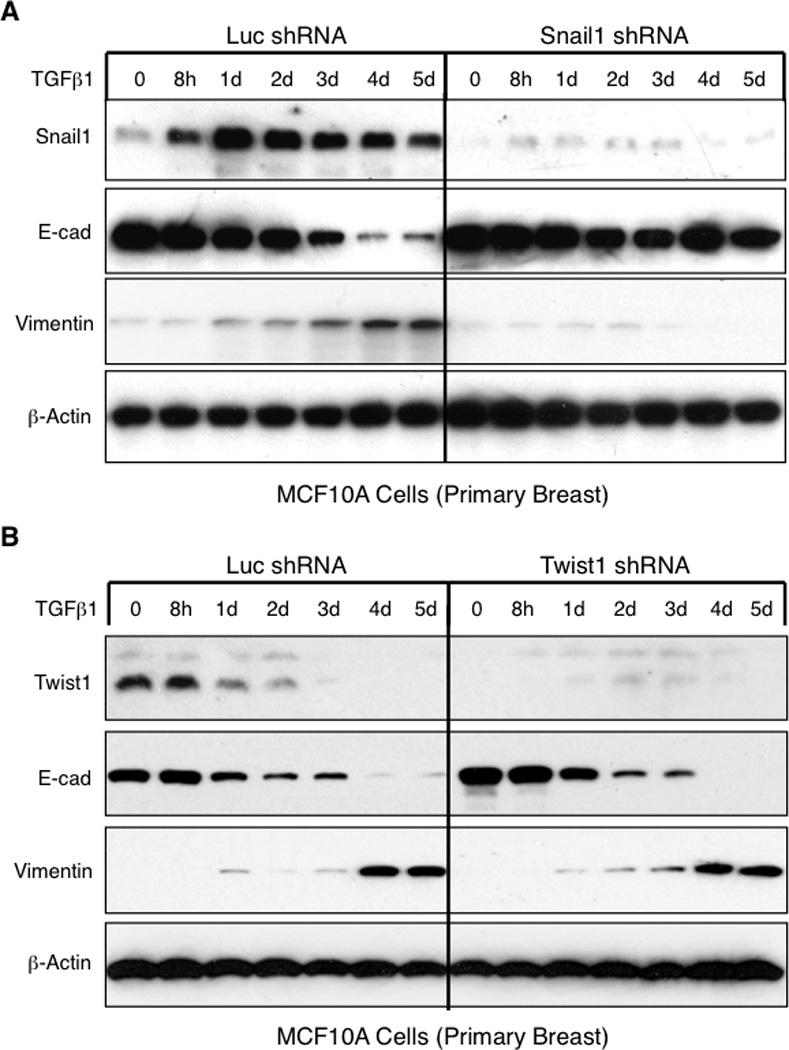
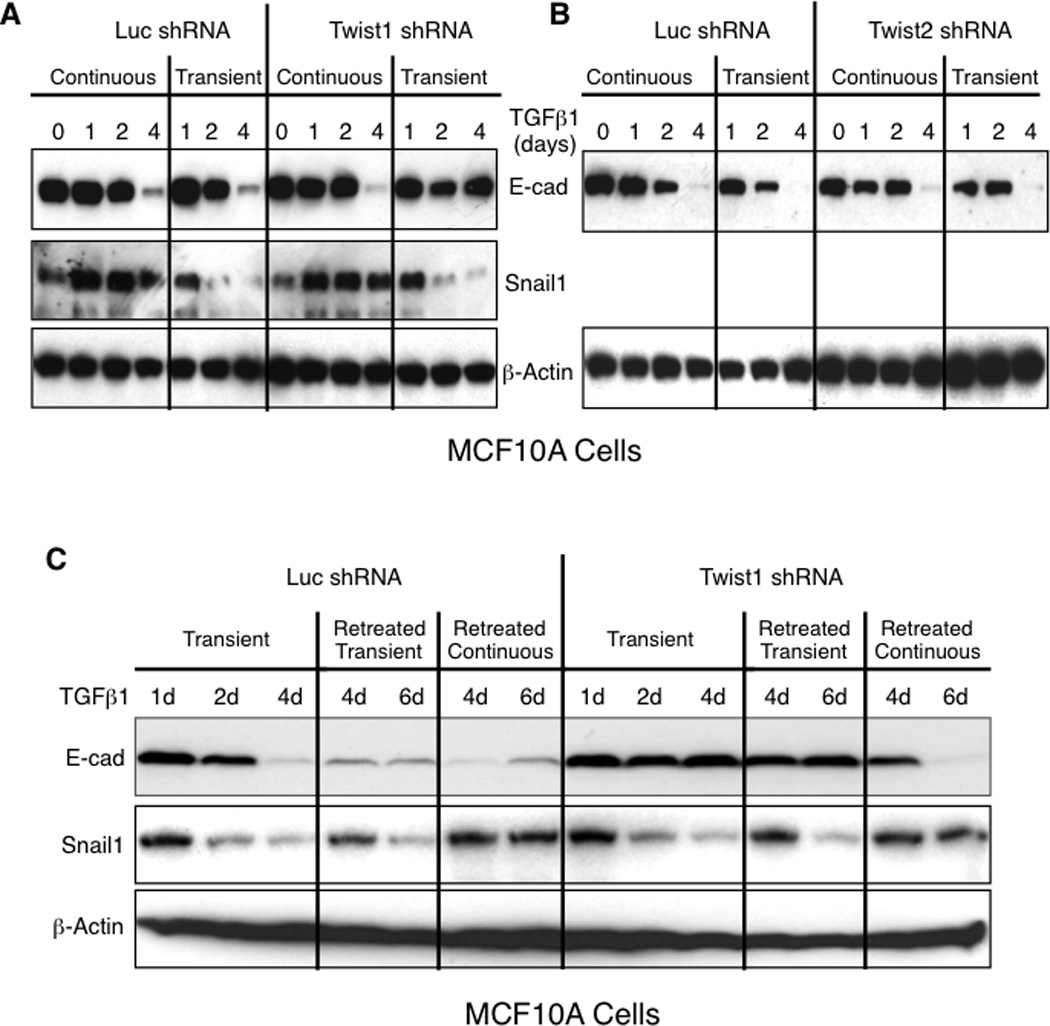
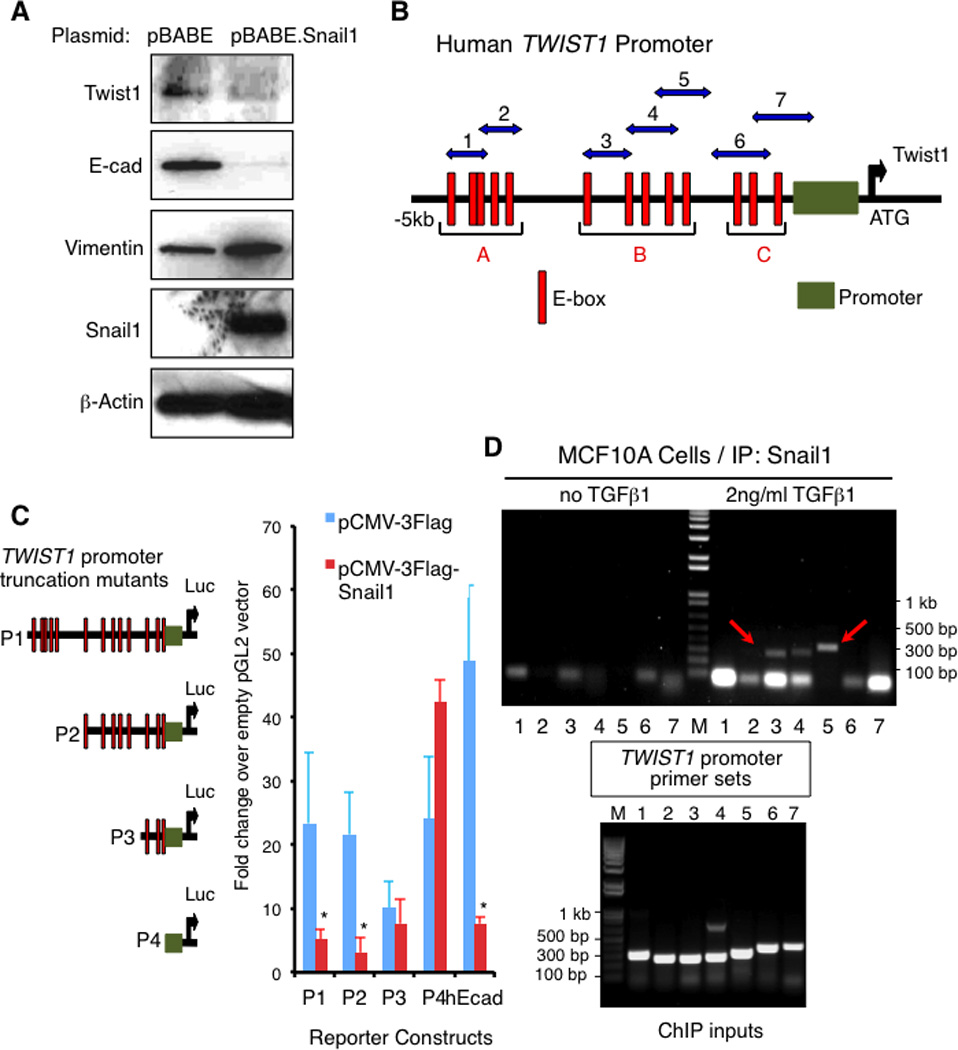
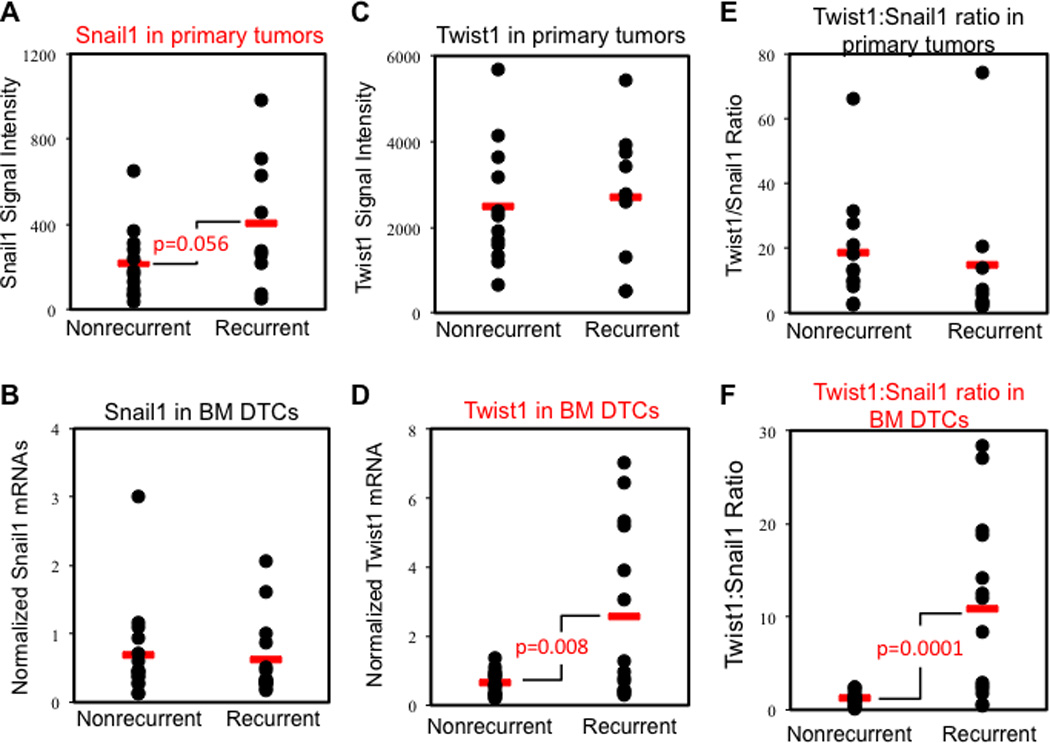
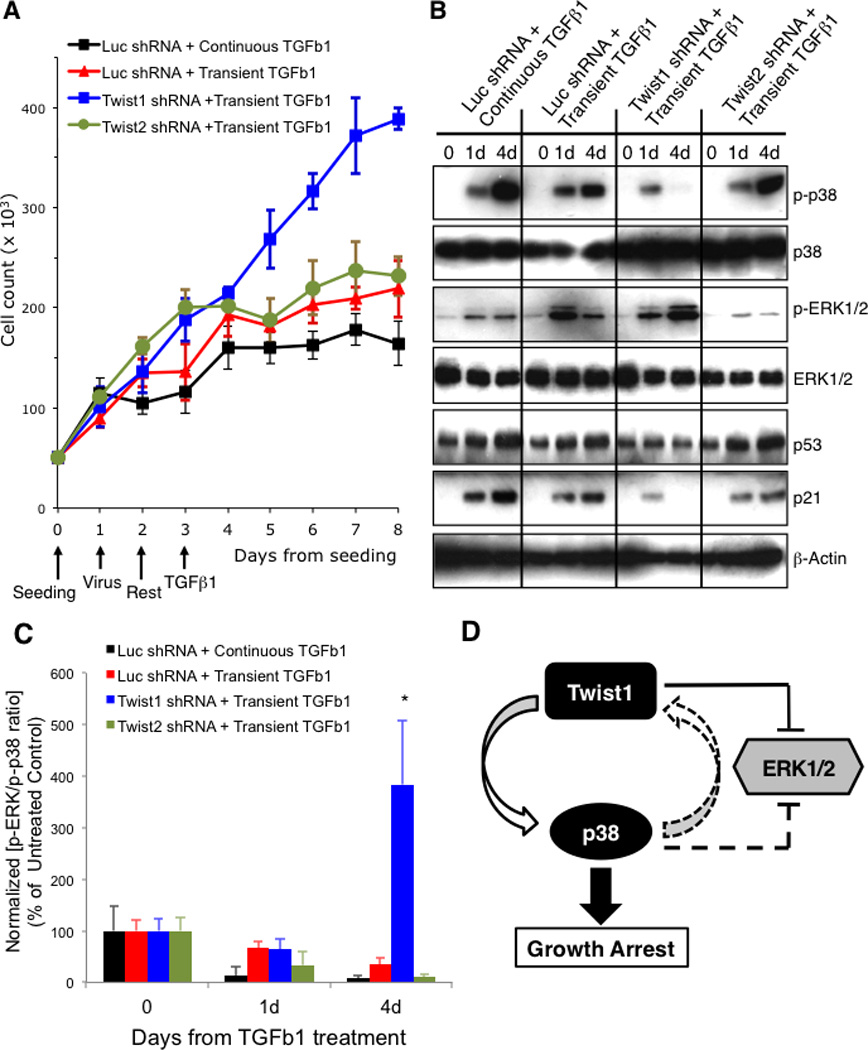
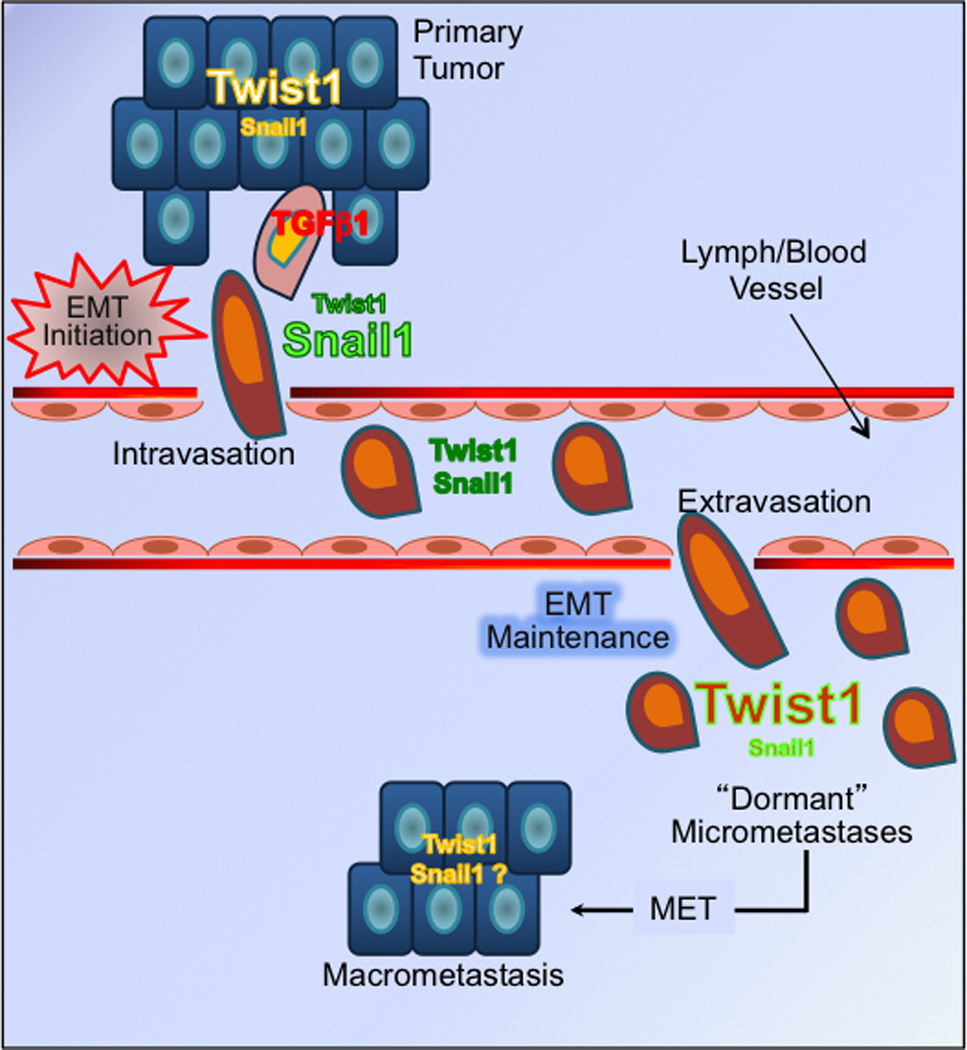
Epithelial-mesenchymal transition (EMT) is a normal developmental program that is considered to also play an important role in cancer metastasis. Ultimate inducers of EMT are transcriptional repressors that individually can induce experimental EMT, yet in many cells, particularly cancer cells, multiple inducers are expressed simultaneously. Why, and if, and how they interact to regulate EMT is unanswered. Using RNA interference technology to affect protein knockdown and avoid potential overexpression artifact coupled with transient TGFβ treatment to better mimic in vivo conditions we show, in both nontumorigenic and tumorigenic epithelial cancer cells, that Snail1 is uniquely required for EMT initiation, whereas Twist1 is required to maintain late EMT. Twist1, present in resting epithelial cells, is dispensable for EMT initiation. Mechanistically, in response to transient TGFβ treatment, transient Snail1 expression represses Twist1 transcription directly, which is subsequently upregulated, as Snail1 levels decrease, to sustain E-cadherin downregulation and growth arrest of EMT. Persistent Twist1 expression is associated with a p38 and extracellular signal-regulated kinase signal feedback loop that sustains growth-inhibitory signals characteristic of quiescent micrometastatic tumors. This Snail1-Twist1 temporal and spatial cooperation was also observed in vivo during human breast cancer progression to metastasis. Twist1 level, but not Snail1 level, and Twist1:Snail1 ratio in disseminated micrometastatic bone marrow tumor cells was found to correlate with survival and treatment resistance and is highly predictive of metastatic or recurrent disease.
Figures
References
-
- Thiery JP, Acloque H, Huang RYJ, Nieto MA. Epithelial-Mesenchymal Transitions in Development and Disease. 2009;139(5):871–890. - PubMed
-
- Peinado H, Olmeda D, Cano A. Snail, Zeb and bHLH factors in tumour progression: an alliance against the epithelial phenotype? Nat Rev Cancer. 2007 Jun;7(6):415–428. - PubMed
-
- Yang M-H, Hsu DS-S, Wang H-W, Wang H-J, Lan H-Y, Yang W-H, Huang C-H, Kao S-Y, Tzeng C-H, Tai S-K, Chang S-Y, Lee OK-S, Wu K-J. Bmi1 is essential in Twist1-induced epithelial-mesenchymal transition. Nat Cell Biol. 2010;12(10):982–992. [10.1038/ncb2099] - PubMed
-
- Kudo-Saito C, Shirako H, Takeuchi T, Kawakami Y. Cancer Metastasis Is Accelerated through Immunosuppression during Snail-Induced EMT of Cancer Cells. 2009;15(3):195–206. - PubMed
Publication types
MeSH terms
Substances
Grants and funding
LinkOut - more resources
Full Text Sources
Other Literature Sources
Medical
Research Materials