


Lipoprotein lipase deficiency in chronic kidney disease is accompanied by down-regulation of endothelial GPIHBP1 expression
- PMID: 22009636
- PMCID: PMC3417131
- DOI: 10.1007/s10157-011-0549-3
Lipoprotein lipase deficiency in chronic kidney disease is accompanied by down-regulation of endothelial GPIHBP1 expression
Abstract
Background: Chronic renal failure (CRF) is associated with hypertriglyceridemia and impaired clearance of very low density lipoprotein (VLDL) and chylomicrons which are largely due to lipoprotein lipase (LPL) deficiency/dysfunction. After its release from myocytes and adipocytes, LPL binds to the endothelium in the adjacent capillaries where it catalyzes hydrolysis of triglycerides in VLDL and chylomicrons. The novel endothelium-derived molecule, glycosylphosphatidylinositol-anchored binding protein 1 (GPIHBP1), plays a critical role in LPL metabolism and function by anchoring LPL to the endothelium and binding chylomicrons. GPIHBP1-deficient mice and humans exhibit severe hypertriglyceridemia and diminished heparin-releasable LPL, pointing to the critical role of GPIHBP1 in regulation of LPL activity. Given its central role in regulation of LPL activity and triglyceride metabolism, we explored the effect of chronic kidney disease (CKD) on GPIHBP1 expression.
Methods: Expression of GPIHBP1 and LPL were determined by reverse transcriptase-polymerase chain reaction, Western blot and immunohistochemical analyses in the adipose tissue, skeletal muscle and myocardium of rats 12 weeks after 5/6 nephrectomy (CRF) or sham-operation (control).
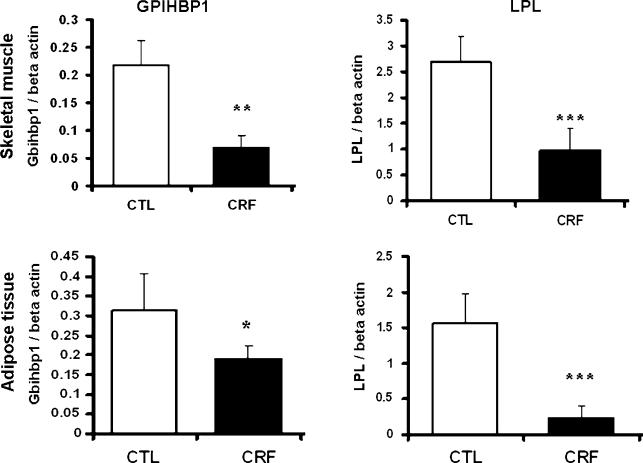
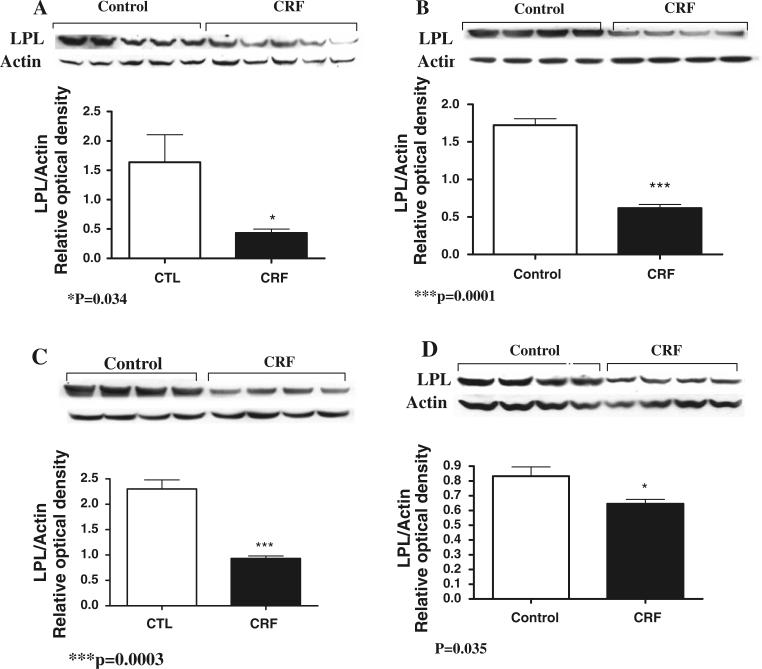
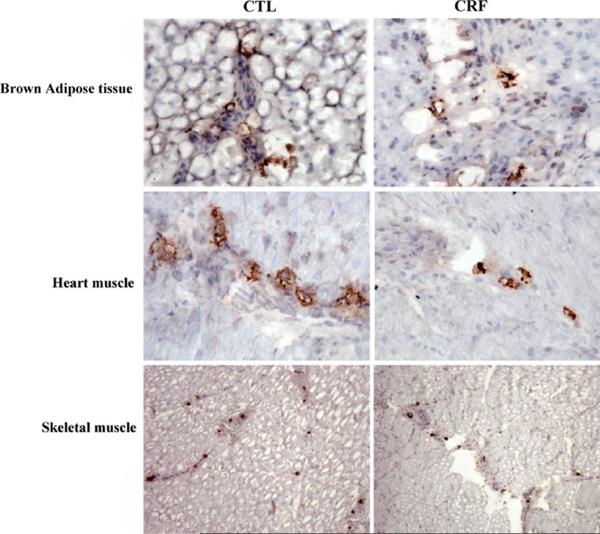
Results: Compared to the controls, the CRF group exhibited severe hypertriglyceridemia, significant reduction of the skeletal muscle, myocardium and adipose tissue LPL mRNA and protein abundance. This was accompanied by parallel reductions of GPIHBP1 mRNA abundance and immunostaining in the tested tissues.
Conclusions: LPL deficiency in CKD is associated with and compounded by GPIHBP1 deficiency. Together these abnormalities contribute to impaired clearance of triglyceride-rich lipoproteins, diminished availability of lipid fuel for energy storage in adipocytes and energy production in myocytes and consequent hypertriglyceridemia, cachexia, muscle weakness and atherosclerosis.
Figures
References
-
- Vaziri ND, Norris K. Lipid disorders and their relevance to outcomes in chronic kidney disease. Blood Purif. 2011;31(1–3):189–96. - PubMed
-
- Vaziri ND. Dyslipidemia of chronic renal failure: the nature, mechanisms and potential consequences. Am J Physiol Renal Physiol. 2006;290:262–72. - PubMed
-
- Attman PO, Samuelsson O, Alaupovic P. Lipoprotein metabolism and renal failure. Am J Kidney Dis. 1993;21:573–92. - PubMed
-
- Vaziri ND, Navab M, Fogelman AM. HDL metabolism and activity in chronic kidney disease. Nat Rev Nephrol. 2010;6(5):287–96. - PubMed
Publication types
MeSH terms
Substances
Grants and funding
LinkOut - more resources
Full Text Sources
Medical
Research Materials
