


Pituitary adenylate cyclase-activating peptide (PACAP) recruits low voltage-activated T-type calcium influx under acute sympathetic stimulation in mouse adrenal chromaffin cells
- PMID: 22009744
- PMCID: PMC3234986
- DOI: 10.1074/jbc.M111.289389
Pituitary adenylate cyclase-activating peptide (PACAP) recruits low voltage-activated T-type calcium influx under acute sympathetic stimulation in mouse adrenal chromaffin cells
Abstract
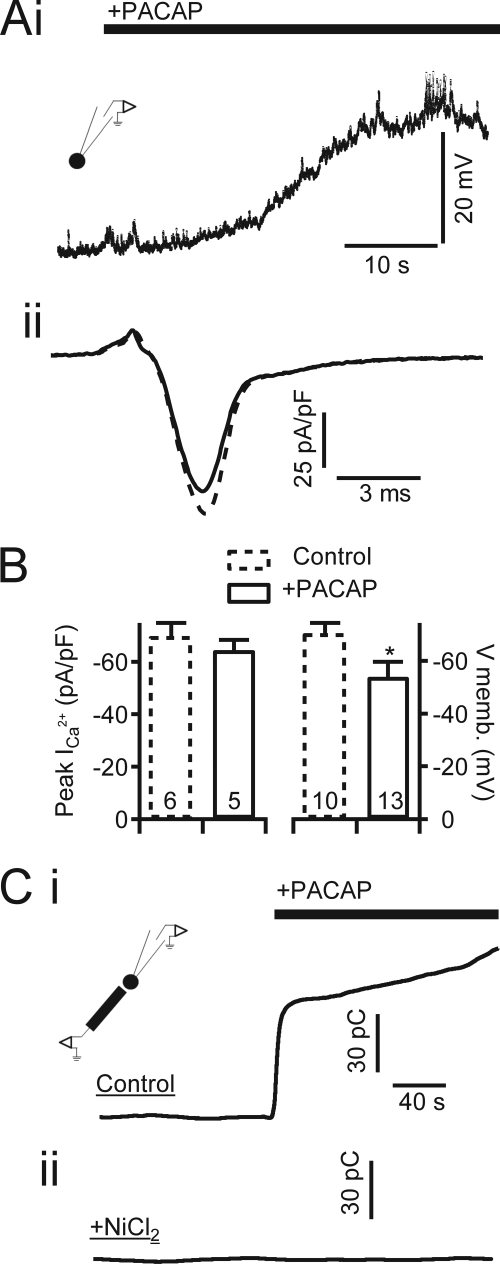
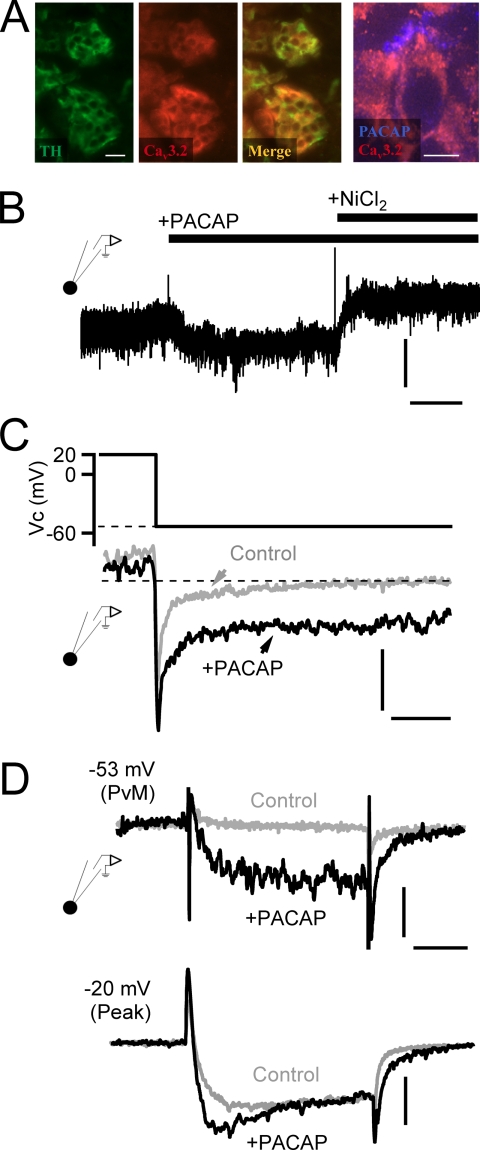
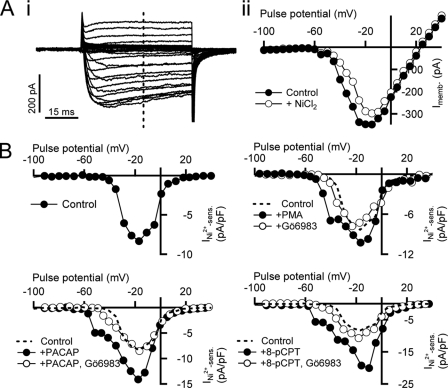
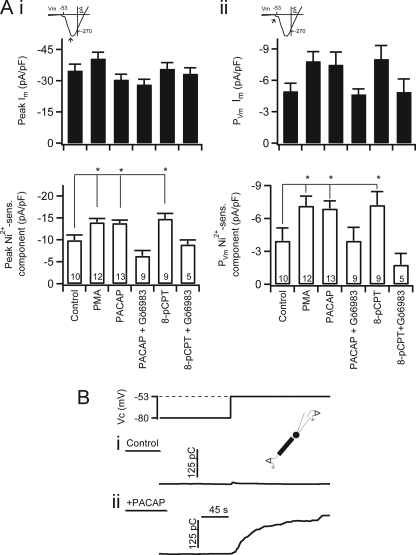
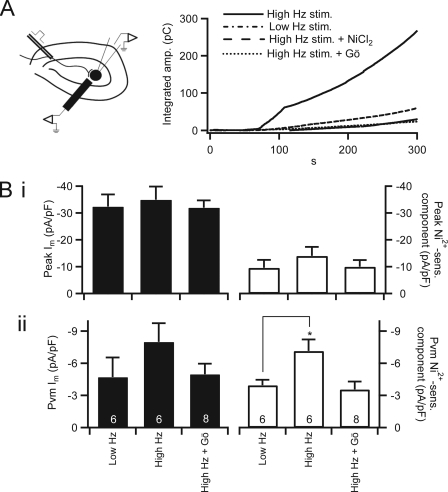
Low voltage-activated T-type Ca(v)3.2 calcium channels are expressed in neurosecretory chromaffin cells of the adrenal medulla. Previous studies have shown that naïve adrenal chromaffin cells express a nominal Ca(v)3.2-dependent conductance. However, Ca(v)3.2 conductance is up-regulated following chronic hypoxia or long term exposure to cAMP analogs. Thus, although a link between chronic stressors and up-regulation of Ca(v)3.2 exists, there are no reports testing the specific role of Ca(v)3.2 channels in the acute sympathoadrenal stress response. In this study, we examined the effects of acute sympathetic stress on T-type Ca(v)3.2 calcium influx in mouse chromaffin cells in situ. Pituitary adenylate cyclase-activating peptide (PACAP) is an excitatory neuroactive peptide transmitter released by the splanchnic nerve under elevated sympathetic activity to stimulate the adrenal medulla. PACAP stimulation did not evoke action potential firing in chromaffin cells but did cause a persistent subthreshold membrane depolarization that resulted in an immediate and robust Ca(2+)-dependent catecholamine secretion. Moreover, PACAP-evoked secretion was sensitive to block by nickel chloride and was acutely inhibited by protein kinase C blockers. We utilized perforated patch electrophysiological recordings conducted in adrenal tissue slices to investigate the mechanism of PACAP-evoked calcium entry. We provide evidence that stimulation with exogenous PACAP and native neuronal stress stimulation both lead to a protein kinase C-mediated phosphodependent recruitment of a T-type Ca(v)3.2 Ca(2+) influx. This in turn evokes catecholamine release during the acute sympathetic stress response.
Figures
References
-
- Aunis D. (1998) Int. Rev. Cytol. 181, 213–320 - PubMed
-
- Chan S. A., Polo-Parada L., Smith C. (2005) Arch. Biochem. Biophys. 435, 65–73 - PubMed
-
- García A. G., García-De-Diego A. M., Gandía L., Borges R., García-Sancho J. (2006) Physiol. Rev. 86, 1093–1131 - PubMed
-
- Carmichael S. W., Winkler H. (1985) Sci. Am. 253, 40–49 - PubMed
Publication types
MeSH terms
Substances
Grants and funding
LinkOut - more resources
Full Text Sources
Miscellaneous
