


Anti-MuSK autoantibodies block binding of collagen Q to MuSK
- PMID: 22013178
- PMCID: PMC3233209
- DOI: 10.1212/WNL.0b013e318237f660
Anti-MuSK autoantibodies block binding of collagen Q to MuSK
Abstract
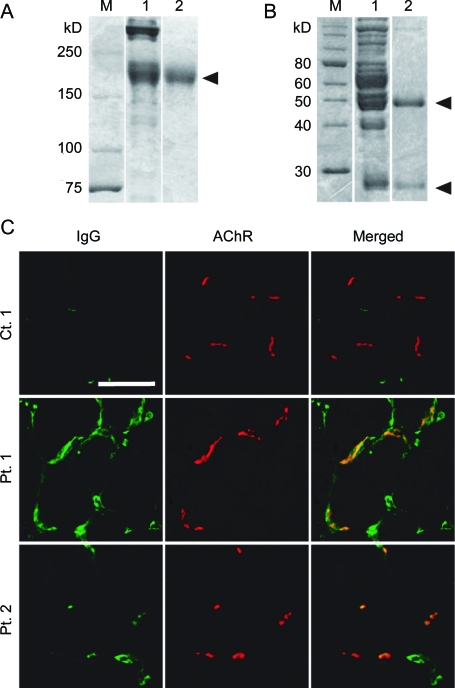
Objective: Muscle-specific receptor tyrosine kinase (MuSK) antibody-positive myasthenia gravis (MG) accounts for 5%-15% of autoimmune MG. MuSK mediates the agrin-signaling pathway and also anchors the collagenic tail subunit (ColQ) of acetylcholinesterase (AChE). The exact molecular target of MuSK-immunoglobulin G (IgG), however, remains elusive. As acetylcholine receptor (AChR) deficiency is typically mild and as cholinesterase inhibitors are generally ineffective, we asked if MuSK-IgG interferes with binding of ColQ to MuSK.
Methods: We used 3 assays: in vitro overlay of the human ColQ-tailed AChE to muscle sections of Colq-/- mice; in vitro plate-binding assay to quantitate binding of MuSK to ColQ and to LRP4; and passive transfer of MuSK-IgG to mice.
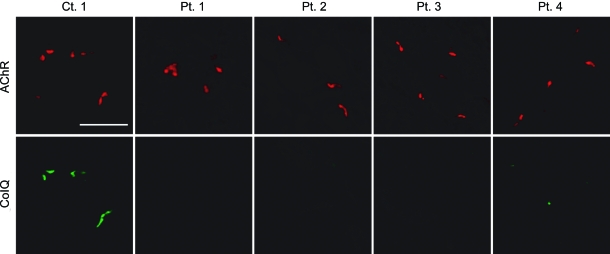
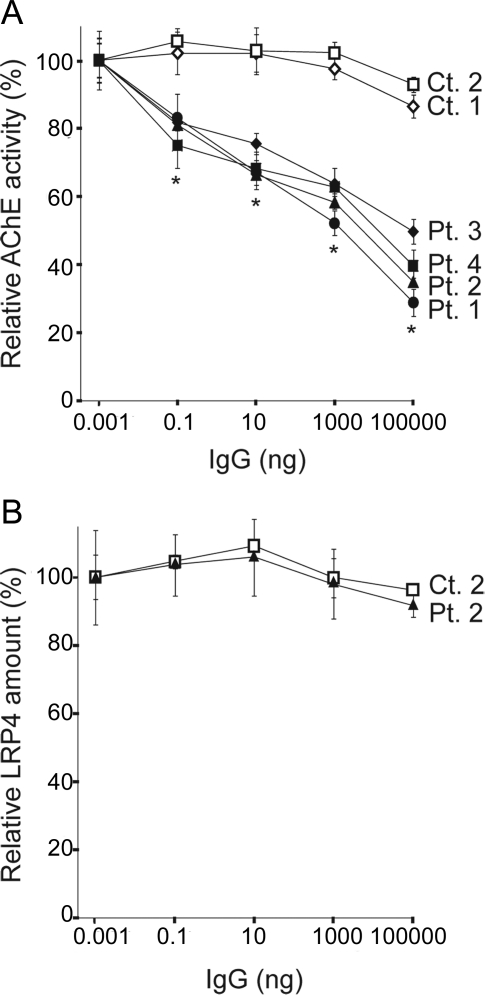
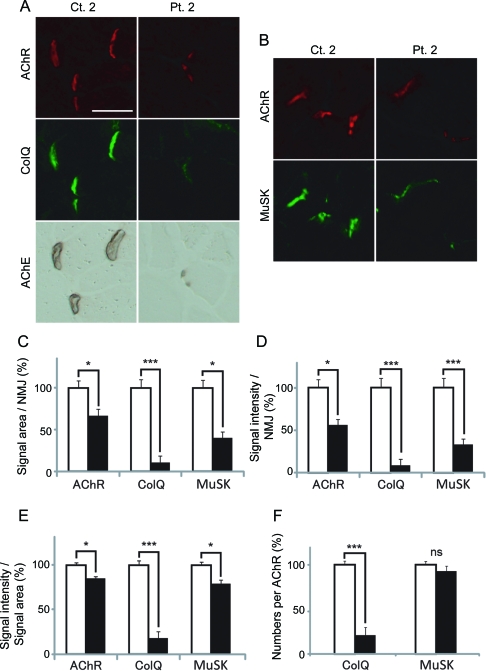
Results: The in vitro overlay assay revealed that MuSK-IgG blocks binding of ColQ to the neuromuscular junction. The in vitro plate-binding assay showed that MuSK-IgG exerts a dose-dependent block of MuSK binding to ColQ by but not to LRP4. Passive transfer of MuSK-IgG to mice reduced the size and density of ColQ to ∼10% of controls and had a lesser effect on the size and density of AChR and MuSK.
Conclusions: As lack of ColQ compromises agrin-mediated AChR clustering in Colq-/- mice, a similar mechanism may lead to AChR deficiency in MuSK-MG patients. Our experiments also predict partial AChE deficiency in MuSK-MG patients, but AChE is not reduced in biopsied NMJs. In humans, binding of ColQ to MuSK may be dispensable for clustering ColQ, but is required for facilitating AChR clustering. Further studies will be required to elucidate the basis of this paradox.
Figures
Comment in
-
Myasthenia gravis with antibodies to MuSK: another step toward solving mystery?Neurology. 2011 Nov 15;77(20):1783-4. doi: 10.1212/WNL.0b013e3182377fa6. Epub 2011 Oct 19. Neurology. 2011. PMID: 22013184 No abstract available.
References
-
- Dechiara TM, Bowen DC, Valenzuela DM, et al. The receptor tyrosine kinase MuSK is required for neuromuscular junction formation in vivo. Cell 1996;85:501–512 - PubMed
-
- Okada K, Inoue A, Okada M, et al. The muscle protein Dok-7 is essential for neuromuscular synaptogenesis. Science 2006;312:1802–1805 - PubMed
Publication types
MeSH terms
Substances
Grants and funding
LinkOut - more resources
Full Text Sources
Other Literature Sources
Research Materials
Miscellaneous
