


Where fMRI and electrophysiology agree to disagree: corticothalamic and striatal activity patterns in the WAG/Rij rat
- PMID: 22016539
- PMCID: PMC3432284
- DOI: 10.1523/JNEUROSCI.0101-11.2011
Where fMRI and electrophysiology agree to disagree: corticothalamic and striatal activity patterns in the WAG/Rij rat
Abstract
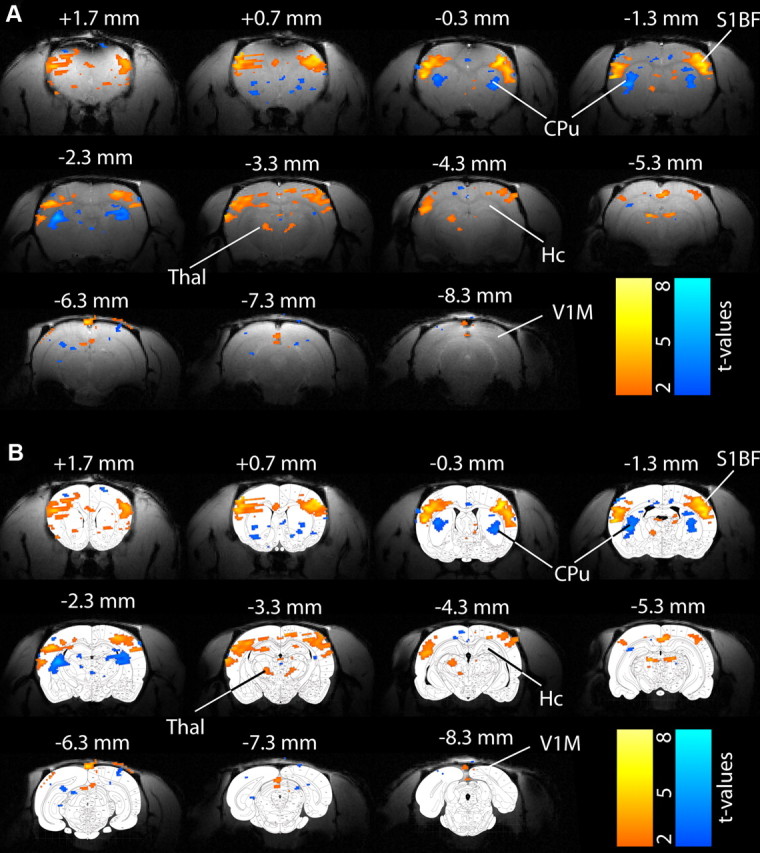
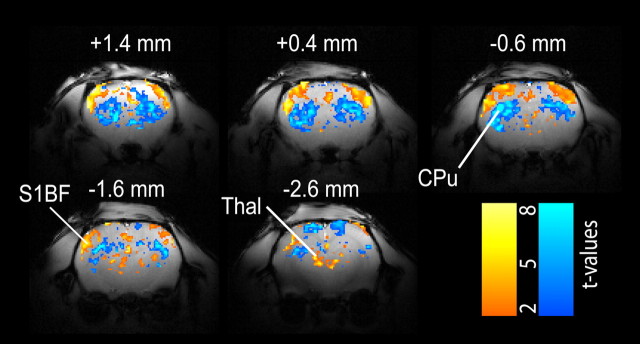
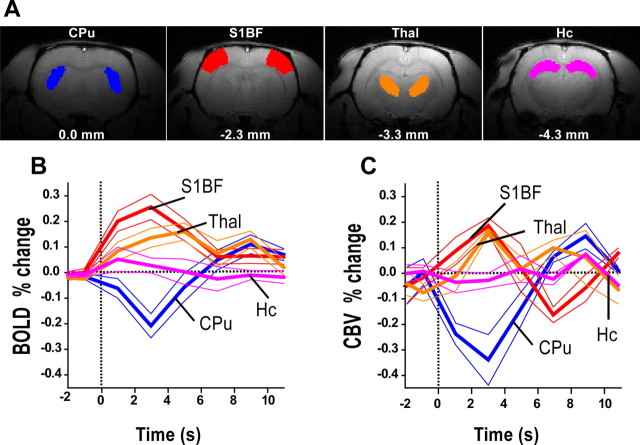
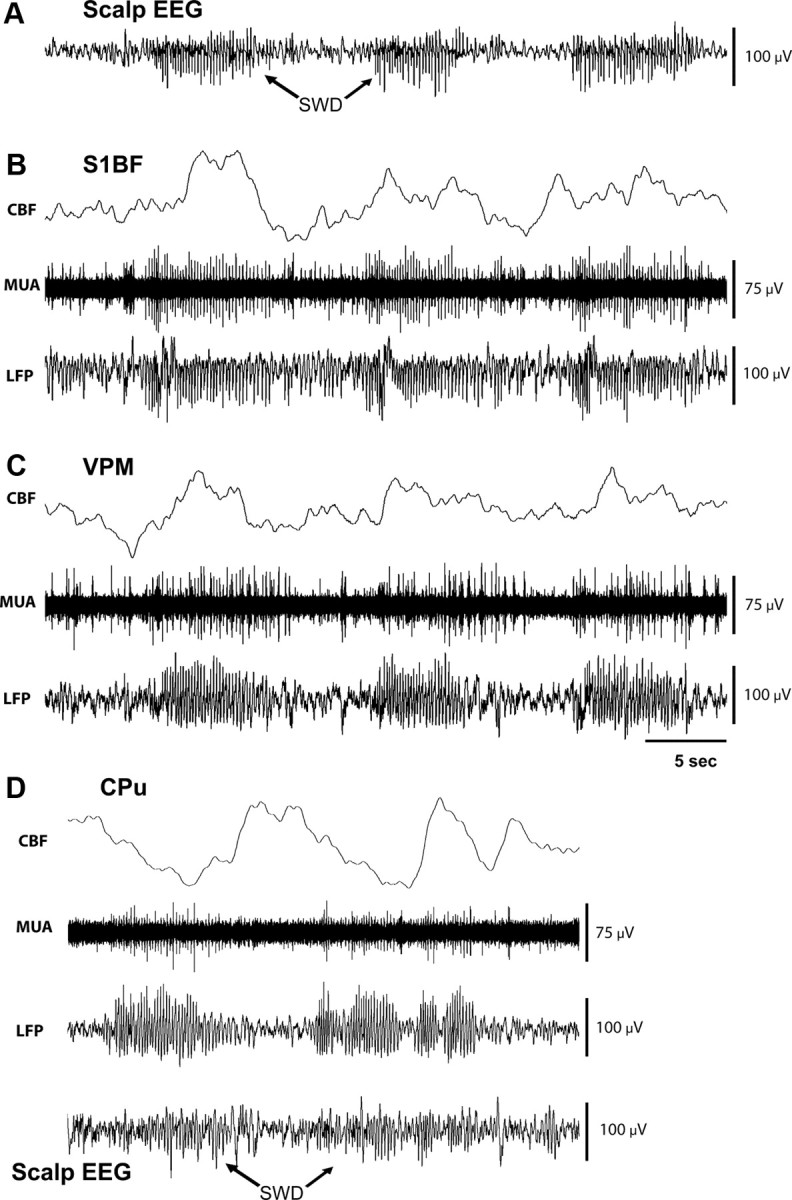
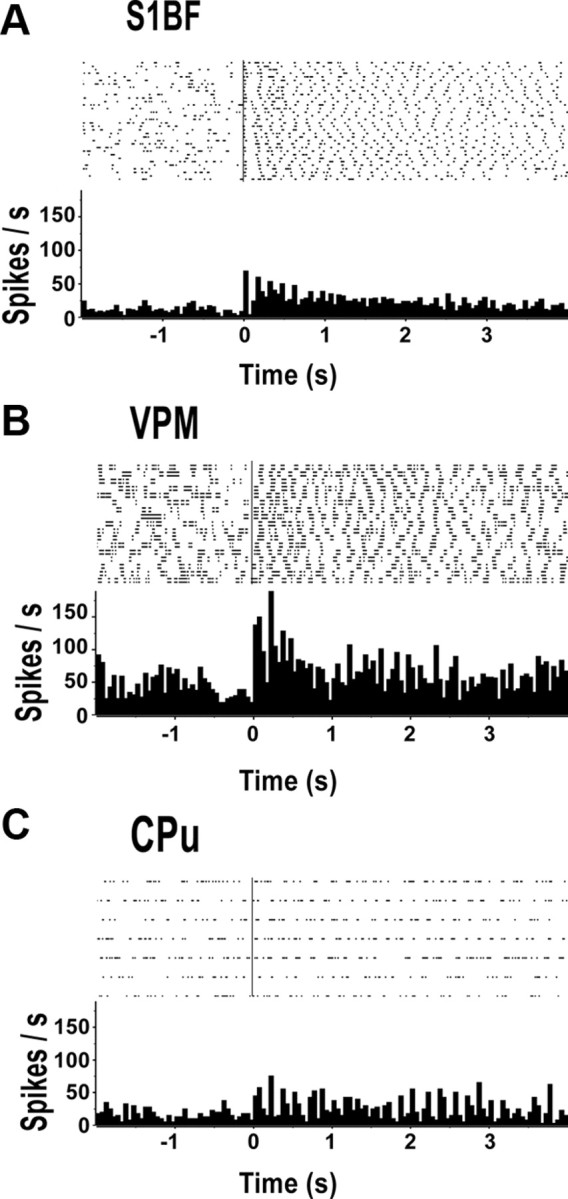
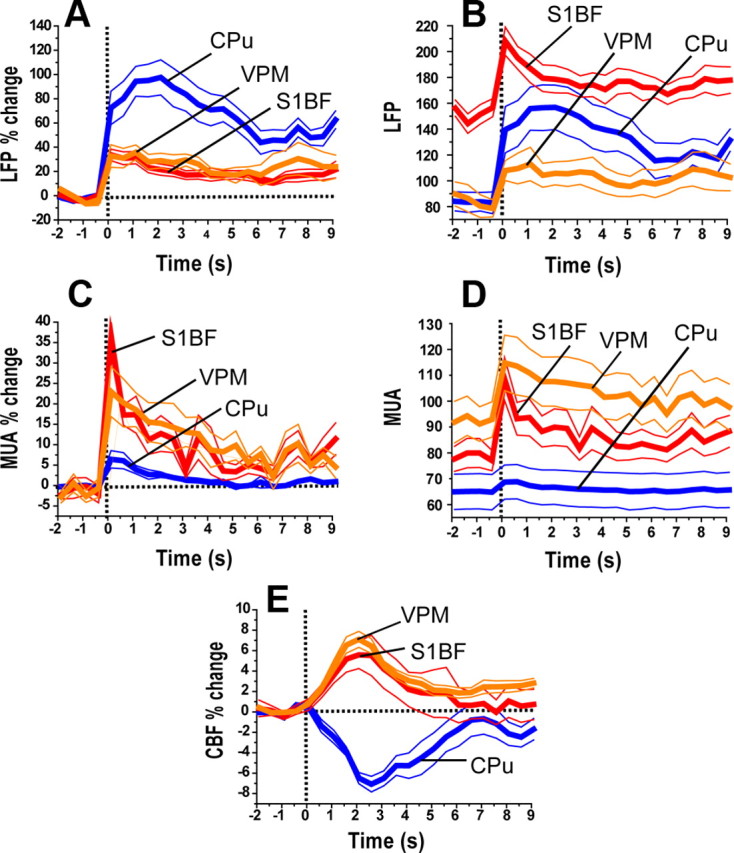
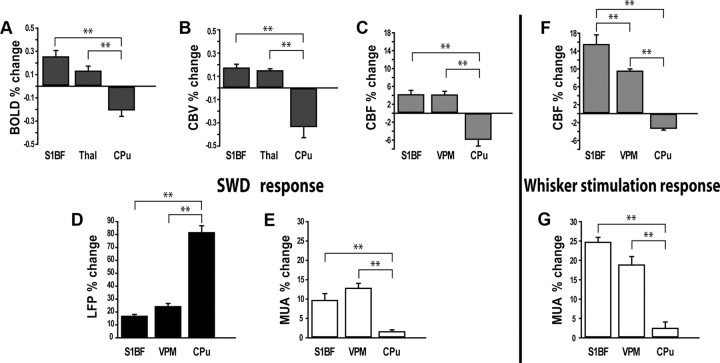
The relationship between neuronal activity and hemodynamic changes plays a central role in functional neuroimaging. Under normal conditions and in neurological disorders such as epilepsy, it is commonly assumed that increased functional magnetic resonance imaging (fMRI) signals reflect increased neuronal activity and that fMRI decreases represent neuronal activity decreases. Recent work suggests that these assumptions usually hold true in the cerebral cortex. However, less is known about the basis of fMRI signals from subcortical structures such as the thalamus and basal ganglia. We used WAG/Rij rats (Wistar albino Glaxo rats of Rijswijk), an established animal model of human absence epilepsy, to perform fMRI studies with blood oxygen level-dependent and cerebral blood volume (CBV) contrasts at 9.4 tesla, as well as laser Doppler cerebral blood flow (CBF), local field potential (LFP), and multiunit activity (MUA) recordings. We found that, during spike-wave discharges, the somatosensory cortex and thalamus showed increased fMRI, CBV, CBF, LFP, and MUA signals. However, the caudate-putamen showed fMRI, CBV, and CBF decreases despite increases in LFP and MUA signals. Similarly, during normal whisker stimulation, the cortex and thalamus showed increases in CBF and MUA, whereas the caudate-putamen showed decreased CBF with increased MUA. These findings suggest that neuroimaging-related signals and electrophysiology tend to agree in the cortex and thalamus but disagree in the caudate-putamen. These opposite changes in vascular and electrical activity indicate that caution should be applied when interpreting fMRI signals in both health and disease from the caudate-putamen, as well as possibly from other subcortical structures.
Figures
References
-
- Aghakhani Y, Bagshaw AP, Bénar CG, Hawco C, Andermann F, Dubeau F, Gotman J. fMRI activation during spike and wave discharges in idiopathic generalized epilepsy. Brain. 2004;127:1127–1144. - PubMed
-
- Ances BM. Coupling of changes in cerebral blood flow with neural activity: what must initially dip must come back up. J Cereb Blood Flow Metab. 2004;24:1–6. - PubMed
-
- Archer JS, Abbott DF, Waites AB, Jackson GD. fMRI “deactivation” of the posterior cingulate during generalized spike and wave. Neuroimage. 2003;20:1915–1922. - PubMed
-
- Benner T, van der Kouwe AJ, Kirsch JE, Sorensen AG. Real-time RF pulse adjustment for B0 drift correction. Magn Reson Med. 2006;56:204–209. - PubMed
Publication types
MeSH terms
Substances
Grants and funding
LinkOut - more resources
Full Text Sources
Medical
