


Transforming growth factor α transforms astrocytes to a growth-supportive phenotype after spinal cord injury
- PMID: 22016551
- PMCID: PMC3213757
- DOI: 10.1523/JNEUROSCI.3441-11.2011
Transforming growth factor α transforms astrocytes to a growth-supportive phenotype after spinal cord injury
Abstract
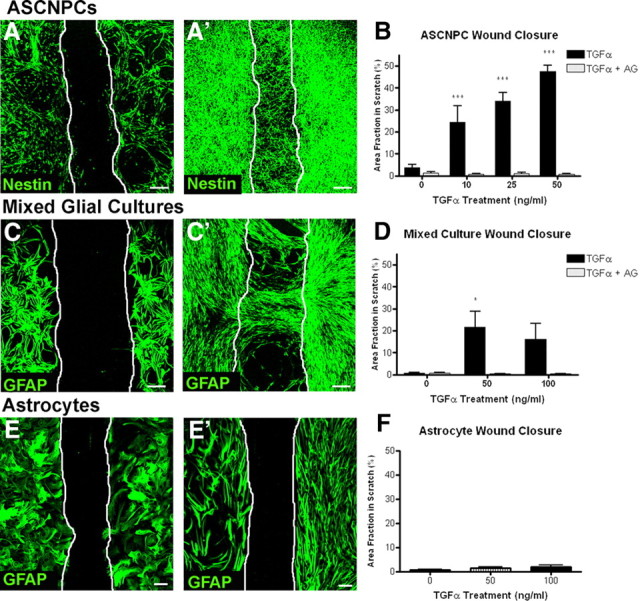
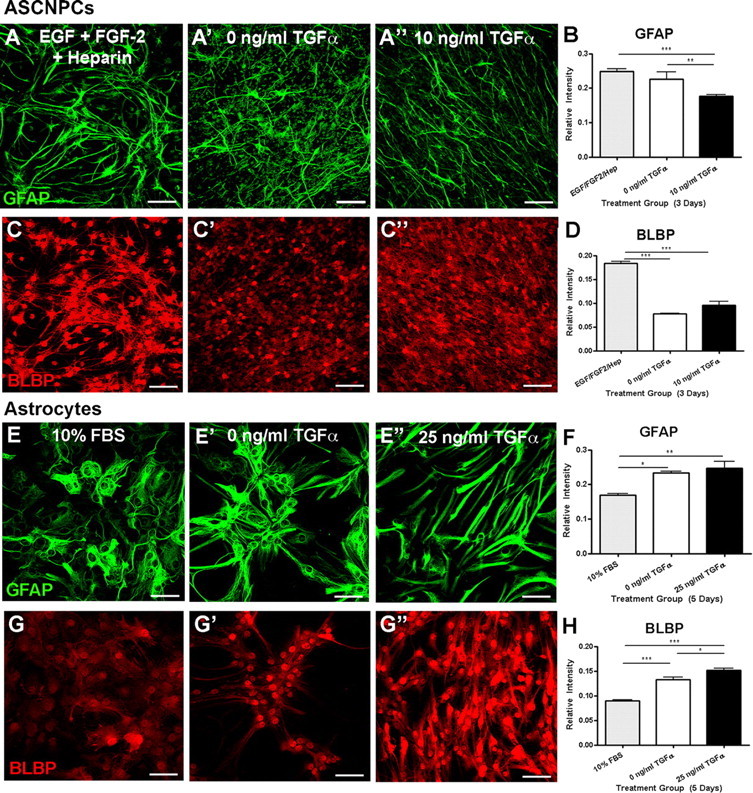
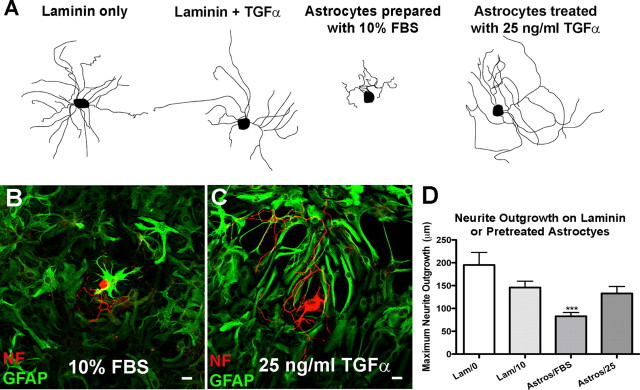
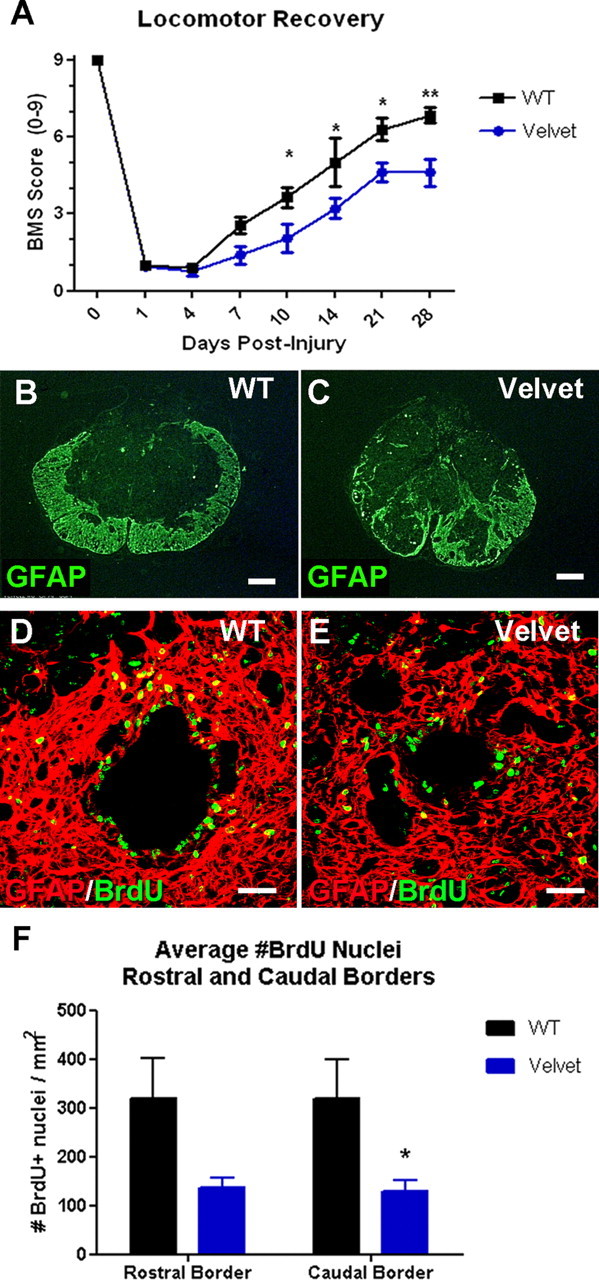
Astrocytes are both detrimental and beneficial for repair and recovery after spinal cord injury (SCI). These dynamic cells are primary contributors to the growth-inhibitory glial scar, yet they are also neuroprotective and can form growth-supportive bridges on which axons traverse. We have shown that intrathecal administration of transforming growth factor α (TGFα) to the contused mouse spinal cord can enhance astrocyte infiltration and axonal growth within the injury site, but the mechanisms of these effects are not well understood. The present studies demonstrate that the epidermal growth factor receptor (EGFR) is upregulated primarily by astrocytes and glial progenitors early after SCI. TGFα directly activates the EGFR on these cells in vitro, inducing their proliferation, migration, and transformation to a phenotype that supports robust neurite outgrowth. Overexpression of TGFα in vivo by intraparenchymal adeno-associated virus injection adjacent to the injury site enhances cell proliferation, alters astrocyte distribution, and facilitates increased axonal penetration at the rostral lesion border. To determine whether endogenous EGFR activation is required after injury, SCI was also performed on Velvet (C57BL/6J-Egfr(Vel)/J) mice, a mutant strain with defective EGFR activity. The affected mice exhibited malformed glial borders, larger lesions, and impaired recovery of function, indicating that intrinsic EGFR activation is necessary for neuroprotection and normal glial scar formation after SCI. By further stimulating precursor proliferation and modifying glial activation to promote a growth-permissive environment, controlled stimulation of EGFR at the lesion border may be considered in the context of future strategies to enhance endogenous cellular repair after injury.
Figures




References
-
- Ahmed Z, Jacques SJ, Berry M, Logan A. Epidermal growth factor receptor inhibitors promote CNS axon growth through off-target effects on glia. Neurobiol Dis. 2009;36:142–150. - PubMed
-
- Aimone JB, Leasure JL, Perreau VM, Thallmair M. Spatial and temporal gene expression profiling of the contused rat spinal cord. Exp Neurol. 2004;189:204–221. - PubMed
-
- Anchan RM, Reh TA, Angello J, Balliet A, Walker M. EGF and TGF-alpha stimulate retinal neuroepithelial cell proliferation in vitro. Neuron. 1991;6:923–936. - PubMed
-
- Barry D, McDermott K. Differentiation of radial glia from radial precursor cells and transformation into astrocytes in the developing rat spinal cord. Glia. 2005;50:187–197. - PubMed
-
- Basso DM, Fisher LC, Anderson AJ, Jakeman LB, McTigue DM, Popovich PG. Basso Mouse Scale for locomotion detects differences in recovery after spinal cord injury in five common mouse strains. J Neurotrauma. 2006;23:635–659. - PubMed
Publication types
MeSH terms
Substances
Grants and funding
LinkOut - more resources
Full Text Sources
Medical
Molecular Biology Databases
Research Materials
Miscellaneous
