


Isolation of a Klebsiella pneumoniae isolate of sequence type 258 producing KPC-2 carbapenemase in Korea
- PMID: 22016687
- PMCID: PMC3190012
- DOI: 10.3343/kjlm.2011.31.4.298
Isolation of a Klebsiella pneumoniae isolate of sequence type 258 producing KPC-2 carbapenemase in Korea
Abstract
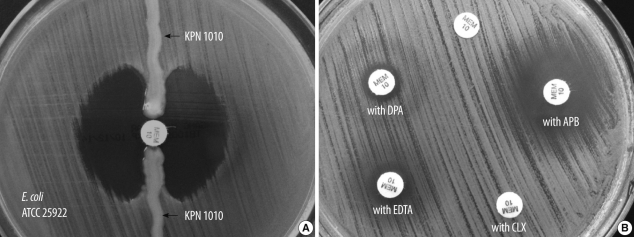
Carbapenem-resistant Klebsiella pneumoniae isolates producing K. pneumoniae carbapenemases (KPC) were first reported in the USA in 2001, and since then, this infection has been reported in Europe, Israel, South America, and China. In Korea, the first KPC-2-producing K. pneumoniae sequence type (ST) 11 strain was detected in 2010. We report the case of a patient with a urinary tract infection caused by KPC-2-producing K. pneumoniae. This is the second report of a KPC-2-producing K. pneumoniae infection in Korea, but the multilocus sequence type was ST258. The KPC-2-producing isolate was resistant to all tested β-lactams (including imipenem and meropenem), amikacin, tobramycin, ciprofloxacin, levofloxacin, and trimethoprim-sulfamethoxazole, but was susceptible to gentamicin, colistin, polymyxin B, and tigecycline. The KPC-2-producing isolate was negative to phenotypic extended-spectrum β-lactamase (ESBL) and AmpC detection tests and positive to modified Hodge test and carbapenemase inhibition test with aminophenylboronic acid.
Keywords: KPC-2; Klebsiella pneumoniae; ST258.
Conflict of interest statement
No potential conflict of interest relevant to this article was reported.
Figures
References
Publication types
MeSH terms
Substances
LinkOut - more resources
Full Text Sources
Medical