


Removing biofilms from microstructured titanium ex vivo: a novel approach using atmospheric plasma technology
- PMID: 22016784
- PMCID: PMC3189945
- DOI: 10.1371/journal.pone.0025893
Removing biofilms from microstructured titanium ex vivo: a novel approach using atmospheric plasma technology
Abstract
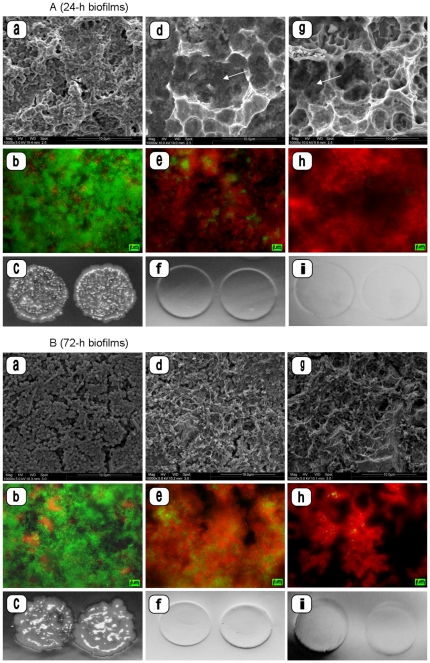
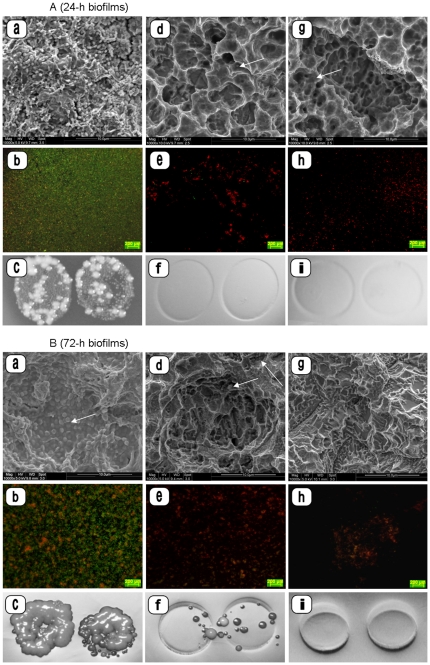
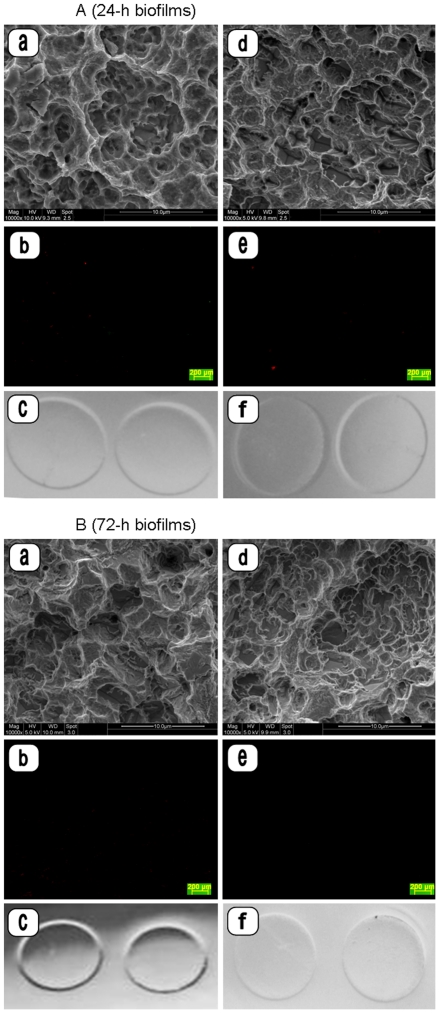
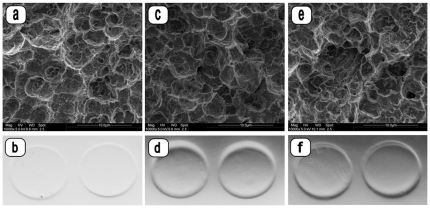
The removal of biofilms from microstructured titanium used for dental implants is a still unresolved challenge. This experimental study investigated disinfection and removal of in situ formed biofilms from microstructured titanium using cold atmospheric plasma in combination with air/water spray. Titanium discs (roughness (Ra): 1.96 µm) were exposed to human oral cavities for 24 and 72 hours (n = 149 each) to produce biofilms. Biofilm thickness was determined using confocal laser scanning microscopy (n = 5 each). Plasma treatment of biofilms was carried out ex vivo using a microwave-driven pulsed plasma source working at temperatures from 39 to 43°C. Following plasma treatment, one group was air/water spray treated before re-treatment by second plasma pulses. Vital microorganisms on the titanium surfaces were identified by contact culture (Rodac agar plates). Biofilm presence and bacterial viability were quantified by fluorescence microscopy. Morphology of titanium surfaces and attached biofilms was visualized by scanning electron microscopy (SEM). Total protein amounts of biofilms were colorimetrically quantified. Untreated and air/water treated biofilms served as controls. Cold plasma treatment of native biofilms with a mean thickness of 19 µm (24 h) to 91 µm (72 h) covering the microstructure of the titanium surface caused inactivation of biofilm bacteria and significant reduction of protein amounts. Total removal of biofilms, however, required additional application of air/water spray, and a second series of plasma treatment. Importantly, the microstructure of the titanium discs was not altered by plasma treatment. The combination of atmospheric plasma and non-abrasive air/water spray is applicable for complete elimination of oral biofilms from microstructured titanium used for dental implants and may enable new routes for the therapy of periimplant disease.
Conflict of interest statement
Figures
References
-
- Kieft IE, van Berkel JJBN, Kieft ER, Stoffels E. Radicals of plasma needle detected with fluorescent probe. In: d'Agostino R, Favia P, Oehr C, Wertheimer MR, editors. Plasma Processes and Polymers. Weinheim: Wiley-VCH; 2005. pp. 295–308.
-
- Laroussi M, Leipold F. Evaluation of the roles of reactive species, heat, and UV radiation in the inactivation of bacterial cells by air plasmas at atmospheric pressure. Int J Mass Spectrom. 2004;233:81–86.
-
- Vleugels M, Shama G, Deng XT, Greenacre E, Brocklehurst T, et al. Atmospheric plasma inactivation of biofilm-forming bacteria for food safety control. IEEE Trans Plasma Sci. 2005;33:824–828.
-
- Fridman A, Chirokov A, Gutsol A. Non-thermal atmospheric pressure discharges. J Phys D: Applied Physics. 2005;38:1–24.
-
- Dobrynin D, Fridman G, Friedman G, Fridman A. Physical and biological mechanisms of direct plasma interaction with living tissue. New J Phys. 2009;11:115020.
Publication types
MeSH terms
Substances
LinkOut - more resources
Full Text Sources
Other Literature Sources
