


Toxicity after radiochemotherapy for glioblastoma using temozolomide--a retrospective evaluation
- PMID: 22017800
- PMCID: PMC3213071
- DOI: 10.1186/1748-717X-6-141
Toxicity after radiochemotherapy for glioblastoma using temozolomide--a retrospective evaluation
Abstract
Purpose: Retrospective evaluation of toxicity and results after radiochemotherapy for glioblastoma.
Methods: 46 patients with histopathologically proven glioblastoma received simultaneous radiochemotherapy (RCT). The mean age at the beginning of therapy was 59 years, the mean Karnofsky performance index 80%. 44 patients had been operated on before radiotherapy, two had not. A total dose of 60 Gy was applied in daily single fractions of 2.0 Gy within six weeks, 75 mg/m2/day Temozolomide were given orally during the whole radiotherapy period.
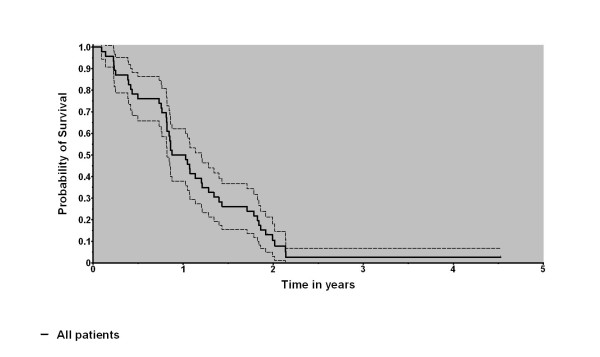
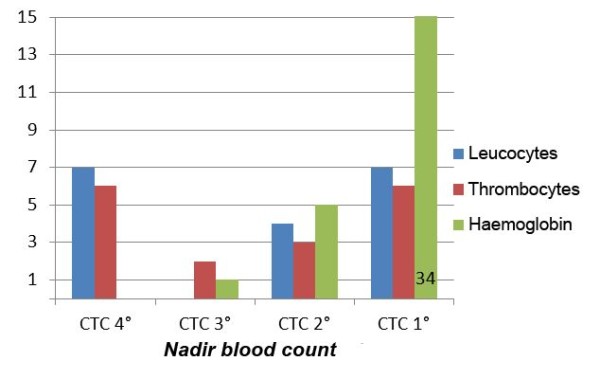
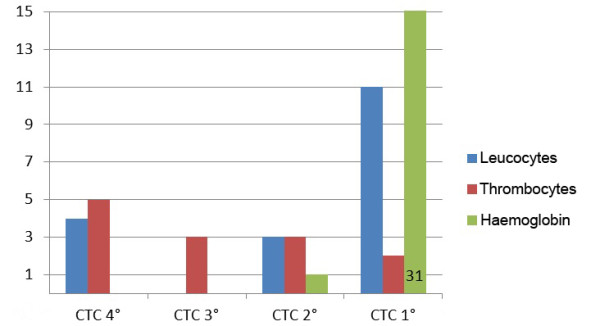
Results: A local progression could be diagnosed in 34/46 patients (70%). The median survival time amounted to 13.6 months resulting in one-year and two-year survival probabilities of 48% and 8%, respectively. Radiotherapy could be applied completely in 89% of the patients. Chemotherapy could be completed according to schedule only in 56.5%, the main reason being blood toxicity (50% of the interruptions). Most of those patients suffered from leucopenia and/or thrombopenia grade III and IV CTC (Common toxicity criteria). Further reasons were an unfavourable general health status or a rise of liver enzymes. The mean duration of thrombopenia and leucopenia amounted to 64 and 20 days. In two patients, blood cell counts remained abnormal until death. In two patients we noticed a rise of liver enzymes. In one of these in the healing phase of hepatitis a rise of ASAT and ALAT CTC grade IV was diagnosed. These values normalized after termination of temozolomide medication. One patient died of pneumonia during therapy.
Conclusion: Our survival data were well within the range taken from the literature. However, we noticed a considerable frequency and intensity of side effects to bone marrow and liver. These lead to the recommendations that regular examinations of blood cell count and liver enzymes should be performed during therapy and temozolomide should not be applied or application should be terminated according to the criteria given by the manufacturer.
Figures
References
-
- Nagane M, Nozue K, Shimizu S, Waha A, Miyazaki H, Kurita H, Homori M, Fujioka Y, Shiokawa Y. Prolonged and severe thrombocytopenia with pancytopenia induced by radiation-combined temozolomide therapy in a patient with newly diagnosed glioblastoma--analysis of O6-methylguanine-DNA methyltransferase status. J Neurooncol. 2009;92:227–232. doi: 10.1007/s11060-008-9754-7. - DOI - PubMed
MeSH terms
Substances
LinkOut - more resources
Full Text Sources
Other Literature Sources
Medical
