


Allostatic and environmental load in toddlers predicts anxiety in preschool and kindergarten
- PMID: 22018082
- PMCID: PMC3202312
- DOI: 10.1017/S0954579411000502
Allostatic and environmental load in toddlers predicts anxiety in preschool and kindergarten
Abstract
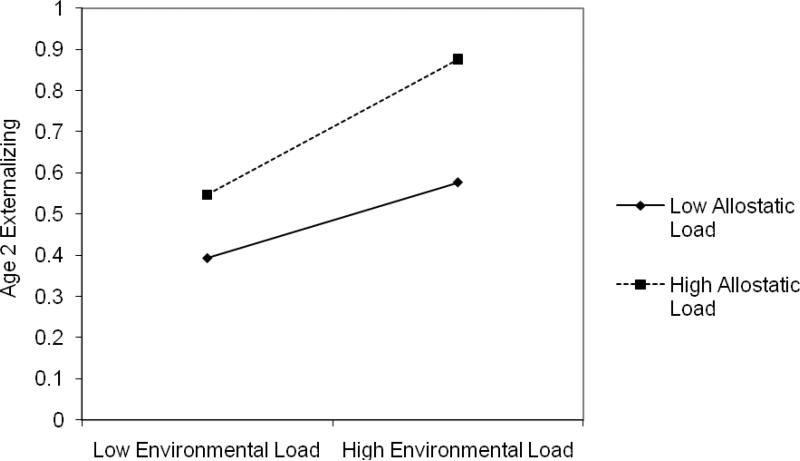
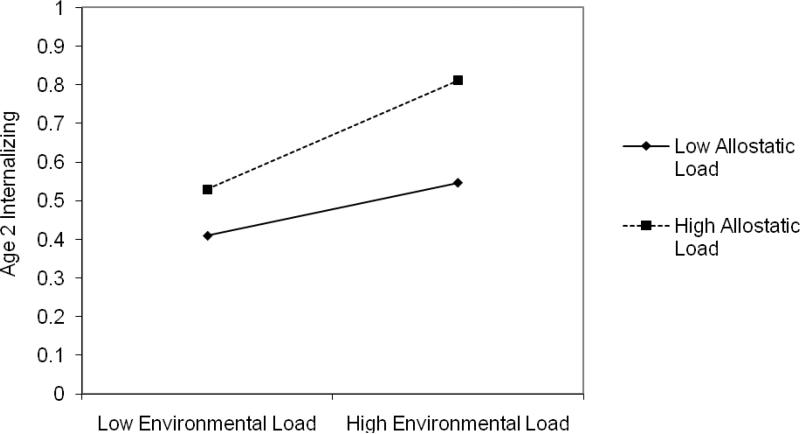
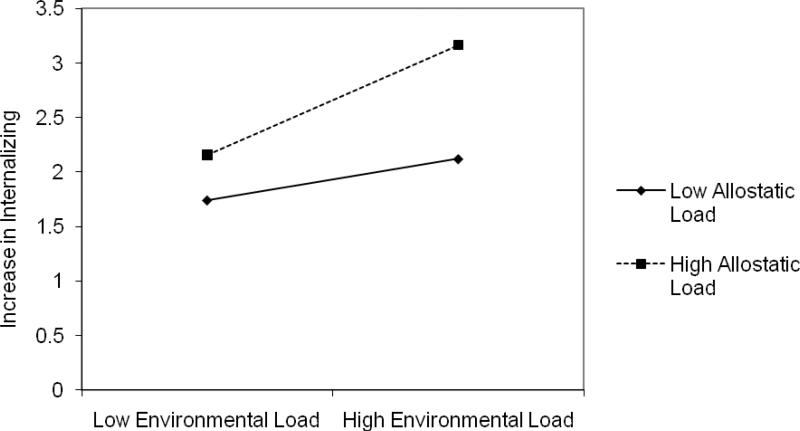
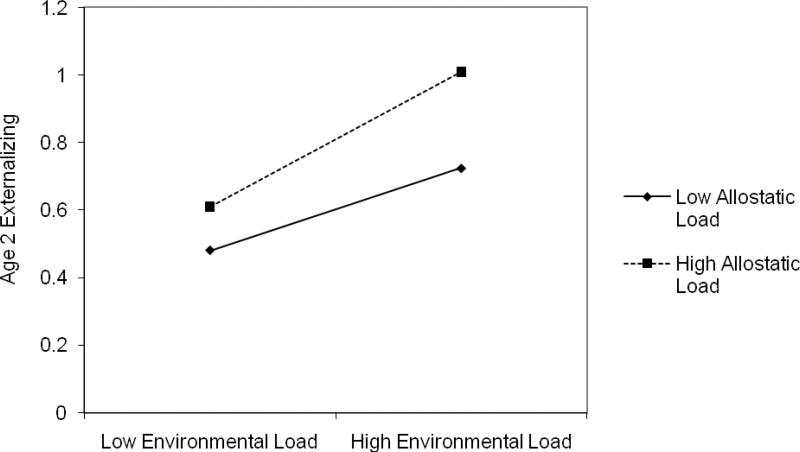
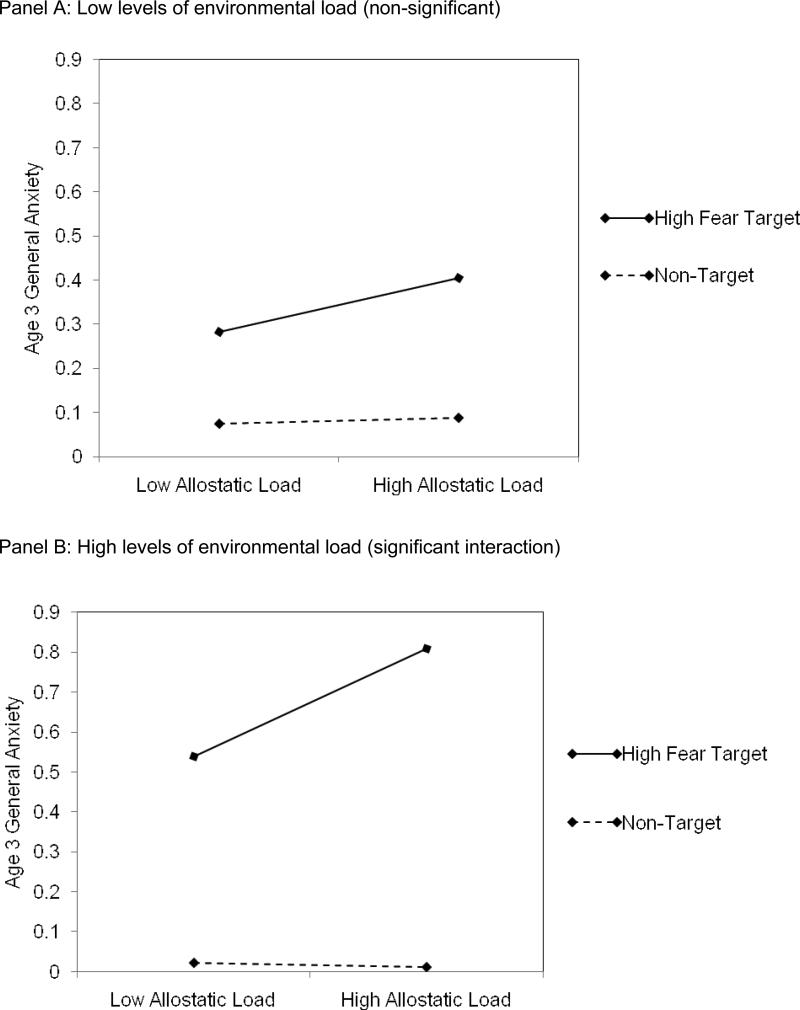
Psychobiological models of allostatic load have delineated the effects of multiple processes that contribute to risk for psychopathology. This approach has been fruitful, but the interactive contributions of allostatic and environmental load remain understudied in early childhood. Because this developmental period encompasses the emergence of internalizing problems and biological sensitivity to early experiences, this is an important time to examine this process. In two studies, we examined allostatic and environmental load and links to subsequent internalizing and externalizing problems. Study 1 examined relations between load indices and maladjustment, concurrently and at multiple times between age 2 and kindergarten; Study 2 added more comprehensive risk indices in a sample following a group of highly fearful toddlers from 2 to 3 years of age. Results from both studies showed that increased allostatic load related to internalizing problems as environmental risk also increased. Study 2, in addition, showed that fearfulness interacted with allostatic and environmental load indices to predict greater anxiety among the fearful children who had high levels of allostatic and environmental load. Taken together, the findings support a model of risk for internalizing characterized by the interaction of biological and environmental stressors, and demonstrate the importance of considering individual differences and environmental context in applying models of allostatic load to developmental change in early childhood.
Figures
References
-
- Bates JE, Viken RJ, Alexander DB, Beyers J, Stockton L. Sleep and adjustment in preschool children: Sleep diary reports by mothers relate to behavior reports by teachers. Child Development. 2002;73:62–74. - PubMed
-
- Bayer JK, Hastings PD, Sanson AV, Ukoumunne OC, Rubin KH. Predicting mid-childhood internalizing symptoms: A longitudinal community study. International Journal of Mental Health Promotion. 2010;12:5–17.
-
- Beauchaine T. Vagal tone, development, and Gray's motivational theory: Toward an integrated model of autonomic nervous system functioning in psychopathology. Development and Psychopathology. 2001;13:183–214. - PubMed
-
- Belsky J, Bakermans-Kranenburg MJ, van Ijzendoorn MH. For better and for worse: Differential susceptibility to environmental influences. Current Directions in Psychological Science. 2007;16:300–304.
-
- Belsky J, Hsieh K-H, Crnic K. Mothering, fathering, and infant negativity as antecedents of boys’ externalizing problems and inhibition at age 3 years: Differential susceptibility to rearing experience? Development and Psychopathology. 1998;10:301–319. - PubMed
