


Hepatoprotective activity of aqueous extract of Portulaca oleracea in combination with lycopene in rats
- PMID: 22022001
- PMCID: PMC3195128
- DOI: 10.4103/0253-7613.84973
Hepatoprotective activity of aqueous extract of Portulaca oleracea in combination with lycopene in rats
Abstract
Objective: To investigate the hepatoprotective activity of the aqueous extract of the aerial parts of Portulaca oleracea (P. oleracea) in combination with lycopene against carbon tetrachloride induced hepatotoxicity in rats.
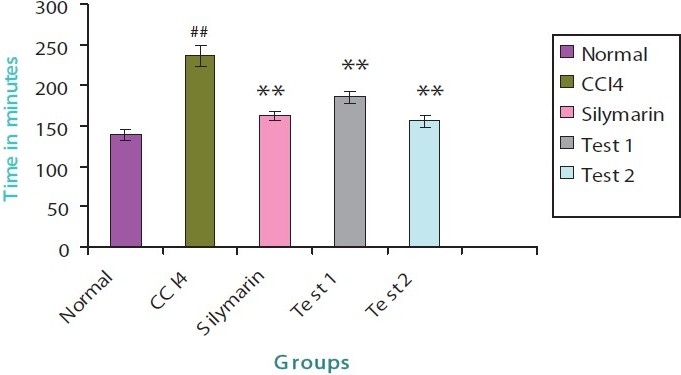
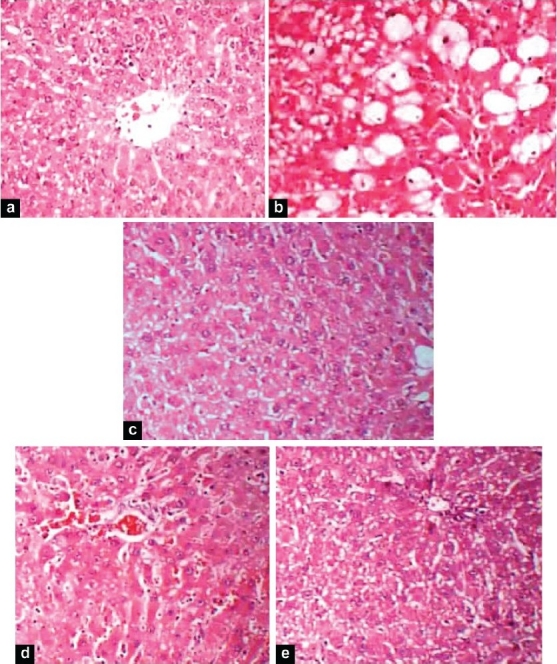
Materials and methods: Hepatotoxicity was induced in male Wistar rats by intraperitoneal injection of carbon tetrachloride (0.1 ml/kg b.w for 14 days). The aqueous extract of P. oleracea in combination with lycopene (50 mg/kg b.w) was administered to the experimental animals at two selected doses for 14 days. The hepatoprotective activity of the combination was evaluated by the liver function marker enzymes in the serum [aspartate transaminases (AST), alanine transaminases (ALT), alkaline phosphatase (Alk.P), total bilirubin (TB), total protein (TP) and total cholesterol (TC)], pentobarbitone induced sleeping time (PST) and histopathological studies of liver.
Results: Both the treatment groups showed hepatoprotective effect against carbon tetrachloride induced hepatotoxicity by significantly restoring the levels of serum enzymes to normal which was comparable to that of silymarin group. Besides, the results obtained from PST and histopathological results also support the study.
Conclusions: The oral administration of P. oleracea in combination with lycopene significantly ameliorates CCl(4) hepatotoxicity in rats.
Keywords: Hepatotoxicity; Portulaca oleracea; hepatoprotective activity; lycopene.
Conflict of interest statement
Figures
References
-
- Jaeschke H, Gores GJ, Cederbaum AI, Hinson JA, Pessayre D, Lemasters JJ. Mechanisms of hepatotoxicity. Toxicol Sci. 2002;65:166–76. - PubMed
-
- Ezekwe MO, Omara-Alwala TR, Membrahtu T. Nutritive characterization of purslane accessions as influenced by planting date. Plant Foods Hum Nutr. 1999;54:183–91. - PubMed
-
- Liu LX, Howe P, Zhou YF, Xu ZH, Hocart C, Zhang R. Fatty acids and b-carotene in Australian purslane (Portulaca oleracea) varieties. J Chromatogr. 2000;893:207–13. - PubMed
-
- Barbosa-Filho JM, Alencar AA, Nunes XP, Tomaz AC, Sena Filho JG, Athayde Filho PF, et al. Sources of alpha, beta, gamma, delta and epsilon-carotenes: A twentieth century review. Rev Bras Farmacogn. 2008;18:135–54.
-
- Sakai NK, Okamoto, Shizuru Y, Fukuyama Y, Portuloside A. a monoterpene glucoside from Portulaca oleracea. Phytochemistry. 1996;42:1625–8.
LinkOut - more resources
Full Text Sources
