Prospective analysis of early lapse to drinking and smoking among individuals in concurrent alcohol and tobacco treatment
- PMID: 22023022
- PMCID: PMC3336035
- DOI: 10.1037/a0026039
Prospective analysis of early lapse to drinking and smoking among individuals in concurrent alcohol and tobacco treatment
Abstract
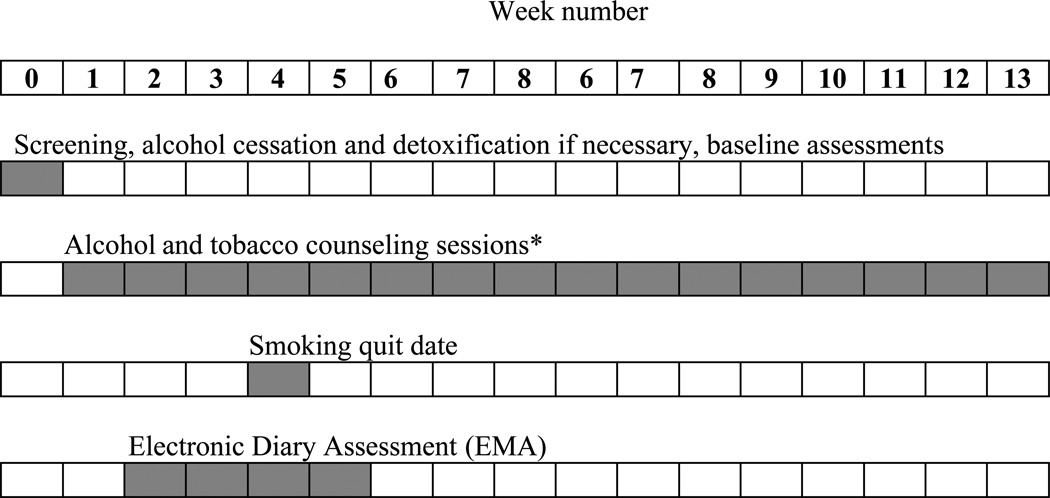
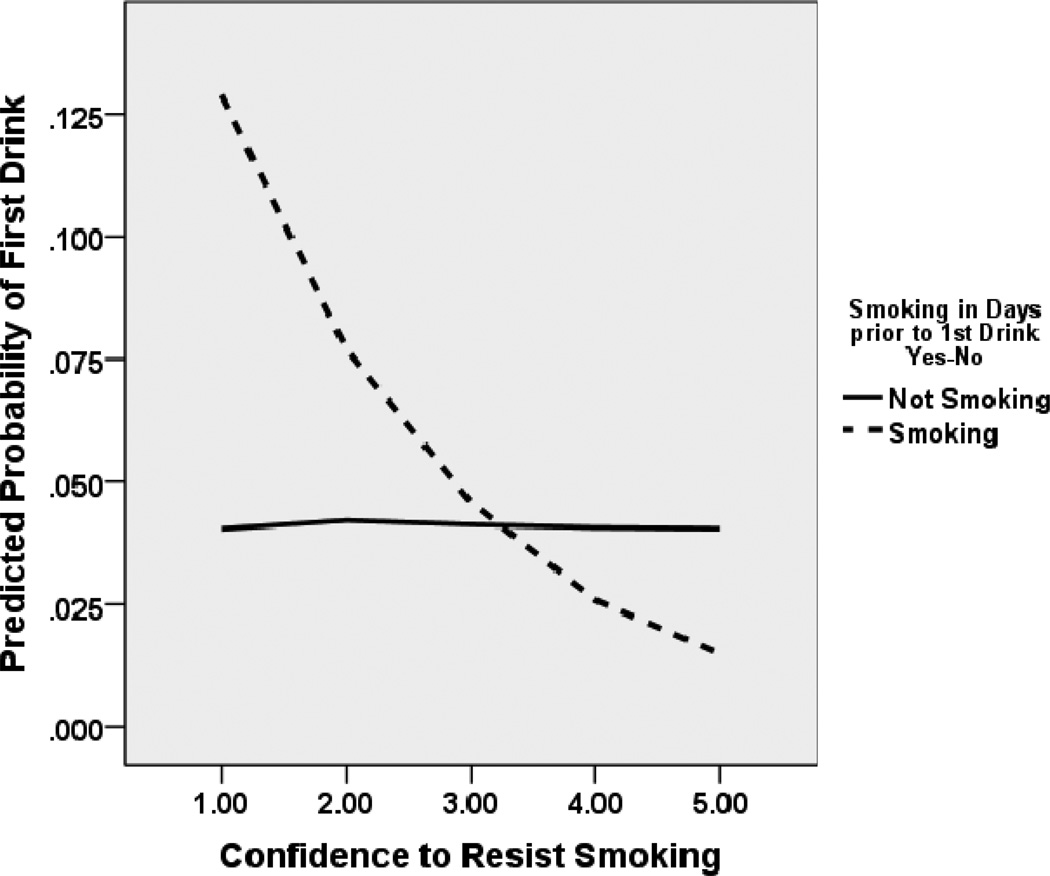
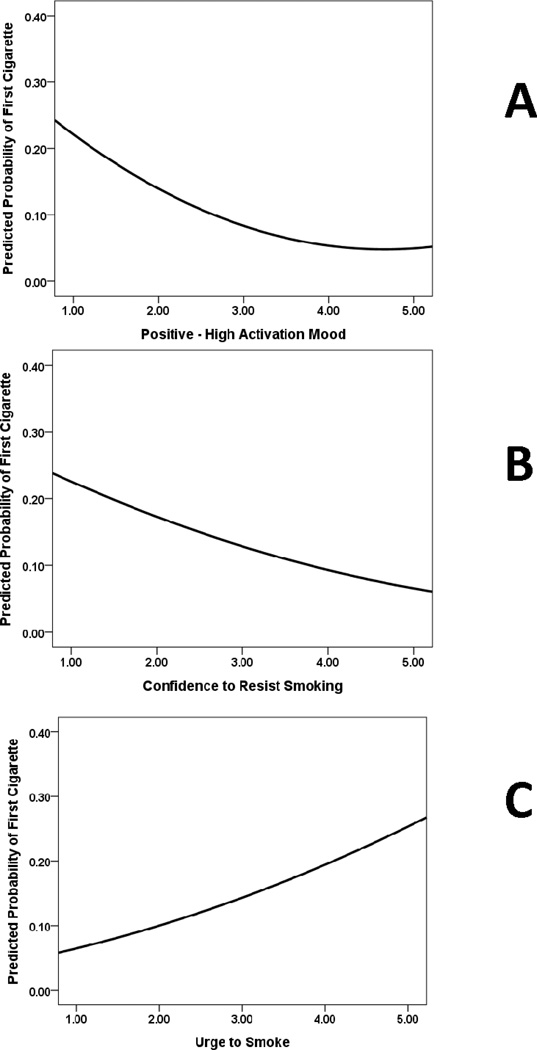
The aims of the current study were to examine, prospectively, (a) dynamic changes in affective state, self-efficacy, and urge in the hours before initial smoking and drinking lapses among individuals in concurrent alcohol and smoking treatment, and (b) the extent to which self-efficacy, urge to use, and/or the use of one substance predicted lapse to the other substance. Ninety-six men and women recruited for a clinical trial of concurrent alcohol and tobacco treatment were eligible for inclusion. Only data from those who experienced an initial lapse to drinking (n=29) or smoking (n=32) were included. Two outpatient substance abuse clinics provided concurrent alcohol and smoking treatment on a weekly basis for three months. Ecological Momentary Assessment (EMA) methods were employed over a 28-day monitoring period to assess antecedents to first drink, and a 14-day monitoring period was examined for initial smoking lapses. Baseline and EMA measures of positive and negative affect, alcohol/smoking urge, alcohol/smoking abstinence self-efficacy, nicotine withdrawal, and quantity/frequency of alcohol and tobacco use were examined as lapse predictors. Analyses of EMA ratings controlled for the corresponding baseline measure. Smoking lapse among individuals in concurrent alcohol and tobacco treatment was foreshadowed by higher urges to smoke, lower positive mood, and lower confidence to resist smoking. Drinking lapse was preceded by lower confidence to resist smoking, but only among individuals who reported recent smoking. Concurrent alcohol and smoking treatment should focus on the enhancement of abstinence self-efficacy, positive mood, and the curbing of urges in order to offset lapse risk.
PsycINFO Database Record (c) 2012 APA, all rights reserved.
Figures
References
-
- Baker TB, Piper ME, McCarthy DE, Majeskie MR, Fiore MC. Addiction motivation reformulated: An affective processing model of negative reinforcement. Psychological Review. 2004;111:33–51. - PubMed
-
- Barta WD, Tennen H, Litt M. Measurement reactivity in diary research. In: Mehl MM, Conner TS, editors. Handbook of research methods for studying daily life. New York: Guilford Press; (in press)
-
- Berlin I, Covey LS. Pre-cessation depressive mood predicts failure to quit smoking: the role of coping and personality traits. Addiction. 2006;101:1814–1821. - PubMed
-
- Borland R. Slip-ups and relapses in attempts to quit smoking. Addictive Behaviors. 1990;15:235–245. - PubMed
Publication types
MeSH terms
Grants and funding
LinkOut - more resources
Full Text Sources
Medical
Research Materials