


Subcutaneous adipose tissue macrophage infiltration is associated with hepatic and visceral fat deposition, hyperinsulinemia, and stimulation of NF-κB stress pathway
- PMID: 22025778
- PMCID: PMC3198061
- DOI: 10.2337/db10-1263
Subcutaneous adipose tissue macrophage infiltration is associated with hepatic and visceral fat deposition, hyperinsulinemia, and stimulation of NF-κB stress pathway
Abstract
Objective: To examine in obese young adults the influence of ethnicity and subcutaneous adipose tissue (SAT) inflammation on hepatic fat fraction (HFF), visceral adipose tissue (VAT) deposition, insulin sensitivity (SI), β-cell function, and SAT gene expression.
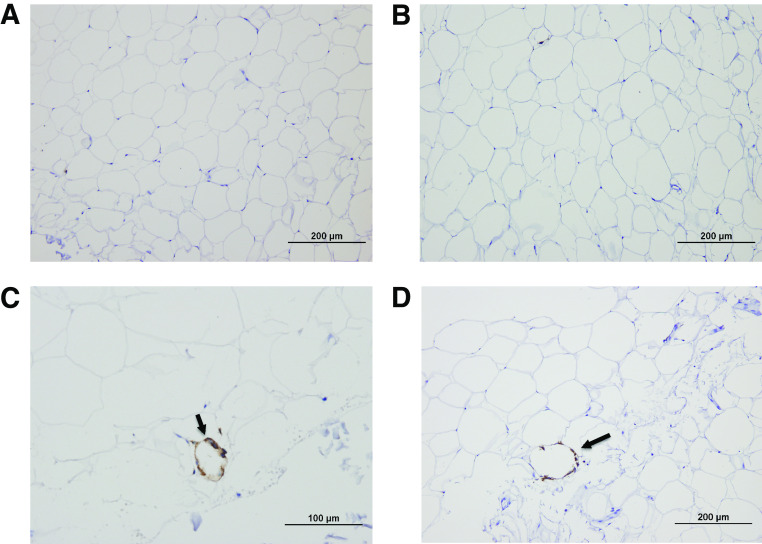
Research design and methods: SAT biopsies were obtained from 36 obese young adults (20 Hispanics, 16 African Americans) to measure crown-like structures (CLS), reflecting SAT inflammation. SAT, VAT, and HFF were measured by magnetic resonance imaging, and SI and β-cell function (disposition index [DI]) were measured by intravenous glucose tolerance test. SAT gene expression was assessed using Illumina microarrays.
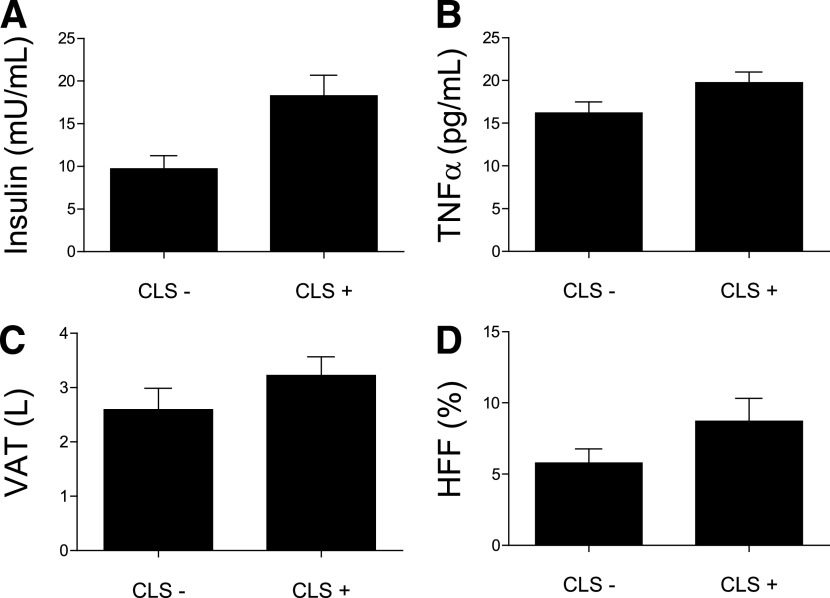
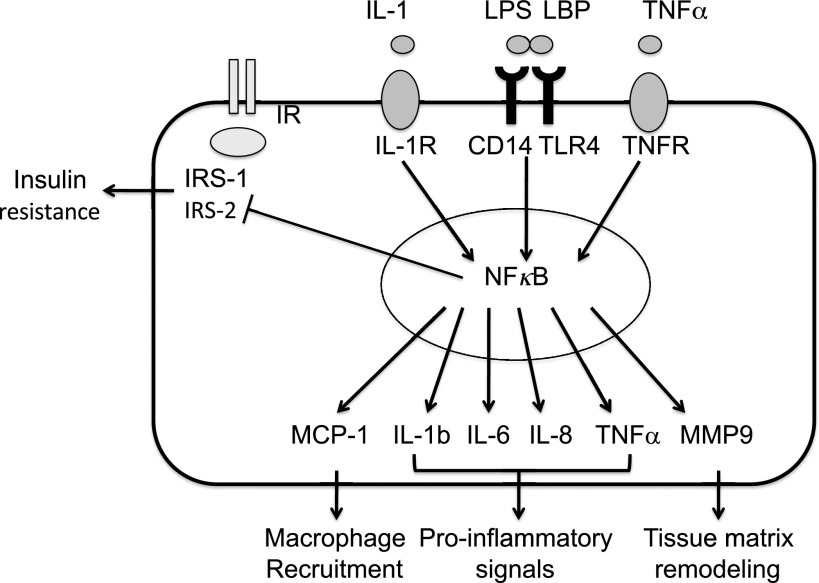
Results: Participants with CLS in SAT (n = 16) were similar to those without CLS in terms of ethnicity, sex, and total body fat. Individuals with CLS had greater VAT (3.7 ± 1.3 vs. 2.6 ± 1.6 L; P = 0.04), HFF (9.9 ± 7.3 vs. 5.8 ± 4.4%; P = 0.03), tumor necrosis factor-α (20.8 ± 4.8 vs. 16.2 ± 5.8 pg/mL; P = 0.01), fasting insulin (20.9 ± 10.6 vs. 9.7 ± 6.6 mU/mL; P < 0.001) and glucose (94.4 ± 9.3 vs. 86.8 ± 5.3 mg/dL; P = 0.005), and lower DI (1,559 ± 984 vs. 2,024 ± 829 × 10(-4) min(-1); P = 0.03). Individuals with CLS in SAT exhibited upregulation of matrix metalloproteinase-9 and monocyte antigen CD14 genes, as well as several other genes belonging to the nuclear factor-κB (NF-κB) stress pathway.
Conclusions: Adipose tissue inflammation was equally distributed between sexes and ethnicities. It was associated with partitioning of fat toward VAT and the liver and altered β-cell function, independent of total adiposity. Several genes belonging to the NF-κB stress pathway were upregulated, suggesting stimulation of proinflammatory mediators.
Trial registration: ClinicalTrials.gov NCT00697580.
Figures
References
-
- Olefsky JM, Glass CK. Macrophages, inflammation, and insulin resistance. Annu Rev Physiol 2010;72:219–246 - PubMed
-
- Kolak M, Westerbacka J, Velagapudi VR, et al. . Adipose tissue inflammation and increased ceramide content characterize subjects with high liver fat content independent of obesity. Diabetes 2007;56:1960–1968 - PubMed
-
- Stefan N, Kantartzis K, Machann J, et al. . Identification and characterization of metabolically benign obesity in humans. Arch Intern Med 2008;168:1609–1616 - PubMed
-
- Karelis AD, Faraj M, Bastard JP, et al. . The metabolically healthy but obese individual presents a favorable inflammation profile. J Clin Endocrinol Metab 2005;90:4145–4150 - PubMed
Publication types
MeSH terms
Substances
Associated data
Grants and funding
LinkOut - more resources
Full Text Sources
Medical
Molecular Biology Databases
Research Materials
Miscellaneous
